



2018 School Spending Survey Report
What Color Is the Past? History, Diversity, and Books for Kids
The headline caught my eye. In the Guardian it read Mary Beard abused on Twitter over Roman Britain’s ethnic diversity. Subtitle, “Classicist says her assertion that there was at least some diversity under Roman rule led to ‘torrent of aggressive insults’.” Apparently the BBC recently released a video for schools in which a high-ranking Roman […]
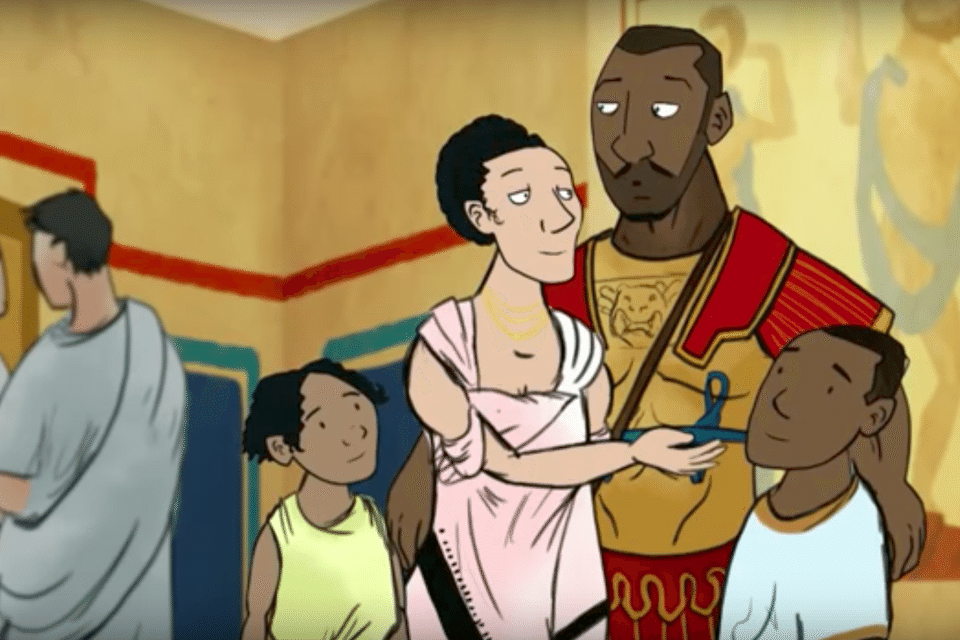 The headline caught my eye. In the Guardian it read Mary Beard abused on Twitter over Roman Britain’s ethnic diversity. Subtitle, “Classicist says her assertion that there was at least some diversity under Roman rule led to ‘torrent of aggressive insults’.” Apparently the BBC recently released a video for schools in which a high-ranking Roman soldier and father was portrayed as black. Beard, who teaches at Cambridge, supported the video by saying that scholarship indicates that in many places, “the Roman empire, Britain included, was culturally and ethnically diverse.” Some folks on Twitter did not, let us say, like that idea very much.
What interested me the most about this is that the video the BBC created has much in common with a slew of children’s books dealing with historical subjects at the moment. With a firm focus on diversity in our children’s literature, both in terms of content and creators, every aspect of children’s books is being examined. Board books, beginner or easy books, early chapter books, middle grade books, graphic novels, young adult literature, ALL of it is under the lens. Nonfiction is no exception and is in many ways the most interesting.
Unlike the BBC video, children’s works of nonfiction that include diversity in moments that used to be portrayed as strictly white have not (to the best of my knowledge) become the subject of online diatribes and rallying cries against “political correctness.” Yet. I have little doubt that as these books continue to be published, at some point in the future someone with a bit too much time on their hands will start to bloviate about how illustrators are “rewriting history”. Before they do, then, let’s examine some books that utilize this technique.
First up, a book that I haven’t even read yet. Normally that would mean that I wouldn’t really comment on it, but since we’re not talking about the content but the book jacket, I’m going to write myself a free pass (convenient, non?). You may recall that earlier this week I debuted the cover of Marc Tyler Nobleman’s upcoming nonfiction picture book Fairy Spell: How Two Girls Convinced the World That Fairies Are Real. The book is illustrated by Eliza Wheeler and right from the start I was intrigued by the cover:
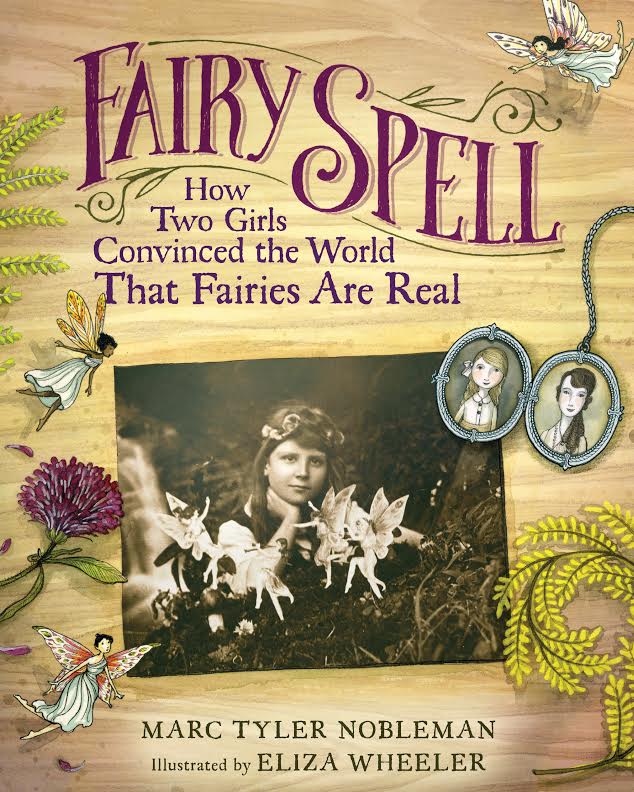
Wheeler is very clever. If you know the story of Elsie and Frances then you know that the fairies they featured in their photographs were all white. Ms. Wheeler, however, has included fairies of different races in her illustrations. And why the heck not? It’s fairies, for crying out loud. That makes perfect sense to me. Unless someone wants to claim that all fairies in England really are white (I would love to hear your argument on that one) then Wheeler’s choice is good and right. Well done.
Next up, a biography of none other than John Newbery himself:

This book is an absolute delight, and I say that as someone who generally views picture book bios of children’s book creators with a great deal of suspicion. Much of the heavy lifting, of course, can be credited to Nancy Carpenter. I’m fairly certain I’ve never read a Nancy Carpenter book I didn’t like. But what’s so interesting about this particular book is the crowd scenes. Here on the cover, for example, you’ll notice that the kids that clamor around Mr. Newbery are of different hues and shades. When I saw this I was intrigued. I’ve always assumed that Britain has been more ethnically diverse historically than written works of the time would lead you to believe, but I’m no scholar. I honestly don’t know how it would have broken down.
But let’s just look at this cover from a practical standpoint. Was there any specific moment in history when John Newbery stood exactly like this with a book in his hand exactly like that surrounded by children shouting in quite this way? Of course not! Children’s book illustrators have a freedom unavailable to nonfiction children’s book writers. While an author can never say “the hero said this” when the hero did not, in fact, say any such of a thing, artists can make up stuff all the time. Nothing crazy, of course. You can’t make someone seven feet tall if they were only 5’6″ but illustrators offer interpretations of past events. That, by definition, requires imagination. Now we consider this cover. Since we don’t know that Newbery never stood exactly like this with a book in his hand exactly like that, why can’t we consider that there may well have been kids of color in 19th century England? I bet there were some somewhere. And if it’s possible, then the art is a-okay.
I’m pretty easygoing when it comes to works of strict nonfiction like this one. So why is it that the one book that makes me confused a fictional picture book? Meet the king:
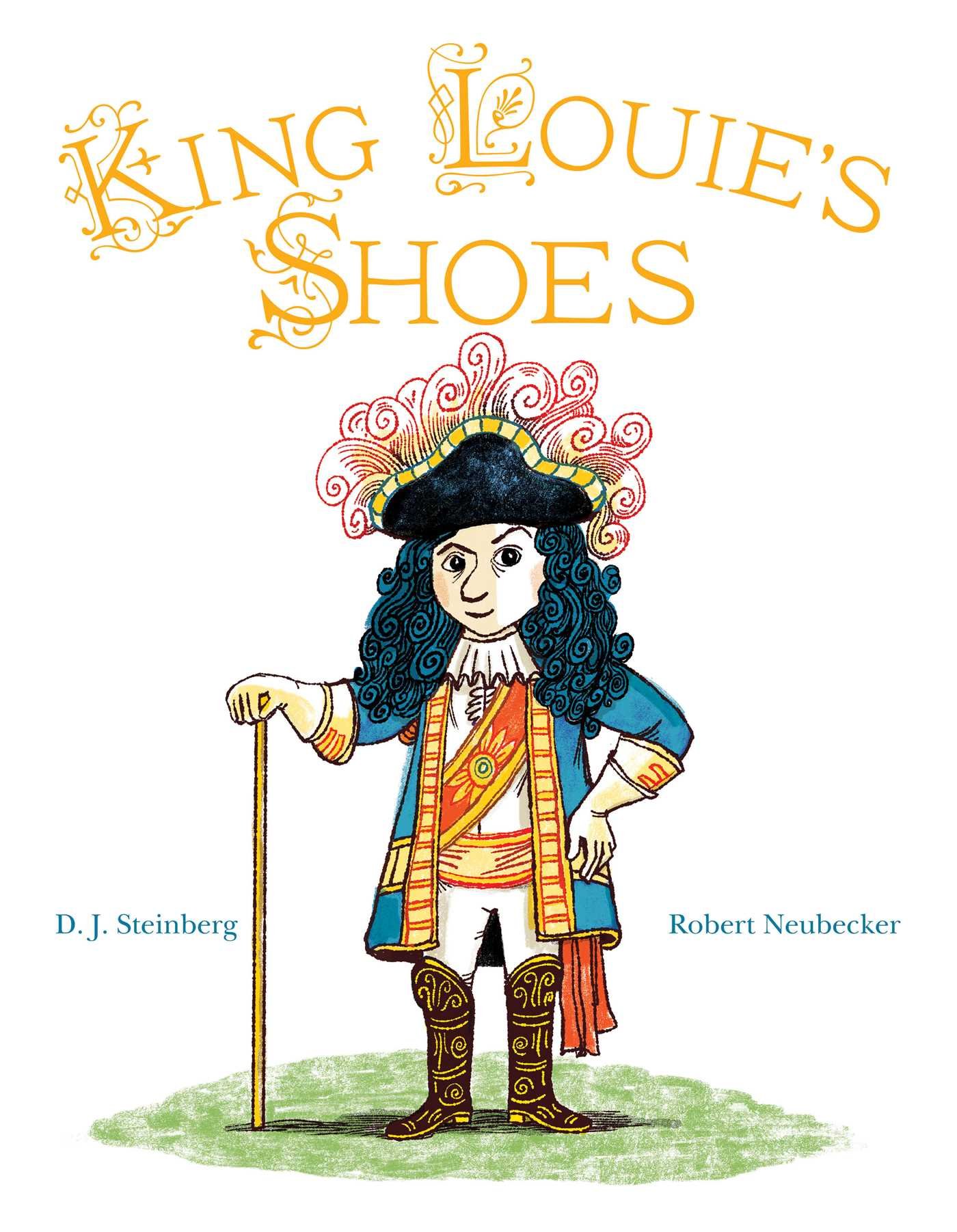 Here is a book that has bloody well tied me into knots and I’d like to get to the bottom of why that is.
So right from the start, author D.J. Steinberg and Robert Neubecker make it clear to the readership that this is a work of fiction. Though based on a real king (Louis XIV or The Sun King) the story is silly and playful. Louise XIV was a short man and the book portrays him as a rather adorable little king who just wants to be liked for himself. The final image is of him dancing in his socks, having eschewed the ridiculous platform shoes he’d been wearing before. There are also facts about the real Louis XIV in the back. There’s even a moment where the book says, “He ruled France for 72 years. he built the biggest palace in the world in the town of Versailles. He grew the biggest army in all of Europe. He threw the biggest parties for his royal family and friends. And he gave the biggest gifts, mostly paintings and statues of himself. There was only one little problem…” His considerable foreign, military, and domestic expenditure impoverished and bankrupted France? Nope. His failure to reform French institutions while the monarchy was still secure led to widespread social upheaval? Nope. He was short.
Now what I can’t figure out about this book is why they chose to make it about a real king. Perhaps a desire to tie it into STEM is the reason. No idea. Whatever the case, it’s the most pro-monarchy picture book I’ve read in years, and I’m including fawning Disney princess tales in that statement. Like the Newbery bio it also makes group scenes diverse. But while the Newbery biography has diverse crowds of regular people, in the Louis book his army and royal friends are of different races. His Royal Shoemaker is dark-skinned too. So is that a significantly different choice from those crowd scenes? Can we definitively say that Louis XIV had a white personal cobbler or does the image dwell in the possibility? If this book is fictionalized then what’s wrong with adding some diversity? And if I cheer on the Newbery book, why does fable about Louis XIV seem different to me?
I don’t have any good answers for this. So I’m going to crowdsource the answer. My question to you is this: What are the rules about adding diversity to historical works of fiction and nonfiction? It isn’t really something they cover at RISD, after all. Memory is fluid and children’s history in America is more often than not written by white authors, so when we portray the past what is and isn’t allowed?
Very interested in your thoughts.

Added To Cart
RELATED


RECOMMENDED
CAREERS
The job outlook in 2030: Librarians will be in demand
CAREERS
The job outlook in 2030: Librarians will be in demand
ALREADY A SUBSCRIBER? LOG IN
We are currently offering this content for free. Sign up now to activate your personal profile, where you can save articles for future viewing
ALREADY A SUBSCRIBER? LOG IN
Thank you for visiting.
We’ve noticed you are using a private browser. To continue, please log in or create an account.
Add Comment :-
Be the first reader to comment.
Comment Policy:
Comment should not be empty !!!