



2018 School Spending Survey Report
The Nuanced Picture Book Biography
Last week I was sick. Sick as a dog sick. Sick in that way where you feel the cool breezes coming through your window and have a fleeting glimpse of how lucky you are to be sick at the end of the summer rather than even a week earlier when your misery could have only […]
Last week I was sick. Sick as a dog sick. Sick in that way where you feel the cool breezes coming through your window and have a fleeting glimpse of how lucky you are to be sick at the end of the summer rather than even a week earlier when your misery could have only have been compounded by hot winds and bright, horrible, happy sunlight.
In the midst of all this lovely blah-ness I was given the chance to speak with a German reporter about political picture book biographies. Thanks to the fever I’ve only a mild inkling of what I said (we’ll all find out together, yay!) but I do remember a long discussion of American picture book biographies and nuance. Look at the bios of Hillary out there for kids and you’re not going to find much within them beyond praise. How true is that of other picture book biographies? Are they capable of showing several sides of an individual or are they, by definition, only able to show the good sides of their subjects and never the bad?
I’ve been pondering this for the past week and I don’t know if I’m any closer to an answer. A picture book biography by its very nature is supposed to tell a child more about a subject. Moreover, that subject is supposed to be someone that child should learn and grow from as well as emulate in their own lives. You will not find picture book biographies of Hitler or Ted Bundy because that flies in the face of a picture book bio’s purpose in life. The only time you can come close is when you write a parody for adults like A Child’s First Book of Trump.
But is that actually true? I mean, if a kid is supposed to emulate a picture book biography’s subject and you don’t show their flaws and failures, doesn’t that automatically make the subject seem otherworldly and perfect? Isn’t there value in displaying the problematic areas and showing how someone surmounted them?
I set out to locate a couple picture book biographies of people who led complicated lives. How did their picture book biographers choose to handle their less than stellar personal qualities? When drawing up the list, I was surprised to find that the most examples involve drugs. I made a conscious effort to include some of those, but to come up with other personal failings as well.
Jimi Hendrix

Personal Difficulty: Died of drug overdose
Does the Book Address This? Sure, but not in the text for kids. Since the text pretty much just shows him as a kid, that was a given. Now one way these books get around the problem of a problematic life is simply to put all the less-than-stellar stuff in the backmatter. If a book does that, can you honestly say that it’s discussing a subject’s complicated life head-on? By the same token, it’s obviously there and has the additional advantage of being readily available to a teacher or parent IF and only IF they want to share it. In this case, mentioning Jimi’s death wouldn’t have made sense in the main body of the text.
Coco Chanel
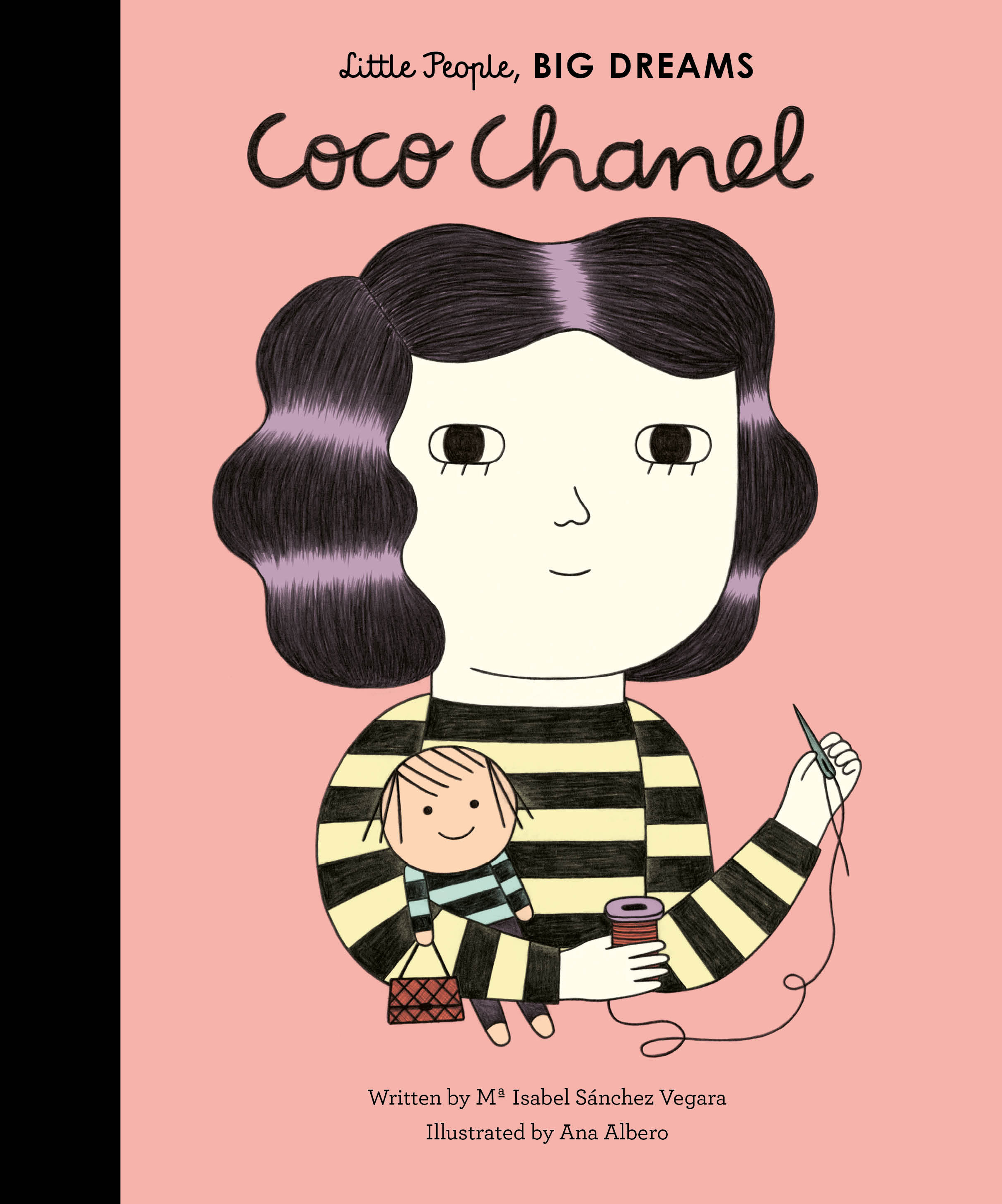
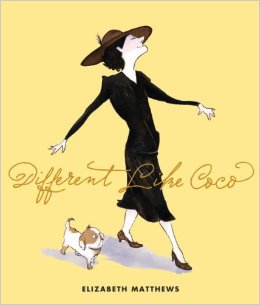

Personal Difficulty: Got cozy with a Nazi
Do These Books Address This? Ah, nope. But I’ve a theory on this one anyway. Seems to me that when a person’s personal life involved drug abuse, or even physical violence, that’s something a picture book biography can work with. Sex, in any form, is far more difficult. Read on and you’ll see what I mean a little later.
John Coltrane
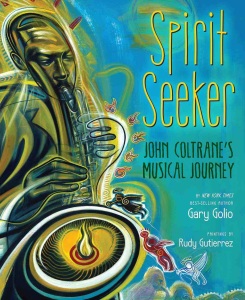
Personal Difficulty: Drug addiction
Does the Book Address This? Yes. In fact, this turned out to be one of the very few picture book biographies I could find where the text written for kids discussed the fact that the subject of the book had personal failings. As I wrote in my review, “You see the days when his deep sadness caused him to start drinking early on. You see his experiments with drugs and the idea some musicians harbored that it would make them better.” There’s even an in-depth “Author’s Note: Musicians and Drug Use” section at the end. Now the author of this book, Gary Golio, also wrote the aforementioned Jimi Hendrix biography so he’s no stranger to writing about complicated men. If you seek complexity in a picture book biography, this is where you start.
Johnny Cash
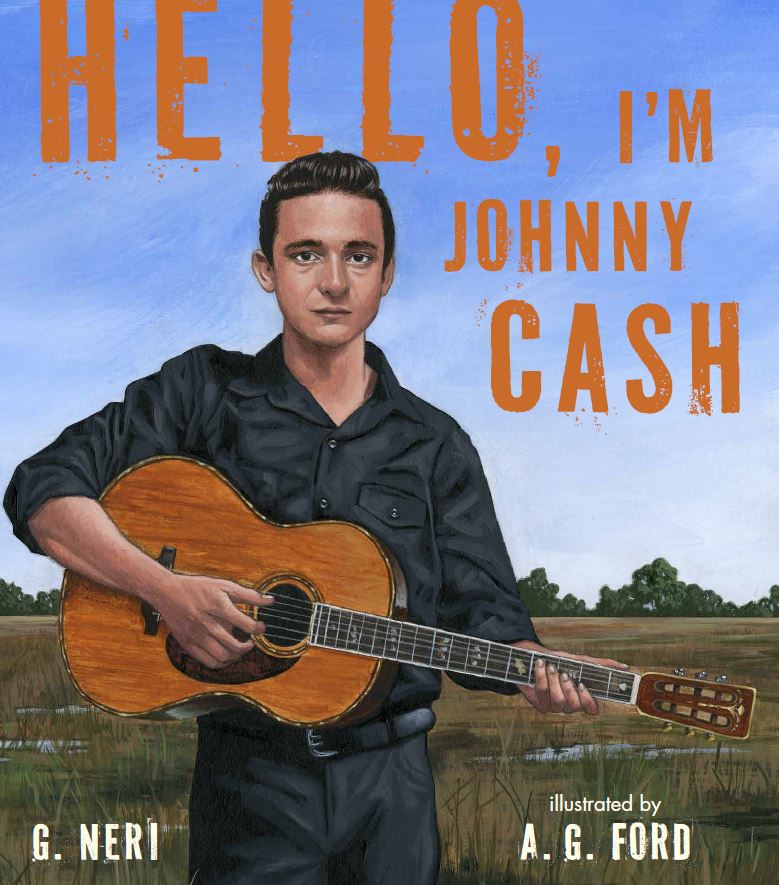
Personal Difficulty: Several, but let’s just stick with the fact that he left his wife for Rosanne.
Does the Book Address This? Not really. It definitely mentions Rosanne and how much Johnny admired her, but the storyline stops strategically before they get togehter. If you want to get into the sticky subject of infidelity the text of the book won’t help you out. But could it even? Could any picture book biography tackle infidelity in any manner without the topic tipping everything in the text in only that direction? Can we state for the record, then, that infidelity cannot ever be discussed in a picture book biography?
Jean-Michel Basquiat
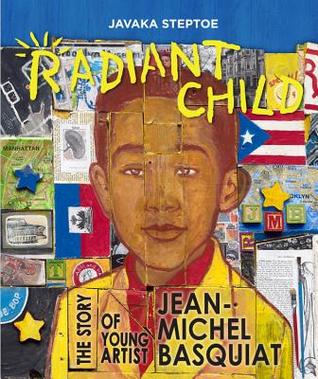
Personal Difficulty: Family mental issues and drug addiction
Does the Book Address This? Yep. The problems with his mother are discussed at length in the text. The drug problems come up in the backmatter. This is a pretty good example of a book that has found the right balance in the public and personal, and has found a way to make an honest picture book biography that touches on the big issues and how they formed the man as an artist without letting them take over the book itself.
Robert Miller a.k.a. Tricky Vic
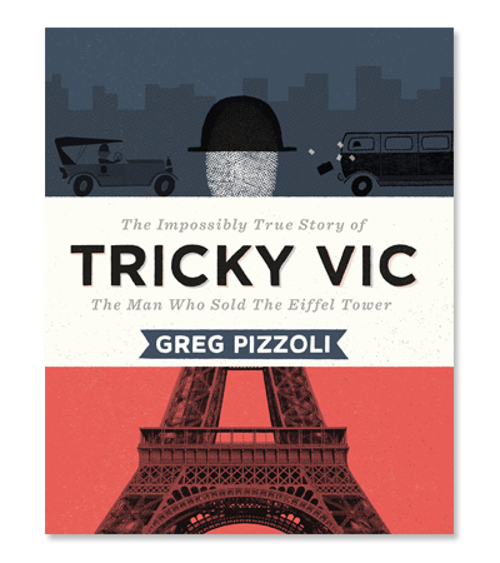 Personal Difficulty: Um . . . his whole entire life? Remember when I said you couldn’t write a bio of a villain? Well, Tricky Vic was more of an anti-hero, but that’s splitting hairs. This may well be the only picture book bio I’ve seen of a true shyster. He was a con man, and he didn’t exactly repent. Or learn. Or grow.
Does the Book Address This? The book doesn’t address anything BUT this! How did Pizzoli do it? There wasn’t even an outcry against this book when it came out. People were on board with it. I wonder if they saw it more as a history than a bio. I wonder too if the fact that Vic isn’t that well known contributed to the lack of protestation. If you wrote a biography of a famous sadist, people would assume the book was, by definition, in favor of that person. But if the person is low-level and not particularly well known it flies right under the radar. Much to chew on here.
Conclusion: Let’s say someone wanted to write a serious picture book biography of Donald Trump tomorrow and have it published by a major publisher. Let us also say that this person was not personally associated with Mr. Trump and wanted to present him as honestly as possible to a child readership. Finally, let’s say that this person wanted this to be a “good” book. Could it be done?
I don’t know the answer to this question. I told the reporter that American picture book biographies were capable of nuance, and I’ll stand by that. But they are also, by their very design, meant to inspire as well as inform. If you take away that initial intent, do you do harm to the form itself?
Deep thoughts for a Tuesday, folks. Be interested in your opinions.

Added To Cart
RELATED
BOOKS
PREMIUM
Some of Us Are Brave
BOOKS
PREMIUM
Hail Mariam
BOOKS
PREMIUM
Brady Mason’s Perfect Fit


RECOMMENDED
CAREERS
The job outlook in 2030: Librarians will be in demand
CAREERS
The job outlook in 2030: Librarians will be in demand
ALREADY A SUBSCRIBER? LOG IN
We are currently offering this content for free. Sign up now to activate your personal profile, where you can save articles for future viewing
ALREADY A SUBSCRIBER? LOG IN
Thank you for visiting.
We’ve noticed you are using a private browser. To continue, please log in or create an account.

Add Comment :-
Be the first reader to comment.
Comment Policy:
Comment should not be empty !!!