



2018 School Spending Survey Report
The Castle Where Children’s Literature Lives
In case you missed it, our National Ambassador of Young People’s Literature was hanging out with actual royalty the other day: That would be Jacqueline Woodson, receiving the Astrid Lindgren Memorial Award, in Sweden. Americans win the award every so once in a while, and for a brief shining moment some of us in the […]
In case you missed it, our National Ambassador of Young People’s Literature was hanging out with actual royalty the other day:
That would be Jacqueline Woodson, receiving the Astrid Lindgren Memorial Award, in Sweden. Americans win the award every so once in a while, and for a brief shining moment some of us in the U.S. are reminded that ours are not the only children reading in the world. Children’s books are a worldwide phenomenon and we would do well to look to what other folks in other countries are up to. Which is why I was so interested the other day when Michelle Bourgeois and Claudia Soeffner from the International Youth Library of Munich, Germany came to visit the home of Junko Yokata and the friends of the Center for Teaching Through Children’s Literature, here in Evanston.
A little background before I go much further. First off, let’s make one thing very clear. Are you, or are you not, aware that there is a castle full of international children’s books in Germany? And if you are aware, did you know that it looks like this?
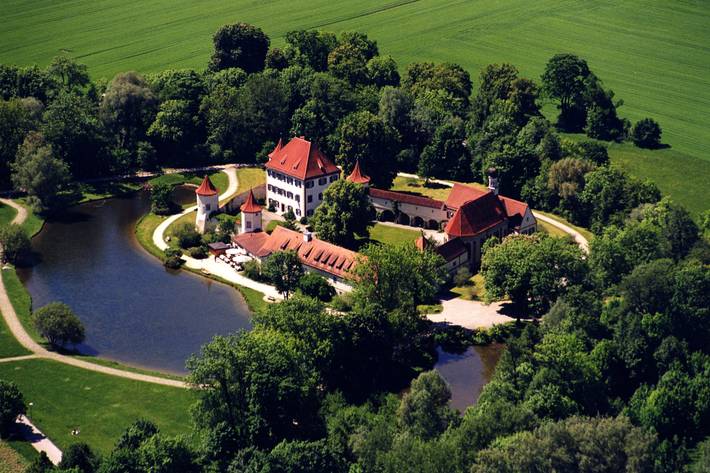
Yep. That’s a castle all right.
And were you to end up in Munich, you would find that it is not difficult to actually visit this library. Indeed, in additional to being a repository of world children’s literature, it also serves as a public lending library to the city. You can take a bus. It’s just that simple.
Now this library collects international children’s literature from around the globe. On staff they have people adept at a number of different languages. But how did it all get started? Well, back during the time of WWII there was a German children’s author and reporter named Jella Lepman. Jella was Jewish and was in Britain for the duration of the war. Afterwards “Lepman returned to Germany from British exile on contract with the American occupational forces to act as a consultant for the ‘cultural and educational matters of the women and children in the American occupied zone’.” Basically, her job was to get a handle on how to re-educate all those kids that had been raised to be good little Nazis. Her solution? Books and literature. She reached out to international publishing houses for book donations and collected 4,000 children’s books from 14 countries. Or, as the castle’s website puts it:
“Cross-cultural understanding being an urgent ideal, international children’s books were meant to help build a bridge between nations that could ensure a peaceful, democratic and tolerant future for the growing generation.”
Later, the collection would move to Blutenburg Castle, a location that dates back to the 15th century. You can read more about Jella (who clearly needs to have a character in a children’s book named after her) in the biography A Bridge of Children’s Books.
Michelle and Claudia were on hand from the library itself to offer answers to any questions we might have. We had quite a few. Is the IYL the only international youth library in the world? Apparently there’s one in Japan as well, but its focus is far more national than the castle’s. Is there a danger of running out of storage at the castle? Apparently there are cellars beneath the ground that are extensive. There appears to be no fear, at this time, of running out of space. Can anyone visit? Absolutely. In fact, you can even apply for an academic fellowship if you’d like to stay there and work on something.
One more thing to know about the library is a publication it produces each year. Without fail, the library publishes an annual international book review catalogue titled “White Ravens”. Books deemed worth of inclusion in “White Ravens” are selected for inclusion in the catalogue if they “inspire and provoke, set new trends, and are of the highest quality in terms of language, content and artistry.” We got our hands on a copy of this international Best Of list and naturally I wanted to see how many of these books I could recognize:
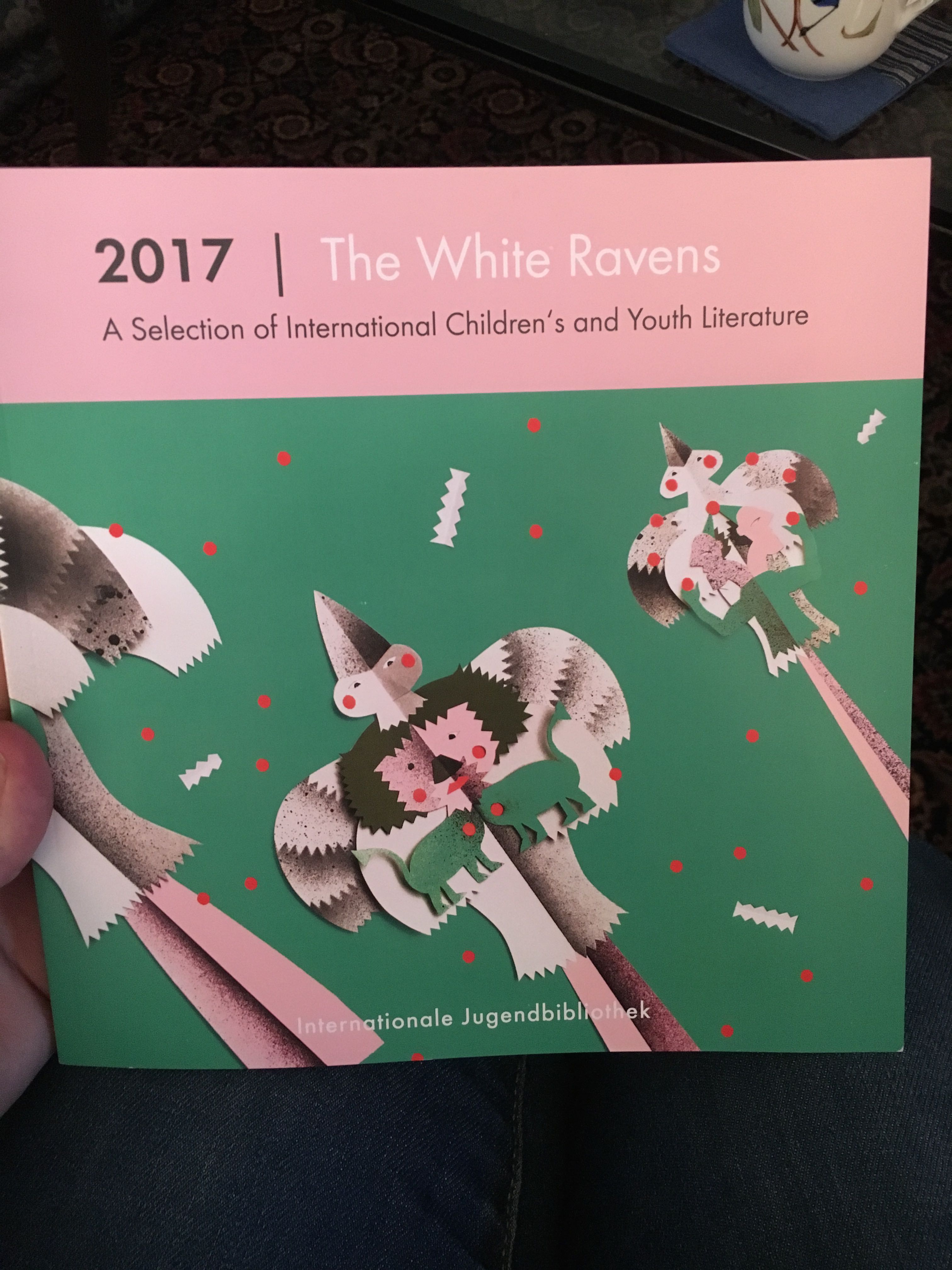
The inclusions from the United States are all from 2016 and are utterly fascinating. They are:
- The Girl Who Drank the Moon by Kelly Barnhill
- The Wild Robot by Peter Brown
- Du Iz Tak? by Carson Ellis
- Giant Squid by Candace Fleming, illustrated by Eric Rohmann
- The Inquisitor’s Tale by Adam Gidwitz, ill. Hatem Aly
- March: Book 3 by John Lewis, Andrew Aydin, and Nate Powell
- Pax by Sara Pennypacker, ill. Jon Klassen
- Ghost by Jason Reynolds
- Some Writer! The Story of E.B. White by Melissa Sweet
- The Princess and the Warrior: A Tale of Two Volcanoes by Duncan Tonatiuh
- Freedom in Congo Square by Carole Boston Weatherford, ill. R. Gregory Christie
- They All Saw a Cat by Brendan Wenzel
- The Sun Is Also a Star by Nicola Yoon
Excellent, exquisite taste, you have to agree.
Then I took a gander at the other countries and found some very interesting titles. These included:
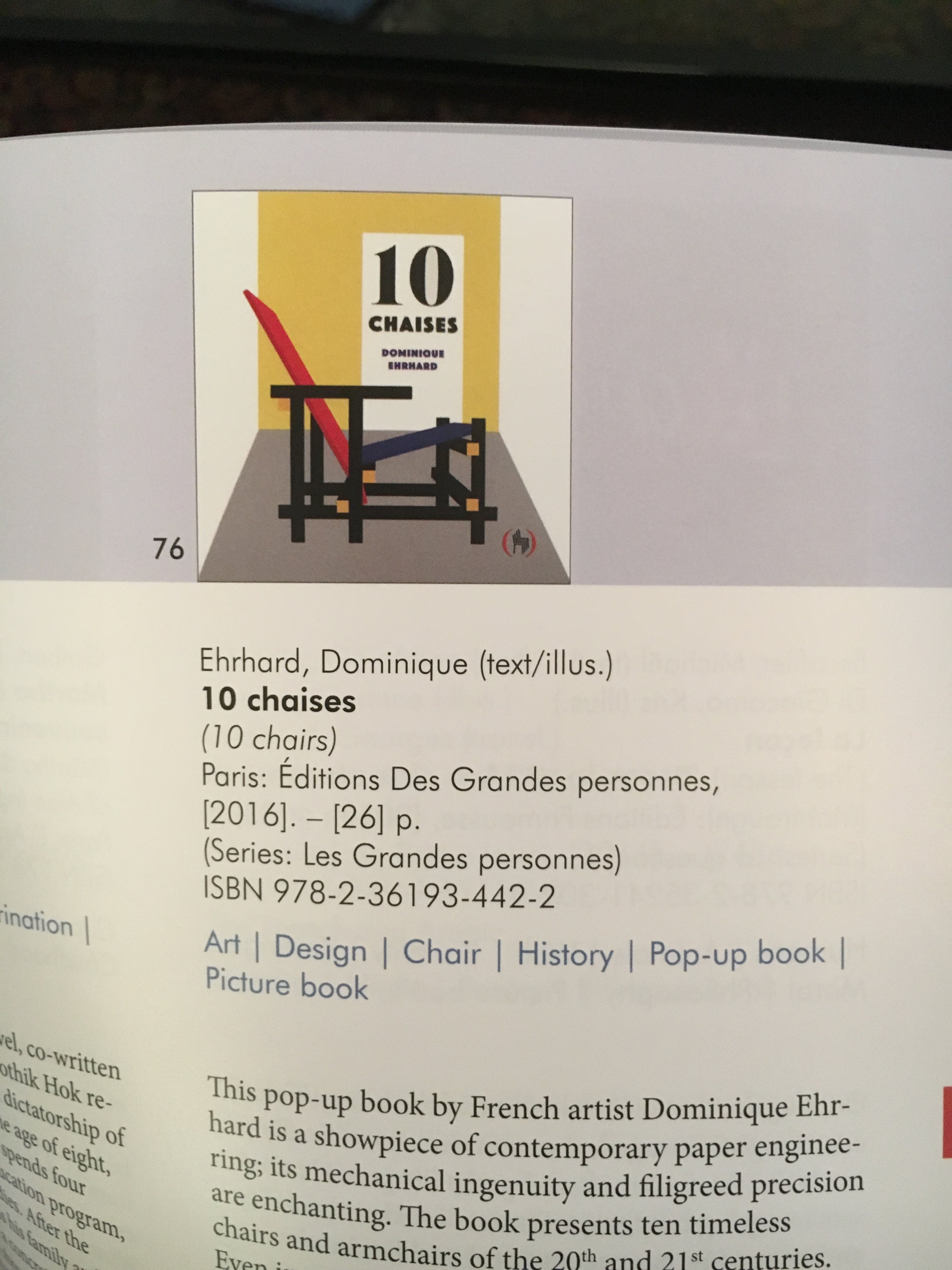
A book that I am nominating as Most French Book of All Time. Look at that. Le Corbusier’s chair is RIGHT there on the cover!!! And it’s a pop-up book. I think I’m in love. Not sure how it’s for kids, but I just like that it exists.

Americans know this book best by its title here in the States “Rabbit Magic”. I guess they deemed the original title a little too esoteric for Yankee palates.

For those of you who have ever wondered by Croatian YA looks like, here’s your answer.
You can search the White Ravens database here to learn more or find more catalogues here.
Many thanks to Michelle and Claudia for their patience in aiding our understanding.

Added To Cart
RELATED


RECOMMENDED
CAREERS
The job outlook in 2030: Librarians will be in demand
CAREERS
The job outlook in 2030: Librarians will be in demand
ALREADY A SUBSCRIBER? LOG IN
We are currently offering this content for free. Sign up now to activate your personal profile, where you can save articles for future viewing
ALREADY A SUBSCRIBER? LOG IN
Thank you for visiting.
We’ve noticed you are using a private browser. To continue, please log in or create an account.
Add Comment :-
Be the first reader to comment.
Comment Policy:
Comment should not be empty !!!