


2018 School Spending Survey Report
Tech Tips to Encourage Reluctant Readers
From street lit resources to free, web-based libraries, digital tools to spark a love of reading and other tips from three experts.

K.C. Boyd
Boyd, for example, has had success engaging students with animation creator apps. She highlighted AMV, a site that allows students to create anime music videos, building new story lines—making them authors as well as readers. She also mentioned her use of Nooks with students, which allows them to look up vocabulary words privately so their friends didn’t know if they couldn’t grasp the meaning of a word or not. Boyd also recommended Animation Creator and street lit resources. “If you work with teenagers, you know they don’t like to be embarrassed,” says the lead library media specialist at East St. Louis (IL) Senior High School, and a Library Journal Mover and Shaker. And it’s important to inform your administration about what you’re doing. Boyd produces a monthly one-page report for her principal, including circulation statistics, images from the library, and anything she believes would enhance her work—such as items she could buy quickly if a budget surplus became available to her. “I truly believe when you’re going to implement a new practice, you need to have supporting research to present to the administration,” says Boyd. “You need buy-in.”Free Digital Tools
You also don’t have to spend a lot of money to start, says Shinas, who noted several favorite sites that offer free children’s books, stories, and other content that can engage students at their interest level, from the International Children’s Digital Library to National Geographic Kids. She also highlighted Newsela, an online news site for grades 2–12. Another favorite is Inanimate Alice, a multimedia episodic story that weaves audio, visual, animation, photography—and text—to take students on a journey with the protagonist, Alice.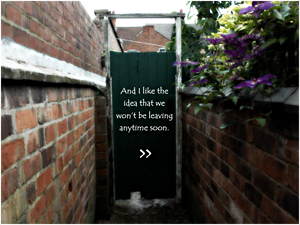
From Inanimate Alice
“Apps are a terrific way to put digital texts in the hands of children,” says Shinas. “It allows them to be creators, consumers, and producers and also collaborate with their peers.” But modeling the joy of reading is just as important, according to Furman. If a child sees the adults around them enjoying a wonderful book, magazine or text, they may want to engage as well, and this can make them readers for life, he says. “It is conceivable a student may not have seen an adult reading for pleasure, yet we ask why we can’t get kids to read,” says the principal of South Park (PA) Elementary School, and author of Technology, Reading & Digital Literacy: Strategies to Engage the Reluctant Reader (ISTE, 2015). “Maybe this is something we need to prioritize.” Furman also offered strategies for using Goodreads and ePals, a global collaboration site. The archive of the webcast is now available.
Added To Cart
RELATED


RECOMMENDED
CAREERS
The job outlook in 2030: Librarians will be in demand
CAREERS
The job outlook in 2030: Librarians will be in demand
ALREADY A SUBSCRIBER? LOG IN
We are currently offering this content for free. Sign up now to activate your personal profile, where you can save articles for future viewing
ALREADY A SUBSCRIBER? LOG IN
Thank you for visiting.
We’ve noticed you are using a private browser. To continue, please log in or create an account.
Add Comment :-
Be the first reader to comment.
Comment Policy:
Comment should not be empty !!!