


 Click to Enlarge
2018 School Spending Survey Report
Super and Magical Webcomic Now in Print: Jillian Tamaki on “SuperMutant Magic Academy”
On the heels of the publication of her first solo YA work, a collection of her webcomic SuperMutant Magic Academy, about teen witches and mutants who attend a Hogwarts-like school, Jillian Tamaki shared with SLJ what inspired her to work on this long-running project and what she’s got planned next.
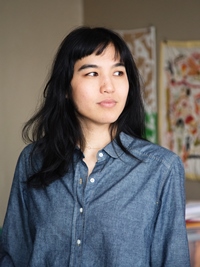
Photo by Reynard Li
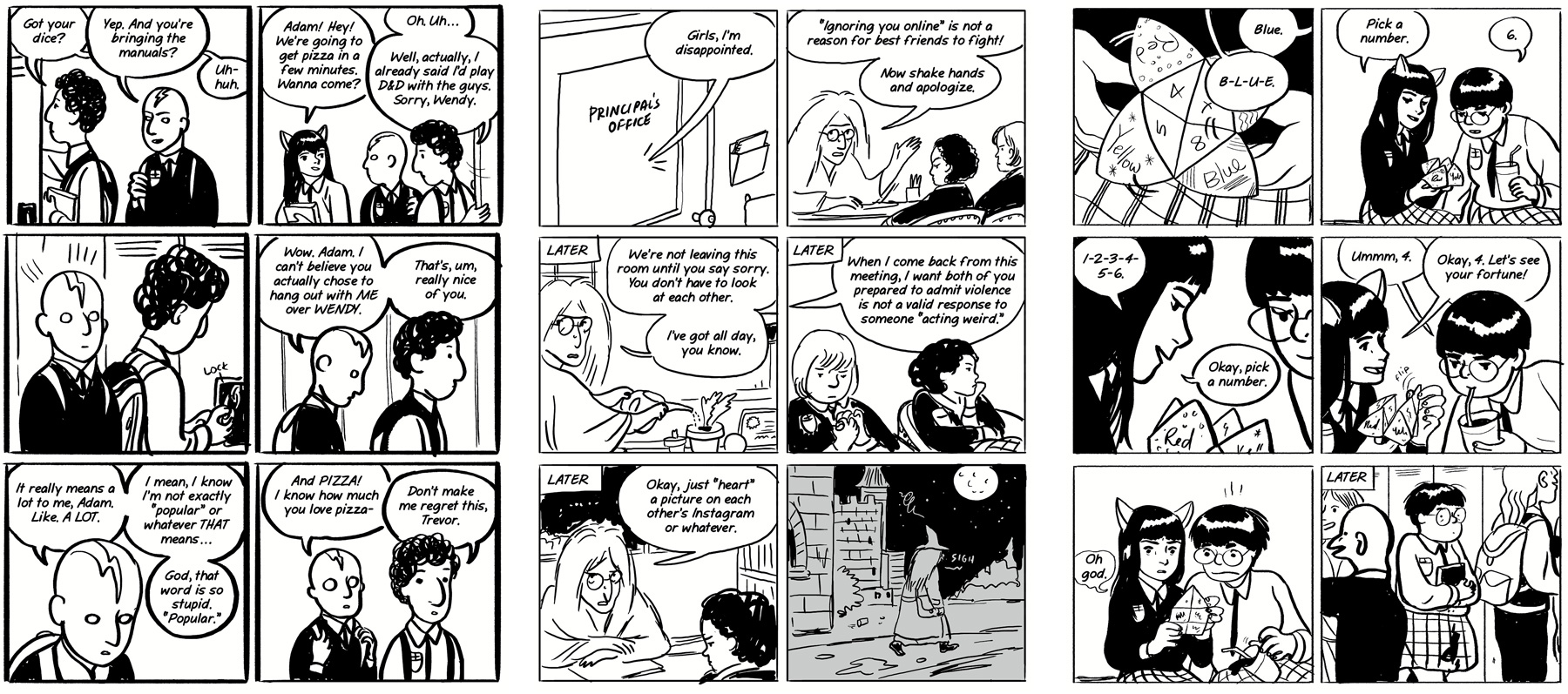
Jillian Tamaki is no stranger to librarians. As the cocreator of the boundary-pushing, Caldecott Honor-winning This One Summer (First Second, 2014) and the acclaimed Skim (Groundwood, 2008), graphic novels on which she collaborated with cousin Mariko Tamaki, the Canadian-born artist has continued to attract attention among fans of teen lit and comics. On the heels of the publication of her first solo YA work, a collection of her webcomic SuperMutant Magic Academy (Drawn & Quarterly, 2015), about teen witches and mutants who attend a Hogwarts-like school, Tamaki shared with SLJ what inspired her to work on this long-running project and what she’s got planned next. See our starred review of SuperMutant Magic Academy. Congrats on the Caldecott Honor for This One Summer. Were you surprised to get the call? How did you feel about the backlash that arose after the announcement? I was surprised only because I was not even expecting that it would be considered. I’m from an editorial illustration and comics background. I considered it such a different facet of the industry. I assumed like everyone else that the Caldecott winners were picture books. It was a completely wonderful surprise. I didn’t pay much attention to the backlash. I deferred to the librarians. They know what is appropriate for awards and the kids that they work with every day and how to make age distinctions and categorizations. You’ve worked on SuperMutant Magic Academy (SMMA) webcomic for four years. Did you feel a bit of nostalgia while curating the comics into this collection and creating the concluding story arc? Whenever you’re revisiting a work that you’ve done over a period of time, you can’t help looking back and remembering where you were when you first started. It’s really a different experience to see them all together—certain themes come up. It’s enlightening. Everything I work on is a snapshot of that specific time in my life. One of my favorite aspects of SMMA is the conglomeration of several “Chosen One” narratives that readers will be familiar with from the “Harry Potter” books and X-Men franchise. What inspired you to showcase the teen experience through that lens? I wanted to work with a conceit that I could move around in and use to think about the writing process. Plus, I wanted a project that was low stakes. The webcomic format is perfect for testing things out and playing around. It was a purposefully silly exercise. The last “Harry Potter” movie was coming out when I first started, and I was also working on a Marvel project, so I had dipped my toes into the superhero world. But the parts that I was most interested in were the superheroes’ boring teen lives. On the surface, SMMA is about witches and mutants, but really it’s more in line with Degrassi Junior High, “Archie comics,” and terrible teen sitcoms. There’s a vast cast of characters in this work, yet readers are easily able to keep track of them, even with the mostly one-page strip entries. How did you imbue each protagonist with such unforgettable personality? As writer and a reader, you have to be somewhat open to everything not getting resolved at the end, which is appropriate and realistic. I do aim for realism even in something very cartoony like this. I felt the need to create a new character whenever there was new personality I wanted to explore.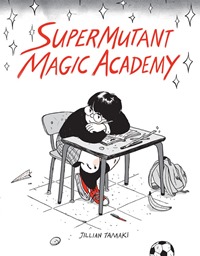 Marsha bears an uncanny resemblance to “The Boy Who Lived.” Are any of the other characters based on popular literary icons? A lot of them are based on teenage stereotypes: the cute girl that everyone is in love with, the destructive teenager with issues, and the cool guy. The fun part is subverting the stereotypes. Life is beautiful when the things you expect get eclipsed by the unexpected. Plus, I think it’s funny when a stereotype gets flipped—when [appearances] and reality don’t jive. A lot of the book is inspired by my time as a teacher and [by] my students. I’ve taught in art schools since 2007. Some of that experience [slips] into the art scenes, especially. Is there a character that you connect with the most? They are all aspects of my personality —tiny dimensions and pockets of myself. Some of them are more directly inspired by other people I know. Each character starts with a kernel of an idea. If there is a main character, it’s probably Marsha. I found her the most malleable character. Some proved to be more flexible than others, which was an interesting discovery. Ultimately, I hit an end with some of them. This is a mostly black-and-white collection, but there are places where flashes of color appear. How and why did you decide to maintain this palette? How did you decide which strips would be in color? That decision was often born out of the limitations I had. Mostly time. This project was about writing: perfecting characters and dialogue. It wasn’t about making it pretty or polished in any way. It was almost like a sketchbook. If the color is not needed, then why waste the time? When color was used, it was because it was needed to communicate something—to visually highlight or clarify. The strip wouldn’t work without it. There were some [strips] that had some color and I decided to take the color out. Comics are about streamlining communication. Who are some of the artists and comic creators that have inspired you? I actually don’t read that many comics. There are other projects that I’ve worked on in which I have I studied other people’s work, but this one was more diaristic. It’s probably the most personal book that I’ve done. It was mostly inspired by my students, the Internet, and Tumblr. It’s my own boring, daily life— very observational as opposed to literary. Would you ever return to SMMA, even if only as a webcomic? You never ever know. For now, I got what I wanted from this project. I learned a lot of what I had set out to learn. Some of the lessons that I learned have already come into other work, such as This One Summer. The attitude will go on, but maybe not the characters themselves. But you never know, because life is weird. What are you working on next? I have a little comic also out in April, called SexCoven, published by a small micropress (Youth in Decline). It’s the longest standalone that I’ve ever done. I’ll be doing a lot of touring for that and SMMA. Other ideas are percolating as well. I’m also working on exciting ideas with virtual reality, but those are very much in flux. Here's a sneak peek at some of the interior artwork in Tamaki's SuperMutant Magic Academy, published on April 28.
Added To Cart
RELATED


RECOMMENDED
CAREERS
The job outlook in 2030: Librarians will be in demand
CAREERS
The job outlook in 2030: Librarians will be in demand
ALREADY A SUBSCRIBER? LOG IN
We are currently offering this content for free. Sign up now to activate your personal profile, where you can save articles for future viewing
ALREADY A SUBSCRIBER? LOG IN
Thank you for visiting.
We’ve noticed you are using a private browser. To continue, please log in or create an account.

Add Comment :-
Be the first reader to comment.
Comment Policy:
Comment should not be empty !!!