


2018 School Spending Survey Report
Students Walk Out; Librarian Creates Display to Inform, Support Kids
School librarian Angie Morris pulled books from her collection at Rolesville (NC) Middle School to help students understand the issues as they prepared to take part in the National School Walkout.
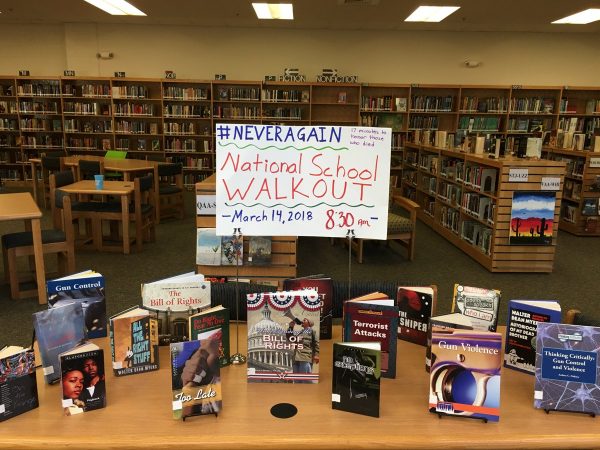 Some parents complained about what they saw as administrative support of the walkouts in Rolesville, according to Morris, but the principal stressed that it was voluntary and worked with the eighth graders coordinating their school's event to make it least disruptive to the school day. Around the country there was criticism, debate, and even some threats of violence against protesting students. Some schools created options to replace or add to the walkout, such as assemblies to discuss school safety, gun violence, and being kind to each other. Students in large cities marched to parks and government building for rallies. Thousands in the Washington, DC, area turned their backs on the White House and sat in silence for 17 minutes before marching to the Capitol. At middle schools and high schools across the country, the #NeverAgain movement started by the survivors at MSD swelled. News reports and social media posts showed kids who were not just taking the opportunity to skip class, as some opponents to the walkout contended, but giving speeches about the issues and learning about activism, politics, gun control, and organizing action. Photos of educators outside with their students filled social media feeds. Some stood with the students, while others stayed nearby for support and to make sure there was a supervising adult for security reasons. Morris went out into the cold morning with what she estimates to be 600–700 students, most of the kids in attendance at school that day. The day after the Parkland shooting, Morris went around her library pulling books for a display. She thought students would need information to better understand what was happening. She found titles on gun control and gun violence, and to offer contrasting viewpoints, she took a book from the "Thinking Critically" series that deals with the issue. She pulled titles about the Bill of Rights. Morris included some novels that address gun violence—including All The Right Stuff and Autobiography of My Dead Brother by Walter Dean Myers and Jason Reynolds’ Long Way Down, among others. She also put out some poetry books. Then she showed her library assistant what she compiled. When her assistant expressed some misgivings about the idea, Morris hesitated. “We are a very divided community,” she says. However, when eighth graders began planning to participate in the National School Walkout, Morris spoke to them about the display. The student organizers thought it was a good idea, and Morris displayed the books out on a table with the students’ sign for the March 14 walkout. “Kid have definitely been looking at it,” Morris says. “Books have been taken in bits and pieces.” The most popular choices have been the novels and the books on the Bill of Rights. While the school walkout is over, many young activists are planning for larger March For Our Lives on March 24. Are you helping students become better informed on the issues through fiction and nonfiction selections? What books would you recommend for future displays and reading lists for this generation of activists? Let us know in the comments section below.
Added To Cart
RELATED

RECOMMENDED
CAREERS
The job outlook in 2030: Librarians will be in demand
CAREERS
The job outlook in 2030: Librarians will be in demand
ALREADY A SUBSCRIBER? LOG IN
We are currently offering this content for free. Sign up now to activate your personal profile, where you can save articles for future viewing
ALREADY A SUBSCRIBER? LOG IN
Thank you for visiting.
We’ve noticed you are using a private browser. To continue, please log in or create an account.
Add Comment :-
Comment Policy:
Comment should not be empty !!!
Nomenclature
Why do I think if it had been a national walkout against abortion, "NATIONAL SCHOOL WALKOUT: STOP THE EMBRYO/FETUS VIOLENCE" there would have been no signs in any libraries anywhere, even if there were book displays on the abortion debate? Because conservative librarians know that our role is not to agitate, but to provide information and guidance to information.Posted : Mar 17, 2018 01:47