


2018 School Spending Survey Report
Secret Agent STEM | SLJ Spotlight
From murderous poisoners to poop-sniffing dogs, there is a wealth of educational and accessible material here.
Need to sneak a bit of STEM into readers’ hands? These titles skillfully integrate STEM topics into their narratives to create a reading experience that is not only wildly engaging but also rich with opportunities for critical thinking. From murderous poisoners to poop-sniffing dogs, there is a wealth of educational and accessible material here.
 Heos, Bridget. Blood, Bullets, and Bones: The Story of Forensic Science from Sherlock Holmes to DNA. 272p. bibliog. glossary. notes. photos. HarperCollins/Balzer + Bray. Oct. 2016. Tr $18.99. ISBN 9780062387622. POP
 Gr 8 Up–The use of DNA evidence by forensic scientists to help solve crimes is a relatively new innovation. It was only in 1994 that the FBI created a database of DNA samples from convicted and suspected criminals called the Combined DNA Index System (CODIS). However, the field of forensic science has been around for centuries. In fact, as early as 270 CE there was Zhang Ju, a Chinese coroner who wrote about the crimes he solved by examining the bodies of the victims. Using numerous real-life cases, Heos presents a riveting history of the evolution of modern forensic science. One of the first scientific tests ever developed in relation to murder was one for determining the presence of poison, in particular arsenic. This 18th-century breakthrough laid the groundwork for countless other developments in the quest to solve crimes. Heos deftly incorporates the stories behind many murders to illuminate advancements in areas such as fingerprint evidence, firearm and blood pattern analysis, and forensic anthropology (how bodies decompose). Also covered are the rise of the medical examiner, the advent of criminal profilers, and the development of DNA evidence. The text, with photographs sprinkled throughout, is gripping and easy to read but not for the faint of heart. VERDICT Sherlock Holmes lovers, CSI: Miami aficionados, and forensic science students will all be drawn to this rather gruesome yet highly entertaining and fact-packed history.
Jenkins, Steve. Animals by the Numbers: A Book of Infographics. illus. by Steve Jenkins. 48p. bibliog. chart. diag. HMH. Nov. 2016. Tr $17.99. ISBN 9780544630925. POP
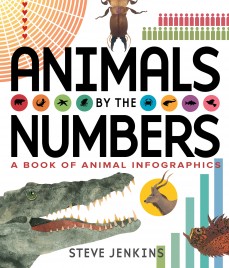 Gr 2-6–Jenkins combines cut-and-torn-paper illustrations with infographics to present highly engaging visual comparisons from the animal kingdom. Ranging from one to four pages in length, the graphic sections feature careful layouts that convey well-chosen and fascinating data. Clean lines and abundant white space lead readers to absorb the information without strain or confusion. In one example, a horizontal bar graph examines the speeds of 15 animals, each identified by name and a silhouette figure. In addition, illustrations highlight two particular examples with captions. Varied graph formats demonstrate each topic to maximum effect. Concentric circles show the surprising differences between wing speeds of hummingbirds and gnats. Cut-paper horns are neatly placed within a bar graph of horn lengths. There’s even a logic tree outlining the decision-making process of an armadillo. Scales are clearly noted, even when they shift on the following page, as in the impressive four-page look at the deadliest animals that reveals the mosquito’s clear dominance. Estimated data is always identified, such as numbers representing the combined biomass of species. In some cases, two graphs are used to offer different perspectives on the topic: a horizontal bar graph details tongue lengths, for example, while on the facing page a vertical depiction compares those lengths to the size of each animal (and the bars are cleverly rounded to resemble tongues). VERDICT Compelling visual presentation makes the information accessible and exciting. Highly recommended for all science collections.
Lee, Cora & Gillian O’Reilly. The Great Number Rumble: A Story of Math in Surprising Places. illus. by Lil Crump. 104p. bibliog. chart. diag. further reading. glossary. index. photos. Annick. Oct. 2016. Tr $22.95. ISBN 9781554518500.
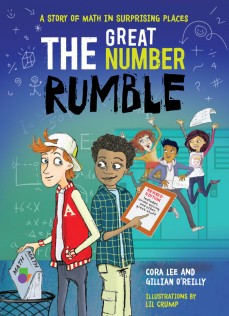 Gr 3-6–So, you take a couple of middle school boys who are dissimilar (one loves math, one doesn’t) but have enough in common to form a firm friendship, and you pop in a director of education who decides to remove math from the curriculum, and you get a humorous take on the importance of math. This is a fun romp with lots of unexpected bits about geometry, consonance in music, geographic profiling, virtual reality, and a whole lot of other neat stuff, carefully packaged to entice readers. Interspersed are boxes where “Jeremy wrestles with weird stuff,” like logarithmic spirals, Fibonacci numbers, and Pascal’s triangle. Also included are full-page bios of a selection of mathematicians and some nifty projects, such as creating a Mobius strip, handcuffs, and an Escher-like print. This is not a book most kids will seek out by themselves—even if it is funny, informative, and puzzling—but put it in the hands of an innovative math teacher and watch out! VERDICT Just the cure for standardized tests. Use in math lessons to get kids energized.
Wadsworth, Ginger. Poop Detectives: Working Dogs in the Field. 80p. bibliog. ebook available. further reading. glossary. index. notes. photos. websites. Charlesbridge. Oct. 2016. Tr $17.95. ISBN 9781580896504.
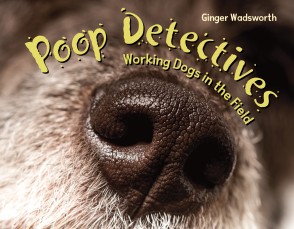 Gr 3-7–Scat can tell scientists a lot about an animal’s age, gender, diet, and health without harming the animal or the researcher. Scat-detection dogs are conservation heroes that use their amazing sense of smell to locate the feces, urine, horn, and hair of a targeted animal. This elite group of canines travel the world to help find and save endangered animals one poop at a time. The origin of these super sniffers (with Samuel Wasser recognized as the pioneer of the scat-detection field), how the rescued dogs are selected and trained, and specific examples of the different duties these dogs are assigned are covered. One example is a story about Tucker, a happy-go-lucky Labrador retriever mix who doesn’t like to swim but is an expert at finding orca poop. VERDICT A fine selection that will appeal to a wide range of readers, from dog and science lovers to conservation enthusiasts and kids who enjoy all things poop related.

Added To Cart
RELATED
BOOKS
PREMIUM
Tide’s Journey
BOOKS
PREMIUM
The Smushkins: ABC Zoinks
BOOKS
PREMIUM
Whose Footprint Is That?
BOOKS
PREMIUM
Our World: Vietnam


RECOMMENDED
CAREERS
The job outlook in 2030: Librarians will be in demand
CAREERS
The job outlook in 2030: Librarians will be in demand
ALREADY A SUBSCRIBER? LOG IN
We are currently offering this content for free. Sign up now to activate your personal profile, where you can save articles for future viewing
ALREADY A SUBSCRIBER? LOG IN
Thank you for visiting.
We’ve noticed you are using a private browser. To continue, please log in or create an account.

Add Comment :-
Be the first reader to comment.
Comment Policy:
Comment should not be empty !!!