


2018 School Spending Survey Report
Searching for the Real: Children’s Literature When Fiction and Reality Intersect
Eventually it will become clear that the bulk of my posts these days are inspired by Radiolab discussion topics of one sort or another. In today’s case, there was a recent show that made a close examination of those moments when fiction and reality intersect in interesting ways. The show began with a look at [...]
Eventually it will become clear that the bulk of my posts these days are inspired by Radiolab discussion topics of one sort or another. In today’s case, there was a recent show that made a close examination of those moments when fiction and reality intersect in interesting ways. The show began with a look at professional wrestling and the moment it became the entertainment it is today. Then it transitioned into Don Quixote (naturally) and the fact that it had a lot of fun going meta when its sequel was released.
What I took away from the show was the fact that people love discovering the little hints of reality hidden in their media. It doesn’t matter if you’re talking about reality shows or great works of literature or one man/woman shows on the stage. When you get a hint of the story behind the story you feel a little thrill.
How then to apply it to children’s literature?
I’m not going to be particularly systematic about this. What follows here is just a random mishmash of books and topics where reality and fiction intermingle. Here’s what I came up with off the top of my head:
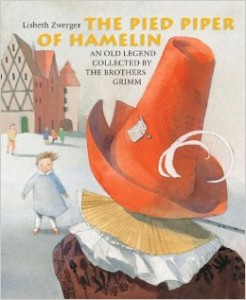 Real World Fairy Tales: The Pied Piper of Hamelin – We all know that the Grimm Brothers collected some fairly wacky tales. We know too that they tended to add their own very particular spin to the stories, watering some down and building others up. But in some ways I find their recounting of The Pied Piper of Hamelin the eeriest of tales. If you encountered the beautiful version illustrated by Elizabeth Zwerger last year then you may have noticed the odd little note in the back. The Grimms take care to say that this tale is based on a true legend and that these children really did disappear. 1284 is the usual date given, and there are multiple theories about what the Piper myth represents. For some fun reading I recommend the Wikipedia entry on the same. There’s lots of fun to be had there.
Namesakes: Alice/ Peter Pan / Wind in the Willows, Christopher Robin, etc. – What do these classic books and characters all have in common? Each and every one was based on real children. Sometimes that worked out fine but more often than not the kids grew up to be displeased with their tributes. The most extreme example would be Christopher Robin, who outright disliked the appropriation of his name (though a sad case could be made for the Peter Pan kids, done away with one by one). Far better to just vaguely base your characters off of real people, yes? Hat tip then to . . .
The real people in Harry Potter – Periodically throughout the years Rowling would mention one person or another in her life who contributed to specific Harry Potter characters. There was the teacher who may or may not have been Severus Snape. The childhood friend who, along with a couple others, created the composite Ron Weasley. Other authors have done similar things with their books. It’s fan service, to a certain extent. Suggest that there’s a real world version of one character or another and watch as your adoring hoards track those poor people down.
 Masquerade / The Clock Without a Face - These are just two examples, but there are quite a lot more in the world (39 Clues comes to mind). What we have here are children’s books where clues are hidden in the art and it’s up to the readers to track down the real world treasures. Inevitably the puzzles are too complex for kids, but that hardly matters. In the case of Masquerade there was a bit of a scandal regarding the solution. In the case of Mac Barnett & Co.’s The Clock Without a Face, I’m not sure what the final score was or how many treasures were found. However, there does appear to be a little wiki of the solutions here. A pity the blog that contained the stories behind the treasure’s winners is defunct.
Real locations – Not the same thing as the puzzle books, but related. I think there’s a great deal of hometown pride that comes out when a book is set in a real place. Even in NYC, denizens take a great deal of love in children’s books that sport recognizable locales. It makes for fun reading and there’s a true advantage to including a town that’s likely to buy many a copy of your book. To say nothing of the tourism as well.
Other examples are, of course, welcome.


Added To Cart
RELATED


RECOMMENDED
CAREERS
The job outlook in 2030: Librarians will be in demand
CAREERS
The job outlook in 2030: Librarians will be in demand
ALREADY A SUBSCRIBER? LOG IN
We are currently offering this content for free. Sign up now to activate your personal profile, where you can save articles for future viewing
ALREADY A SUBSCRIBER? LOG IN
Thank you for visiting.
We’ve noticed you are using a private browser. To continue, please log in or create an account.

Add Comment :-
Be the first reader to comment.
Comment Policy:
Comment should not be empty !!!