


2018 School Spending Survey Report
Risky Business: Trying Something New in the 21st Century Children’s Publishing Market
This past Saturday I hosted a Children’s Literary Salon at the main branch of NYPL that discussed the topic of middle grade science fiction for children, its history and future. Consisting of a panel of editor Andrew Harwell, author Jason Fry (of the “Jupiter Pirates” series), and librarian Stephanie Whelan (who gave a fantastic encapsulation [...]
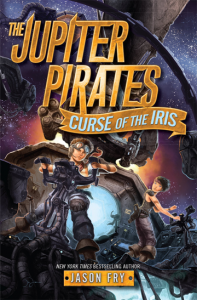 This past Saturday I hosted a Children’s Literary Salon at the main branch of NYPL that discussed the topic of middle grade science fiction for children, its history and future. Consisting of a panel of editor Andrew Harwell, author Jason Fry (of the “Jupiter Pirates” series), and librarian Stephanie Whelan (who gave a fantastic encapsulation of how sci-fi for children has changed over the decades) there came a moment when I was able to ask Harwell about acquiring the Jupiter Pirates books for a large publisher like Harper Collins. I walked in with the assumption that he would have had difficulty convincing HC’s acquisitions team that a work of space adventures would sell. As it happens, I was off the mark. Harwell said that in his experience it was harder to publish a science fiction work that further glutted the market (yet another dystopian YA novel, say) than something original like Fry’s series.
However, all this got me to thinking about editors who take risks. Even if Harwell didn’t encounter resistance to the books within his workplace, you could say he took a bit of a risk publishing something that doesn’t fall within the given norms. Over the years I’ve seen editors put their hearts and souls into children’s books that they knew would strike some as esoteric and others as downright weird. Consider, if you will, that an editor’s very livelihood depends on producing as many successful books as possible. Passion projects take on a very different light too when you see those editors let go from their publishing houses. I’ve seen it happen over the years. The threat is real.
And yet they still continue to bring out books that are of high literary quality and yet aren’t what you might call an easy sell. Looking at 2014, it’s easy to identify the books that bypass the norm.
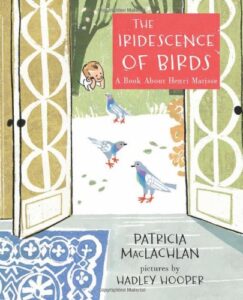 First and foremost amongst editors with a bent for the original and remarkable is Neal Porter. The other day I was sitting down with an old friend who lamented to me that Neal just wasn’t taking enough risks with his books these days. I had to raise an objection to this notion. In 2014, Porter published a book so out there that its very author had assumed that it would never see the light of day. I am referring, of course, to The Iridescence of Birds. Even author Patricia MacLachlan was surprised that Neal took an interest. Here we have a book written in a single sentence that is sortakinda a biography-ish picture book about Matisse. It may be no surprise that it came out the same year as another sortakinda(notreally) bio, Viva, Frida by Yuyi Morales. These books don’t slot into a catalog record neatly at all. Where the HECK do you even put them on your shelves? Yet they’re beautiful and well-written and everything a picture book should be. Just a little unusual.
 Of course Mr. Porter has been an editor for quite some time, so maybe he’s worked up enough cred to try something different from time to time. At a different Children’s Literary Salon Neal was one of my guests and the moderator posed the supposition that no one makes quiet books anymore. Yet Neal actually wins Caldecotts with his (see: A Sick Day for Amos McGee).
Another book that came out in 2014 that I’d call risky won a very different kind of award. I couldn’t have been the only person shocked that Aviary Wonders, Inc. by Kate Samworth beat out books like El Deafo and Joey Pigza to take home a whopping $50,000 prize. That the book was even published was amazing in and of itself. If you see it, it’s more catalog than story. Not quite fiction, not quite 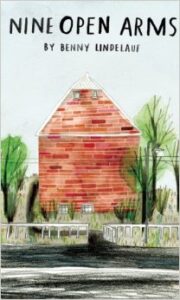 picture book.
Then there are the publishers that take risks by translating books that could be seen to be “too foreign” to American audiences. In 2014 we saw Enchanted Lion Books present us with some remarkable titles that certainly apply. Pomelo’s Big Adventure could never be mistaken for a work of American fiction. Yet as a picture book it really works well. Then there was the middle grade novel Nine Open Arms by by Benny Lindelauf which dared to be funny and strange and unlike anything else on the market. It may have suffered for its book jacket, but the story inside was grand.
On the nonfiction side, I always feel pleased when folks go beyond the usual school report subjects and highlight individuals and tales outside the norm. How precisely did Barbara Kerley convince Scholastic that six-year-olds would comprehend a story about Ralph Waldo Emerson? We all love Ashley Bryan but was a book about his homemade puppets a guaranteed sale? And then there’s the idea of doing a biography of Sun Ra. For kids. Seriously, Chris Raschka? Yet it works. They don’t all work, I should note. That’s the nature of risks, but at least folks were taking a chance on trying something new.
What were your favorite risky children’s titles of 2014?


Added To Cart
RELATED


RECOMMENDED
CAREERS
The job outlook in 2030: Librarians will be in demand
CAREERS
The job outlook in 2030: Librarians will be in demand
ALREADY A SUBSCRIBER? LOG IN
We are currently offering this content for free. Sign up now to activate your personal profile, where you can save articles for future viewing
ALREADY A SUBSCRIBER? LOG IN
Thank you for visiting.
We’ve noticed you are using a private browser. To continue, please log in or create an account.
Add Comment :-
Be the first reader to comment.
Comment Policy:
Comment should not be empty !!!