


2018 School Spending Survey Report
Riffs on Classic Tales | New Fiction for Young Adults
A number of young adult authors continue to adapt, interpret, and honor classic novels and short stories in tales that have proven to be fascinating companion titles to explore in classrooms or as independent reading choices.
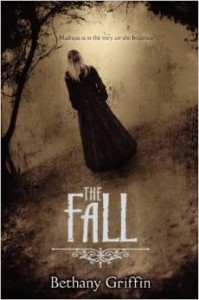 Many children and teens have a fascination for the macabre, which is just one of the reasons Edgar Allan Poe’s work is likely to remain of interest to that audience. Bethany Griffin’s The Fall (HarperCollins/Greenwillow, 2014; Gr 8 Up) retains the best, most gripping facets of this master of gothic's gloomy tale, “The Fall of the House of Usher,” in its protagonists’ obsession with maladies and the creeping evil of the house, while delving even deeper into the characters’ back stories. In the original tale, a former classmate visits the ailing Roderick Usher, the last in a long line of an accursed family. While spending time with him, he assists Roderick as he buries his sister Madeline; eventually it's revealed that she was interred alive. In The Fall, the story is told from the perspective of Madeline, and flashbacks flesh out the missing details. All the elements of the gothic are present, which makes it an ideal supplemental text for teaching the genre’s foundations; the titular house is an imposing, castlelike structure as well as the possible source of all evil. Madeline, her brother, and their parents before them are often subject to inexplicable phenomena both physically and mentally, and the pervasive language choices reveal darkness, stormy weather, and the air of doom. This fascinating, gripping story is guaranteed to end readers back to the original.
 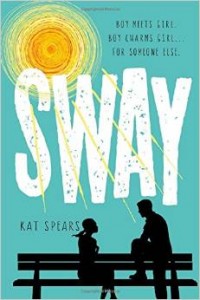 If imitation is the sincerest form of flattery, the literary equivalent may be the update on a classic. In Kat Spears's Sway (St. Martin’s Griffin, 2014; Gr 9 Up), the strong first person narrative is Jesse Alderman’s, a jack-of-all-trades who deals in a wide variety of goods and favors, some more legitimate than others. The rakish charm and questionable behavior of the protagonist pay deliberate homage to Edmond Rostand’s Cyrano de Bergerac, and the central conflict of the novel mirrors that of the play as well. Known for his ability to procure favors and people, Jesse is asked by a class jock for help in wooing a classmate. Ken Foster is no Christian, the nobleman and soldier who entreats de Bergerac in the original story to write romantic missives to his beloved—he is cruel and petty in ways that Christian simply wasn’t—but he has his looks and his bravado. As for Rostand’s Roxane, here she's Bridget Smalley, an almost too-good-to-be-true beauty whose belief in the importance of personality over appearance make her a difficult mark. Jesse falls for Bridget quickly but stays true to his original mission of delivering her to Ken Foster, in part due to his interest in maintaining social credit and respect for his questionable enterprises and in part because he is emotionally closed off and deadened from weathering a family tragedy. Sway will be immensely appealing to young adult readers, especially fans of John Green. But Jesse Alderman has more in common with characters on The Wire than those in Cyrano de Bergerac. He is constantly brokering deals, evading danger, looking out for the hapless and bullied, and participating in conduct that would have never had a place in 17th-century France. Spears imbues her character with an impish spirit, but one that is clearly suffering long before Bridget enters the scene. While the subject matter is often darker than the source material, Sway ends on a high note. The moral quandaries Jesse faces and deals he chooses to traffic in would yield fruitful book-group discussions, especially with older teens who will appreciate the book's nuances.
 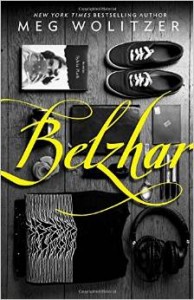 Acclaimed author Meg Wolitzer makes her young adult debut with Belzhar (Dutton, 2014; Gr 9 Up), a spare novel that pays homage in title and content to Sylvia Plath’s The Bell Jar. Jam, the main character, has been sent away to a therapeutic boarding school after struggling mightily with the death of her boyfriend. While both Jam and Esther from The Bell Jar share pathologies, the link between the two is made more explicit by the exclusive class that Jam is selected to attend at the school led by a legendary teacher. The instructor chooses Sylvia Plath’s book The Bell Jar and her poetry as the last texts she will teach before retirement. Each student in the class is given a journal to record their responses. It soon becomes clear that the journals function as a portal to a psychological and emotional space the teens are able to revisit—a safe place that existed before the defining event that wounded them and sent them to the school. With the assistance of the journals and the de facto group therapy that happens in and outside the classroom, Jam and her classmates begin to heal in small ways, even as they worry about what will happen to their in-between world (coined Belzhar) when the diaries are full. The teens who populate these novels are fresh descendants of the characters in the titles that preceded them and can be read as companions to their literary antecedents while serving another generation in the classics. They will inspire discussion and engagement in the classroom. Erinn Salge is the librarian at Saint Peter's Prep, an all boys Jesuit high school. She lives in New Jersey with her husband and their boxer named Cooper.
Added To Cart
RELATED


RECOMMENDED
CAREERS
The job outlook in 2030: Librarians will be in demand
CAREERS
The job outlook in 2030: Librarians will be in demand
ALREADY A SUBSCRIBER? LOG IN
We are currently offering this content for free. Sign up now to activate your personal profile, where you can save articles for future viewing
ALREADY A SUBSCRIBER? LOG IN
Thank you for visiting.
We’ve noticed you are using a private browser. To continue, please log in or create an account.

Add Comment :-
Be the first reader to comment.
Comment Policy:
Comment should not be empty !!!