


2018 School Spending Survey Report
Pyrite Redux: Days of Future Past
Next up in our countdown to the Pyrite: a conversation on science fiction, dystopias, big ideas, rancid politics, and the girls who have just about had enough — girls who chart the world’s meltdown. Taking a look at a dirty and distressing near future, we’ve got A.S. King’s Glory O’Brien’s History of the Future paired [...]
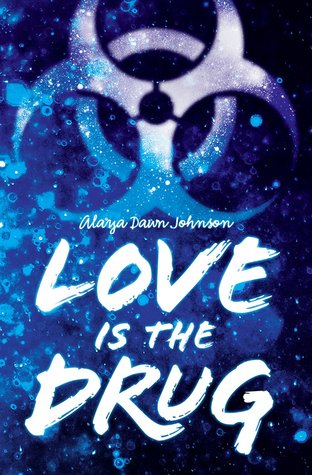
 Next up in our countdown to the Pyrite: a conversation on science fiction, dystopias, big ideas, rancid politics, and the girls who have just about had enough — girls who chart the world’s meltdown. Taking a look at a dirty and distressing near future, we’ve got A.S. King’s Glory O’Brien’s History of the Future paired with Alaya Dawn Johnson’s Love is the Drug.
On the one hand, Glory‘s ambitious science fiction infused novel of weirdness gave me all kinds of conflicted feelings. I loved the ambition of it — King wanted to talk about big ideas (fate, art, communication, friendship), and I loved the outlandish unexpectedness of the plot (bats, dystopias, feminism, slutshaming, STDs — I COULD GO ON AND ON HERE!). But I felt that the novel as a whole didn’t quite work. In the comments, we considered the scenarios that lead to Glory’s dystopia and wondered how likely a scenario really had to be, here, in this purposefully exaggerated dystopian world. Conversation also centered on the nuance — well, actually, the lack of nuance displayed by the dystopia. I totally recognize that, but must also confess that the dystopia sections were my favorite parts of the book…so more conflicted feelings for me!
Speaking of nuance, Karyn had lots of praise for Love is the Drug. Looked at as a science fiction novel that uses elements of a thriller to tell its story, Johnson explores her own big ideas (the human condition, loyalty, evil of government, xenophobia) — but to very different (and, I would argue, much better) effect. As we look at a world falling apart through Bird’s eyes, we experience the action and chaos and tension — and we also watch Bird struggle with questions of “racial identity and identity as a member of a group for whom appearance and status are so complexly interwoven.” We see the complicated, toxic interplay of being black and assimilated in our anti-black culture. Johnson’s narrative never shies from the political (terrorism, quarentine, martial law), but very carefully and intelligently balances the personal (identity, and the brutal struggle that can be dealing with your family).
So we’ve had our say (and had a lot to say), about both of these books. What do you think? I’m ready to talk in the comments!


Added To Cart
RELATED


RECOMMENDED
CAREERS
The job outlook in 2030: Librarians will be in demand
CAREERS
The job outlook in 2030: Librarians will be in demand
ALREADY A SUBSCRIBER? LOG IN
We are currently offering this content for free. Sign up now to activate your personal profile, where you can save articles for future viewing
ALREADY A SUBSCRIBER? LOG IN
Thank you for visiting.
We’ve noticed you are using a private browser. To continue, please log in or create an account.
Add Comment :-
Be the first reader to comment.
Comment Policy:
Comment should not be empty !!!