


2018 School Spending Survey Report
Launching a Dialogue About Sexual Violence in YA Lit—and in Real Life
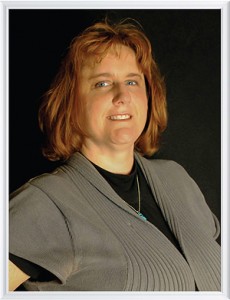
Librarian and "Teen Librarian Toolbox" website creator Karen Jensen is empowering librarians to talk about sexual violence (SV) in books, and more significantly, to help teens who’ve experienced SV themselves.
 Let’s say you’re standing in a classroom of 30 students, evenly split between male and female students. If you go by current statistics, anywhere from three to five of the girls and one to three of the boys will have been the victim of some type of sexual abuse or sexual violence (SV) by the age of 18, according to the Rape, Abuse, and Incest National Network (RAINN). In other words, up to one out of three girls and one out of five boys experience SV by 18. Many suggest that the numbers are actually higher, due to underreporting. A sexual assault occurs every two minutes in the US, according to RAINN. As a youth librarian specializing in young adult services and literature for almost 20 years, I used to hold that information at bay, somewhere in the back of my mind, while I read. The statistics came to the fore in 2011, when I was reading the speculative fantasy Monstrous Beauty (Farrar, 2012) by Elizabeth Fama. Hester, a teenage girl, knows that falling in love will be the death of her, as other women in her family have inexplicably perished after that momentous event. The book also includes two scenes in which Hester is sexually harassed or intimidated; in one case, practically assaulted. As Hester stands in a cave on the edge of the beach, a boy from school approaches her. He starts to get handsy with her. Hester’s fear is starting to bubble over, until a mysterious boy comes to the rescue. At first, these scenes seemed out of place in terms of the rest of the story. But as I thought about it, maybe they weren’t. After that, I really began to think about my own life. I wrote a blog post, “What It's Like for a Girl: How Monstrous Beauty by Elizabeth Fama made me think about the politics of sexuality in the life of girls,” on my site, Teen Librarian Toolbox, outlining the times I’d experienced the same kinds of things. Teens began to share their stories with me. Regarding their experiences of sexual violence and abuse, they told me that it’s just the way things are, the way they always had been, and the way they always would be. There was no hope for change in their words. Around this time, I also began reading articles about the author Laurie Halse Anderson’s work on the behalf of RAINN, for which she is an advocate and spokesperson. Anderson’s book Speak (Farrar, 1999) is perhaps one of the most powerful works written on the topic of sexual violence in the life of a teen. Books, we believe, can help us peel back the layers of life. They make us think. They make us question. They help us build compassion and reveal truths and give victims a voice. They are tools we can use to help change a culture by actively engaging in dialogue with teens and the adults—parents, teachers, leaders—who care about them.
  Out of these ideas, the Sexual Violence in YA Literature (#SVYALit) project was born. It’s a project on Teen Librarian Toolbox, and I run it with authors Christa Desir, Carrie Mesrobian, and Trish Doller. Our goals are simple: To discuss sexual violence in the lives of teens and in YA literature on a bimonthly basis, and to raise awareness of the issues and titles that can be used to discuss the topics with teens. To give librarians, educators, and parents the tools to evaluate and discuss these topics in the lives of teens, and to promote teen reading and literature. It takes place in two parts. In the first, we are holding a variety of live online book discussions about titles involving SV and the issues within. In the second piece, we made a Tumblr to create an archive and hub to share the resources we compile. A variety of authors and librarians will be participating to help build the resources. In the end, we hope that others will be able to utilize these tools to engage teens in thoughtful dialogue about difficult issues. As Carrie Mesrobian says, “I think conversations about sex and sexual violence need to be constant. If we want people to understand the problem of sexual violence and abuse, we need to be talking about sex more in general and not in a scandalized nervous-laughter way or a joking ‘isn't-that-naughty’ way.” She adds, “Books are a great entrance into these conversations, because people are often not used to talking candidly about sex and sexual violence in their own lives." Books are a safe way to help teens process topics we know they are thinking about. Here are some things you can do in your library to get the discussion going in your library—and also implement ways to help teens who themselves have been impacted by SV.
 - Contact your local hospital and see if they have a SANE nurse (Sexual Assault Nurse Examiner). SANE nurses can come to your school and library and give talks about healthy relationships, consent, unhealthy and abusive relationships, recognizing the signs of sexual violence and more. They will usually do this for free as part of their outreach.
- Put together a panel of local communities who work with youth to discuss the various resources in your immediate community that can help teens. Or have a health fair and include this type of information.
- Have a book discussion group on the various titles we are discussing in SVYALit, and watch the author discussion panels.
- At the very least, share relevant information with your community by building displays, putting together booklists and resources, and discussion guides. For example, a variety of discussion guides for Speak can be found online.

Added To Cart
RELATED


RECOMMENDED
CAREERS
The job outlook in 2030: Librarians will be in demand
CAREERS
The job outlook in 2030: Librarians will be in demand
ALREADY A SUBSCRIBER? LOG IN
We are currently offering this content for free. Sign up now to activate your personal profile, where you can save articles for future viewing
ALREADY A SUBSCRIBER? LOG IN
Thank you for visiting.
We’ve noticed you are using a private browser. To continue, please log in or create an account.
Add Comment :-
Comment Policy:
Comment should not be empty !!!
Steven Parlato
Dear Ms. Jensen, A YA author, I was told of your project by a fellow member of Uncommon YA, a collective of writers of gutsy, realistic YA fiction. I'm so pleased to hear of your SVYALit project, as it is so clearly needed. The statistics on SV against teens and preteens are appalling, and something I take very personally. My debut novel, THE NAMESAKE (Merit Press, 2013), deals with fifteen-year-old Evan Galloway's struggle in the aftermath of his father's suicide. In his quest to understand his father's tragic choice, Evan uncovers the dark secrets of the abuse perpetrated against his father as a young boy. The book deals with the generational reverberations of sexual abuse, doing so in an honest yet hopeful way. I've included links to the Kirkus & PW reviews of the novel for your information. http://www.publishersweekly.com/978-1-4405-5457-5 https://www.kirkusreviews.com/book-reviews/steven-parlato/namesake-parlato/ As someone whose life was shaped by childhood sexual abuse, I would be very interested in taking part in your project in some way. Your goal of shining a light on this dark issue and giving voice to the voiceless is one close to my heart. Thank you for your continued good work. I hope to speak and/or correspond with you soon. All best, Steven ParlatoPosted : Mar 14, 2014 09:03
Alicia
Great work, Karen! This is definitely a topic that needs to be discussed and brought to the forefront. Another YA fiction title that deals specifically with dating violence and portrays a frighteningly realistic depiction of a girl stuck in the cycle of violence is Lily and Taylor by Elise Moser (Canadian author). The book does a great job of handling a the complex and often seemingly irrational responses to abuse. It was recognized as a 2014 Best Fiction for Young Adults selection. Definitely one to check out.Posted : Mar 14, 2014 01:50