


2018 School Spending Survey Report
Nurturing “Food Explorers” with Spoons Across America
When it comes to making, what could be more fun than playing, experimenting, and teaching with food? Ali McDowell of Spoons Across America talked to SLJ about the organization's approach to culinary education, with advice and resources on helping kids and families eat well.
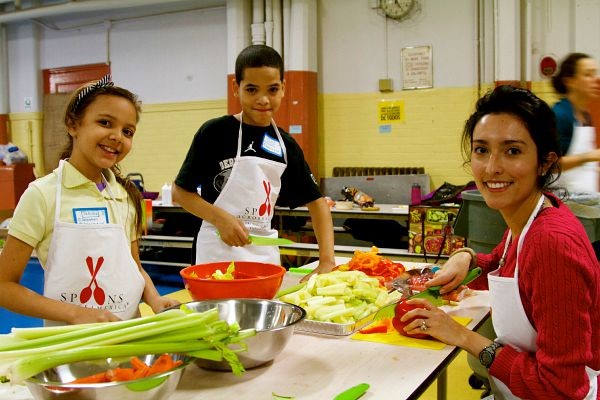
Preparing for a dinner party. Photo credit: Spoons Across America
When it comes to making, what could be more fun than playing, experimenting, and teaching with food? Culinary education for kids is the forte of Spoons Across America, a New York-based nonprofit organization dedicated to helping children, teachers, and families explore the joy of cooking and the benefits of healthy eating. Edible maker projects will be featured in a September 30 session led by Spoons Across America’s Ali McDowell as part of the SLJ and Library Journal Maker Workshop, a four-week professional learning course for librarians and educators. McDowell, the organization’s director of programs and partnerships, talked to SLJ about the philosophy of “Spoons,” with some advice on how to let kids’ natural interest and enthusiasm lead them toward good nutrition and why the family meal is so important. My younger son’s school participated in a Spoons Across America program here in New York City. It was intriguing to see the emphasis on taking pleasure in food. Sure, they explored healthy eating through an exploration of the local green market, but there was no heavy-handed lecturing about diet. How do you balance fun, hands-on learning with the need to address nutrition? Perhaps there’s a lesson there for the rest of us. At Spoons Across America we like to think about the fact that we are developing "food explorers" who approach food and eating with a sense of adventure and wonder. Our hands-on programs weave in lessons about nutrition by providing opportunities for kids to make meaning through exploration and play. So instead of telling kids not to eat or drink too much sugar, we have them discover it on their own. We have discussions about portion control or reading food labels in the context of tasting, cooking, and eating, rather than as a lecture. When parents report that their kids are independently checking food labels or reducing their consumption of soda, we know we are on the right track. At the end of all our programs, we provide take home activities, tip sheets, etc. to extend the lessons beyond the classroom. There’s more to it than food itself, of course. “Spoons” places some emphasis on the family meal. Why? And what can educators and librarians do to help? The dinner (or breakfast, lunch or even snack) table is an important meeting place for families. It's where the "business" and "busy-ness" of the day can be discussed, shared, and processed. Studies have also shown that adolescents who eat dinner with a parent regularly eat more fruits, vegetables, and dairy foods than those who do not and are far less likely to engage in risky behaviors such as drinking and smoking. One of the things that we do is provide "Conversation Starters"—many from the Family Dinner Project—to encourage talk around the table, both at home and during our classroom sessions. Librarians and educators can provide similar resources, for example, book lists that families can read together or on their own and then talk about around the table (see food-related resources from SLJ below). Hosting a family potluck, picnic, or other get together is another way to provide opportunities for families to connect and to model this ideal. We do understand, of course, that families are busy and that schedules don't always allow for extended family meals. Setting a goal for even one to two nights a week for the whole family to eat together is helpful or remembering that sometimes the family table is most full at breakfast and using that accordingly is important. “Convenience does not have to equal junk food,” you wrote in a blog post. That’s a difficult assumption to overcome. What’s your elevator speech on fresh food? Find a few things that you and your children like and start with those things. If bagged baby carrots are easy for the kids to grab, then use them and maybe prep some "regular carrots" into sticks and have them ready as well. I love to cook and engage my daughter in a lot of meal prep, but sometimes I just want to get a good meal on the table. It doesn't always have to be gourmet, but we always have a salad or some fresh veggies to dip. Keep at it! Also, accessibility can be an issue. What can be done on the local level to help make sure that fresh food is available to all? In NYC, Green Carts have become more and more prevalent in neighborhoods that had previously been fresh food "deserts." These carts are providing fresh, fairly inexpensive produce to people who have not had access. It's about education as well, so providing families with information about where they can find this food is important, too. In one of our programs that we have implemented in community centers throughout the city, families learn about local farmers markets and recipes to use. Our readers, including our maker workshop participants, are always looking for meaningful hands-on activities they can incorporate in their schools and libraries. Do you have any favorite ideas and resources you can share? Our focus on creating "food explorers" is designed to get kids excited about tasting and experimenting with food. While our programs incorporate cooking, it's the sensory experience of the food that we want kids to connect with. Giving children the opportunity to taste, smell, and really experience all the ingredients they are working with is a great experience for them. Incorporating garden and farm-based activities are important as well. Children love to watch something grow and it's even better when it becomes something that they can eat. Growing sprouts, baby lettuces, potted herbs—or given space and time, tomatoes and other fruits and vegetables—provide opportunities for cross-curricular connections, including science, math. Then being able to eat the "literal" fruits of their labor or use them in a recipe is a magical experience for them. Incorporating fiction and nonfiction books into these models is also a great way to bring home our message. There are some many wonderful books available that are about food, cooking, where food comes from, life on the farm, garden, and family food traditions. We suggest pairing them with a tasting or cooking activity.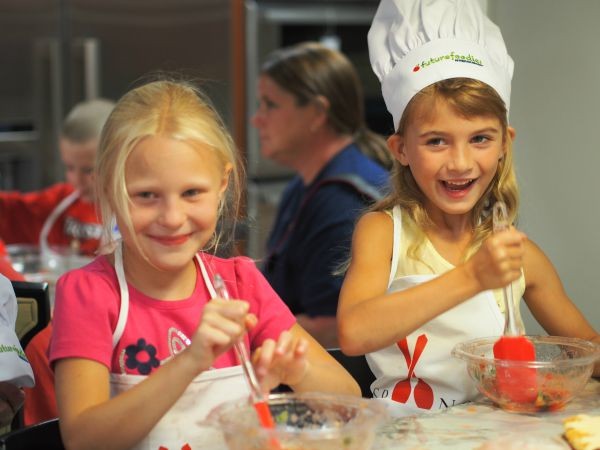
Making Sauce. Photo credit: Spoons Across America
Recommended resources:
The Family Dinner Project National School Garden program Spoons Across America blog From SLJ and Library Journal: Dig It! Library Gardens Sprout Up Coast-to-Coast Read It, Make It, Eat It | Great Picture Books with Recipes “Four Centuries, Four Families, One Delicious Treat” | Spotlight Programs that pop: cooking programs Trends, Traditions, Tastes: Middle Eastern Cooking | Collection Development, July 2015 Feeding Minds and Bodies: Libraries, Nonprofits, and Authors Offer Food Education Q & A with ‘A Moose Boosh’ Author Eric-Shabazz Larkin
Added To Cart
RELATED


RECOMMENDED
CAREERS
The job outlook in 2030: Librarians will be in demand
CAREERS
The job outlook in 2030: Librarians will be in demand
ALREADY A SUBSCRIBER? LOG IN
We are currently offering this content for free. Sign up now to activate your personal profile, where you can save articles for future viewing
ALREADY A SUBSCRIBER? LOG IN
Thank you for visiting.
We’ve noticed you are using a private browser. To continue, please log in or create an account.
Add Comment :-
Be the first reader to comment.
Comment Policy:
Comment should not be empty !!!