


2018 School Spending Survey Report
STEAM at the Library Supports Literacy, Common Core | ALA 2013
Do you know STEAM (Science, Technology, Engineering, Arts, and Mathematics)? From hosting “parties” with traditional building blocks to using science kits with young children, ideas for STEAM programming in libraries were shared at a recent panel at the ALA (American Library Association) annual conference.
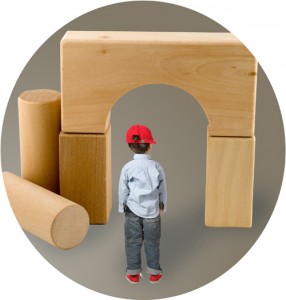 By Lisa G. Kropp Do you know STEAM (Science, Technology, Engineering, Arts, and Mathematics)? From hosting “parties” with traditional building blocks to using science kits with young children, ideas for STEAM programming in libraries were discussed at a recent panel at the ALA (American Library Association) annual conference. The panel, “What’s Hot in STEAM Education: How Using ECRR2 Supports Literacy, Common Core, and School Success,” also honed in on using hands-on activities to build skills outlined in the updated Every Child Ready to Read initiative. At the packed, standing-room-only event, moderator Christy Estrovitz, early literacy coordinator of the San Francisco Public Library, hosted panelists including Dr. Judy Cheatham, vice president of literacy services at the organization Reading is Fundamental (RIF), along with Eva Mitnick, coordinator of children’s services at the Los Angeles Public Library (LAPL) and Susan Anderson-Newham, early learning supervising librarian at the Pierce County (WA) Library System, and a 2013 Library Journal Mover and Shaker. Judy Cheatham of Reading is Fundamental: Resources for teaching STEAM and ECRR What does STEAM programming mean to public libraries and early literacy services? According to Cheatham, STEAM has the potential to help position public libraries at the forefront of language and literacy development, particularly when working with parents, young children, and teachers. Founded in 1966, RIF is the oldest, and largest, children and family literacy non-profit in the US. Its mission is to motivate young children to read by working with them, their parents, and community members to make reading a part of everyday life. Cheatham noted that the RIF site offers a multitude of resources to use when planning library STEAM programs. RIF’s 2012-2013 Multicultural Book Collection focuses on books that enhance STEAM education, and related four-page resource guides feature a wealth of information and suggested activities for parents, librarians, educators, and community coordinators. The resource guides suggest simple ways to add STEAM activities to literature-based projects. “Teachers don’t have to be Albert Einstein’s offspring to do STEAM activities,” Cheatham noted, challenging the audience to infuse more STEAM into their programming. Why focus on STEAM education at such an early age? Cheatham explained that in order for U.S. students to compete in a global economy and job market, we needs to improve their math and science skills. Middle School is the wrong time—too late—to introduce complex science and math terms and vocabulary, she said. Research shows that young children’s brains are like sponges, she noted: eager to absorb information on a wide variety of topics. Cheatham cited statistics showing that 75 percent of students who are poor readers in third grade remain so in high school. After third grade, cognitive demands increase yearly, as does the pressure to master the new Common Core State Standards. If we don’t start introducing scientific vocabulary to kids at a younger age, she argued, we are going to lose the war on literacy and set students up for failure down the line. Children’s librarians can serve their communities by creating STEAM programs for parents with young children, and by offering educators access to STEAM-rich materials and activities, Cheatham noted.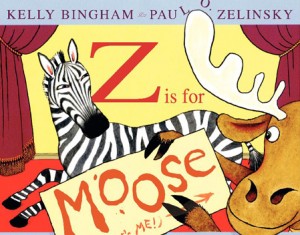
RIF recommends using Z is for Moose with STEAM activities.
She also stressed the need to target learners earlier through workshops incorporating ECRR best practices: talking, singing, writing, reading, and playing. One book that RIF recommends for STEAM activities is Z is for Moose by Kelly Bingham, illustrated by Paul O. Zelinksy (HarperCollins, 2012). RIF’s suggested related activities for the book listed included all five STEAM subjects. Books that encourage STEAM allow librarians to teach complex vocabulary to parents, teachers, and young children in a fun way, Cheatham reiterated. Ending her inspiring talk, she reminded the audience that vocabulary needs to be heard, used, and practiced. STEAM at the Los Angeles Public Library: Partnering with the California Science Center During Mitnick’s presentation, she described a new STEAM program hosted by LAPL in partnership with the California Science Center. LAPL has 72 branches and a central library, all of which follow ECRR practices. Their recent collaboration with the California Science Center introduces preschool children to science concepts using the ECRR principles. “Preschoolers are natural scientists” because they question everything, Mitnick noted. The goal of the project was to create a program promoting STEM activities across the curriculum and referring to the California Preschool Curriculum framework. Also, she said, parents were provided with resources to support their child’s STEM experiences. In January, four LAPL branches began working with preschoolers and their parents, using science kits created by California Science Center. Librarians received training during workshops at the Science Center, whose staff created six kits around the following topics:- Rocks and Minerals
- Insects
- Habitats
- Seeds to Plants
- Balls, Ramps, and Rollercoasters
- Build It!
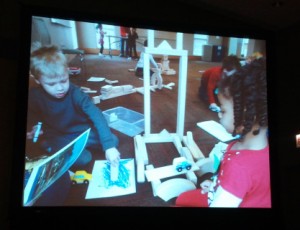 Anderson-Newham started her talk by exclaiming, “Block parties are completely addictive!” She was referring to once-a-month events in which reps from the local Head Start center came to co-lead play sessions, using traditional maple blocks, with trained librarians. Like Cheatham, Anderson-Newham emphasized that STEM activities should start in early childhood settings, when children are at their most inquisitive. During the block parties, librarians announce two simple rules: participants cannot throw blocks or knock down anyone’s structure. She went onto explain the seven stages of block play:
 - Carrying blocks
- Stacking–both horizontal and vertical
- Bridging
- Enclosures
- Patterns and Symmetry
- Early Representational
- Later Representational
Lisa G. Kropp is youth services coordinator at the Suffolk (NY) Cooperative Library System.

Added To Cart
RELATED


RECOMMENDED
CAREERS
The job outlook in 2030: Librarians will be in demand
CAREERS
The job outlook in 2030: Librarians will be in demand
ALREADY A SUBSCRIBER? LOG IN
We are currently offering this content for free. Sign up now to activate your personal profile, where you can save articles for future viewing
ALREADY A SUBSCRIBER? LOG IN
Thank you for visiting.
We’ve noticed you are using a private browser. To continue, please log in or create an account.
Add Comment :-
Be the first reader to comment.
Comment Policy:
Comment should not be empty !!!