


2018 School Spending Survey Report
From Hitchcock to Hunger: David Baldacci on Mysteries, Museums, Writing, and Literacy
SLJ caught up with prolific author and history buff David Baldacci for a candid interview about his new YA book The 39 Clues: Cahills vs. Vespers: Day of Doom (Scholastic), his writing inspirations, the importance of museums and libraries, his lifelong passion for literacy, and his belief that literacy is the key to ending poverty in America.
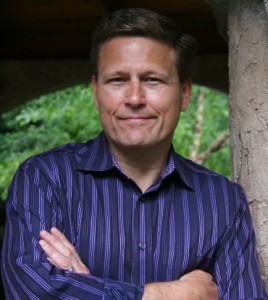
Author David Baldacci. Photo credit: Travis Riggs, Creative Edge Studios.
David Baldacci has been crazy busy these past few months, yet he has no intention of slowing down. The prolific author’s new book, The 39 Clues: Cahills vs. Vespers: Day of Doom, the latest and final title in the bestselling Scholastic series for young readers, has just debuted, but he’s also deeply invested in other upcoming projects. These include post-production on a film version of his adult novel Wish You Well, for which he also wrote the screenplay; an as-yet-unnamed new network television series based on five of his "King of Maxwell" books; the upcoming sixth book in that series; and his ongoing and passionate involvement with the Wish You Well Foundation, his charitable literacy organization that has funded local outreach projects in all 50 states. Working on a variety of projects is such an energizing experience that he’s always on the lookout for something new, he tells School Library Journal. “I would never say never 'no' to anything at this point,” he says. “When you get to a certain age and you realize you have lived longer than you have left to live, time does become more and more precious. If you have things you want to accomplish, you should get to it. I feel very liberated by that.” SLJ interviewed the self-proclaimed history buff ahead of a short promotional tour for both the new book as well as “Decoding History,” the free webcast he hosts that takes viewers on a virtual field trip behind the scenes at Smithsonian’s National Museum of American History. In our candid chat, he shares some of the inspirations for his varied writing projects, fun details about “The 39 Clues” and what he sought to bring to the series in its final installment, the important role of museums and libraries in creating lifelong learners, his own passion for literacy, and his belief that literacy is the key to ending poverty in America. Can you tell us more about the experience of filming the “Decoding History” webcast? What was that like for you? It was fun! I got to wander around one of my favorite museums and talk to a bunch of very interesting people and see the fascinating materials they were working on. What was your favorite artifact that was included in the virtual tour? I think probably Lincoln’s watch, just because of all the graffiti that people had written into it over the years. The first inscription—he had put the watch into the repair shop and this guy was working on it when a man came in and said ‘Fort Sumter has just been fired on.’ And the Civil War started, and he wrote on the back of Lincoln’s watch. And Lincoln never knew any of this, because who opens the back of their watch? And it said, ‘Fort Sumter has fallen, Thank god we have a government.” And then years later another watchmaker inscribed his name in it, and then the creepy part [is that] years later, Lincoln had put his watch in to be repaired [again] and somebody had written the name Jeff Davis, the Confederate president, inside Lincoln’s watch. [laughs]. That was pretty remarkable. Had you known any of this prior to filming? No, I really hadn’t. I knew they had a lot of memorabilia from Lincoln’s time, some of the clothes that he wore, his top hat and things like that, and I’d been there. I’ve been to a lot of the exhibits in areas of the Smithsonian museum but I didn’t know about that particular history. So you learn it as the viewers learn it? Oh yeah, absolutely! And a lot of the stuff that we talked about, [like] slave pottery, I didn’t really know anything about, [like] General Sherman’s battle flag. What’s kind of cool about that one is we were talking to one of the conservationists down there and she was working on Sherman’s battle flag that he had after the Civil War and it was all in pieces and tatters. His daughter had given it to the museum a long time ago and they finally scheduled it to be preserved and brought back, so while we’re looking at that, the curator opened up one of those tables that have these long drawers and I saw this long flag staff but it was all gilded, stuck in this drawer. I don’t even think we were filming this, and I said, ‘What is that?’ and she said, 'That was the flag staff of General Cornwallis’ flag when he surrendered it to Washington at Yorktown.' [laughs] And it’s stuck in a drawer! And she opened another drawer in the same place, and the film crew had a number of young women in their twenties, and in that drawer was a suffragette banner that had 1913 on it, which is ironic because it’s 100 years later. And all the young women are asking her, ‘What is that? What is that?’ And she says, ‘well, that was the women’s fight to vote in the United States; they were fighting for it in 1913 and didn’t get it until several years later.’ And you could see this epiphany in the young women’s heads, this ’Oh my god, 100 years ago, we didn’t even have the right to vote in this country.’ And they were all crowding around asking her questions about the banner. And it’s what a museum should do! It should electrify and inspire. It was pretty cool. I had to step back and take it all in, and I had this big smile on my face. I mean, I have a daughter who is 20, and so she’d be thinking the same thing. To see the faces of these young women, it just clicked. It really clicked when they unrolled that banner. And it was also almost like an omen [that] it just happened to say 1913. I think that’s really what got their attention more than anything else. What a great moment. It really was. So you are a museum buff and a history buff? I am, yeah. I love history. You know as a kid, I was already drawn to these kid biographies; they were a series of biographies that were really popular when I was growing up that dealt with very famous people but only in their childhood. And so it would chronicle their lives up to age 18, you know Thomas Edison [for example], and then the last page of the book was ‘and then he went on to become a famous inventor.’ It would sum up the rest of his life in a couple of sentences. But I found that fascinating, that you could see where these very famous people came from. I was a political science major in college; I minored in history, took a lot of history classes. I’ve always been fascinated by it. Is that what attracted you to “The 39 Clues” series? It did! When Scholastic approached me, I started checking them out, and I saw that they had a very big educational component—even as you’re being excited and entertained…and you’re running around and trying not to be killed, they took it to a lot of fascinating places around the world. And it really had a big dose of history in that, and that really I think is what pretty much drew me to that. Because they just called me out of the blue…I asked them ‘why did you think of me? I’m not really known for that’. And they said, ‘we’ve read some of your books where you had young adults in them and you really wrote the characters very well and we think you could do a great job with this.' I did have some fun with them. When I went up to meet with them in New York before I committed to it, I said, ‘Alright let’s set some parameters here, because I’m new to this series and really don’t know a whole lot about it…first and foremost, can I kill people?' And they sort of looked at each other and said, ‘Um, yeah, people have died in the books before.’ And I said, ‘Okay, is there anyone I can’t kill?' And they said, ‘Well, Amy and Dan Cahill, the protagonists of the series [are] very popular and we’d really like it if they could survive.’ And I said, ‘Okay...can I maim them?” [laughs] By this time, the Scholastic people are looking at me thinking, ‘oh my god, we just made the biggest mistake in the world by calling this guy; he’s a psychopath!’ And I told them I was just pulling their chain! I had a blast writing it. So the Cahills don’t get maimed in this book? No. They come close, though! They really come close. [laughs] But I spared them. It’s a dangerous book! One of the editors [emailed me] after she’d read it [to tell me] something like, ‘I’m sitting in my closet in the dark with my hand over my chest trying to keep my heart from bursting out of it. Job well done!’ Later on, somebody else from Scholastic wrote me and said, ‘We’ve never had in all of our history such cool weaponry in our books before!’ Was that experience writing for young adults really different than writing for adults? I don’t think there’s a huge difference; they’re both difficult, writing for adults and writing for young adults, they’re both readers. And really, what thrills kids these days, what you could envision 5, 10, 15 years ago does not thrill kids anymore, so you really have to bring your ‘A’ game in as far as plotting and these bursts of surprise and twists and turns. I remember when my kids were 7 or 8 years old, way back, and I remember coming downstairs and saw that they were watching Jaws on television. So I ran down to change the channel and I realized they were both laughing, just on the floor laughing at how stupid the shark was and how silly and how completely fake it was. This was a movie that, when I was 16, put me in therapy for 2 years, along with everybody else in America! [laughs] So it didn’t bother them, didn’t scare them, didn’t thrill them. It was a total farce as far as they were concerned. So in writing this book, I had to bring my adult plotting skills; kids are very smart. They’re exposed to a lot more than I was when I was their age. And they’ve seen everything! And I don’t write down to kids. I try to write up to them to challenge them, but keeping in mind that kids these days are very, very smart. What inspired your part of the series? How is it different from the other books? Being the last book, I had to wait to see what everyone else was doing—obviously if somebody had died in an earlier book, I couldn’t use them in mine—and to see where the action and the character flow and the movements were going. There’s a lot of characters in the '39 Clues' books, that was the one of the first things that struck me. So I had to sort of divide and conquer if you will, where I would have sets of them doing certain things. But at the same time, when you have a lot of characters, whether it be in a young adult or an adult book, the challenge is to make them fully formed, three-dimensional to the extent that you can. And doing that, you have to give them page time. Just like in a movie, you have to give actors film time for the audience to relate to the character. So even though I had a lot to deal with, what I would do was move from group to group to group, and I really delved deep into them when I was with them. And showed their interior monologues, showed the interaction they had with each other, showed their thoughtfulness and trying to figure out things. And obviously Dan and Amy are the two most important characters in the book, and one [where] I really tried to emphasize their relationship the most. You’ve got to know them better than others. The only opportunity I have for readers to connect to the characters is to really show them—their weaknesses, their foibles, their doubts. I don’t want to make them super people, because they’re not. They’re ordinary people that are thrust into extraordinary situations, and you hope they can rise to the challenge and overcome the obstacles put in their path. What are you most proud of in this book? In a book like this, you can’t forget about the antagonists, and I really spent a lot of time with the villains. I hate books where you have this megalomaniacal person and he’s doing all this crazy cool stuff, and then you’re wondering, ‘oh my gosh, what is the motivation for this? I’d love to hear his back story.’ And at the end of the book, the author says, ‘yeah, and he was just nuts.’ With no explanation! [laughs] I like to throw the book across the room, because the fascination with villains is a psychological motivation; where did the monster spawn from? So I spent a lot of time with Vesper and with Isabel, trying to let people understand where they were coming from. And Isabel was a very sad-to-evil character, but in this book, I wanted to give her some sense and level of redemption at the end. And the action scenes are the level of what I would write in an adult book. And the scenes on the train, I think, are pretty exceptional. Tunnels...I like dark spaces and claustrophobia. You put people in situations like that and cool things can happen. It definitely raises the tension. It does! And that’s why I love Hitchcock. He was a claustrophobic director, and he put you in small spaces and you have to sit there and watch. One of the best films he ever did was Rope, and that was filmed in one room with four characters. And it was just incredibly tense and suspenseful. He just put you there because you were so close to everything. That’s why I like to write books like this—you are just in the moment. What are some of your upcoming projects? What’s next for you? I have a new adult book coming out, a sequel to a book I wrote last year called The Innocent. I have a feature film that we filmed in November called Wish You Well, and it stars Ellen Burstyn, Josh Lucas, and Mackenzie Foy from the Twilight series. We’ll be done with that by the end of March. I also have a network television series that will premiere in June on TNT; I partnered with Shane Brennan, who does NCIS and NCIS: LA. It’s [based on]...characters from five of my novels, and Shane is building a weekly series based on their exploits. So I’m one of the producers on that as well, and that’s been a lot of fun to work on. The book I’m working on right now is another adult book; it’s the sixth book in the [“King of Maxwell”] series; that will be out in November. How is writing for the screen different? And adapting from your own work? Film is a collaborative affair; you have to deal with directors, actors. As the screenwriter on this film, I was rewriting scenes as we were shooting—conditions on the ground, actors that we had available, things that you thought would work on paper and when you got to the actual location they didn’t. When you have an Academy Award-winning actress waiting in front of a camera while you’re sitting outside scribbling a new script for her to act in a few minutes, it’s the emotional spectrum, both exhilarating and terrifying. You have to marshal the fear and throw it into the creative process and make it as good as you possibly can. I like writing under pressure; I’ve found that that was very stimulating to me and making a film is a very, very difficult journey to take. There are always issues and problems that come up, and you have to deal with them one by one and keep going. So I learned a lot. How do you work on so many projects simultaneously? Do you have a war room? I compartmentalize. So I don’t have to have the perfect place to write. The perfect place to write is in your head, if you’re in the zone and you’re totally focused. But it’s so much fun though, because when you have a variety of writing projects going on and you sort of get stuck, or you just have written yourself out in one of them and you have nothing left in your tank to write about that story at the moment, to be able to jump over to something totally new, it’s like a catharsis, and you refresh yourself. So I like the multiple projects, because it really allows me to exercise my full spectrum of creativity. What’s on your wish list for future projects? I would like to do more independent film, both as a screenwriter and as a producer, whether it be an adaptation of one of my works or another work that I’m interested in. I think that that sort of fleshes me out a little bit more, and writing for film I think makes you a better novelist, too, because scripts are so difficult to write. Even when you’ve written them and you think it’s the final version, it is not. Once you get into the actual filming, you’re going to go through another 15 or 20 renditions of the film, it’s going to change every day. And you’ll make it better and better and better, hopefully, but it makes you a very efficient, economical writer. Every scene in every film has to have at least two purposes for being there. Otherwise, it costs too must and the film time is too precious to waste, so it makes you think so many different steps ahead, and it makes you sort of validate everything you write. Every cue has to hit and vibrate and resonate and if it doesn’t, you’ve got to do something else. Can you tell us more about your involvement with the library community? I’ve been long associated with the Library of Congress, and I’m actually on the board of the National Book Festival here in Washington, D.C., and I’ve been a visiting author there numerous times. And one of my really good friends is the president of Smithsonian Libraries, Nancy Gwinn, I actually made her a character in this book. And I was a library rat growing up. One of the reasons I became a writer was because I was a voracious reader as a kid. I got to the point where I would read all these great books and thought to myself, ‘this is what I want to do. I want to write stories like this and enthrall other people the same way that I’m enthralled by picking up a book that someone has created out of his or her imagination just for me to read and enjoy.’ So the library association was very natural for me. I’ve done hundreds and hundreds of library events across the country in the last 17 years, and the Wish You Well Foundation works heavily with libraries across the country. Can you tell us more about your Wish You Well Foundation? My wife and I founded the Wish You Well Foundation about 13 years ago. [The board of directors] meets six times a year, and we get about 5,000 grant applications for funding. Even though we’re not a huge foundation, there’s a lot of need out there, and these are typically from literacy organizations across the country. They could be small mom-and-pops; they could be part of large organizations. We review all the applications and we fund as many of we can. We’ve funded programs in virtually all 50 states; not just private [institutions], we get requests from public school systems. They have a library but no money in the budget for books. It’s a very important, the work that literacy foundations do, because reading is the most fundamental skill you’re going to have. It’s gotten to be a cliché and that really, really does not do justice to how important it is, because it’s really the bastion, the foundation, for democracy. If you can’t read, you can’t think. Reading and thinking go hand in hand, and if you can’t think and come up with your own ideas and your own opinions on important issues, how can you be a working participant in democracy? You can’t. And all of a sudden, your opinions are not your own, your opinions are spoon-fed to you by others, and after a while we are all marching in lockstep, and it devolves very rapidly into something that none of us would want. Plus, a lack of reading translates completely into a lack of job skills, a lack of marketing skills, it’s a generational thing. So if we solve the issue of literacy in the United States, that’s a big problem. One hundred million adults are reading at the two lowest levels of literacy. In many huge metropolitan areas, the high school graduation rate is less than 40 percent. We are turning out a million people every year who don’t even have a high school diploma and we’re expecting them to compete against kids from South Korea who have PhDs. We’re going to lose that battle every time. So that’s why we’re rapidly becoming an illiterate nation. And every social ill associated with that, from crime to poverty, will only be enhanced by that. So that’s why it’s so important, that’s why we’re doing our little part to try to turn that around, but it is an uphill battle. And the problem is outstripping the resources, unfortunately. I’m pretty passionate about that, but after a while, you get tired of going and speaking about these things because with the audience, you are preaching to the choir. And you’re also preaching to people who are in denial. You come up to a crowd and everybody there has an advanced degree and they have good jobs and they say, ‘Aren’t you talking about Afghanistan?’ And I say, ‘Absolutely, I am talking about the United States.’ It’s just a hard sell. But it is critical. I understand there are other components to the work the foundation is doing. Can you tell us more about the "Feeding Body and Mind" program? In addition to applications for money to pay for tutors, materials, space where people could learn, we were getting [requests for] a food component. So we delved into that and tried to understand where that was coming from. Most of these people are on food assistance and if they are coming in the evening to learn how to read, they’re probably going to give up their meal. So we need to be able to feed them, and they might bring their kids with them and we feed the kids as well. The whole idea, we understand, is illiteracy and poverty go hand in hand, so we started this other program under the umbrella of the foundation. When I go out on book tours—and over the years I’ve gotten other authors to help me with this—the fans come in and they fill boxes with new and gently used books of all types. And once the boxes are full we pay to have them shipped to the local area food banks. Food banks across the country already have these huge pipelines of distribution, and all we did was add books on top of the food they already distribute. And the reasoning is, you need to food to stay alive but honestly, that alone won’t get you out of the cycle of poverty. [It’s] books in the home, reading and literacy—not just for yourself but for your kids, because poverty and food assistance are a generational thing. It’s a cycle one after another. So [it’s] to break people out of that, to have books in the home. I can’t tell you how many homes in the United States have never had a book in them, it’s so disheartening. Over the last 3 years, we’ve collected over a million books as part of this program. So it’s been a very successful program, a very simple idea that we executed in a very simple way just using this already present pipeline. We’re always looking for things like that that can do more, and better serve people. Thank you so much for taking the time to talk to SLJ. I really enjoyed it, too. You know, I think about these issues a lot and I’m involved with them and it’s nice to sit down and talk to people who share those same values.
Added To Cart
RELATED


RECOMMENDED
CAREERS
The job outlook in 2030: Librarians will be in demand
CAREERS
The job outlook in 2030: Librarians will be in demand
ALREADY A SUBSCRIBER? LOG IN
We are currently offering this content for free. Sign up now to activate your personal profile, where you can save articles for future viewing
ALREADY A SUBSCRIBER? LOG IN
Thank you for visiting.
We’ve noticed you are using a private browser. To continue, please log in or create an account.
Add Comment :-
Be the first reader to comment.
Comment Policy:
Comment should not be empty !!!