


2018 School Spending Survey Report
Breaking Bias: Inside Maureen Johnson’s ‘Coverflip’ Challenge
Can you imagine what the covers of classic literary works written by men might look like if those books had been reclassified as “by and for women”? How would the designs be different—and how would that impact how we perceive those books? These are the questions YA author Maureen Johnson posed to her fans in “Coverflip,” a challenge to gendered book covers that limit their audiences.
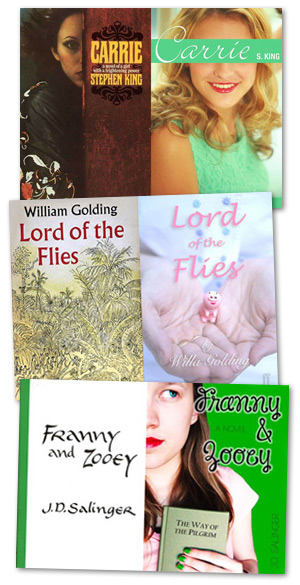
From top, created by: Mellie Ryan; BGM;
and Hilde Kuyper.
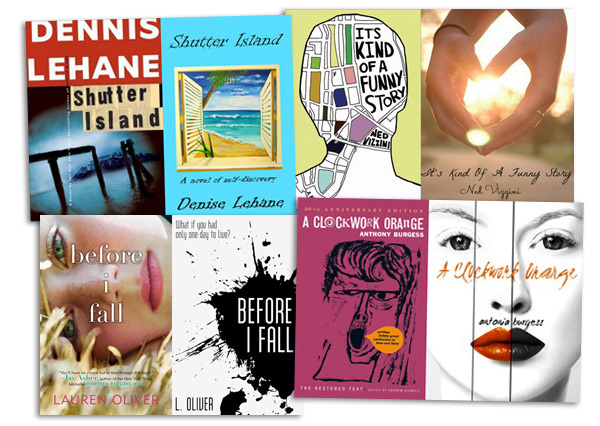
Created by: Kuelthador; Miller; Mellie Ryan; and Brandy.
(All credits from left to right, top to bottom.)
What also surprised Johnson, she says, is the storm of media coverage that followed—especially in the UK—along with intense online discussion as fans and other bloggers who wanted to weigh in on these issues of publishing, culture, and gender sought to be heard. At the beginning, “I definitely didn’t think I was launching anything,” Johnson says. “It started with a simple tweet about the gendered nature of book covers. But it only takes one shot to start a battle, so it all kicked off.”
Did media outlets understand the type of conversation she was hoping to inspire, or did they miss the mark? “Some did, some didn’t,” Johnson says. “Strangely, the coverage really took off in England. It was all over the place there—The Telegraph, The Guardian, The Daily Mail. Even Jacqueline Wilson chimed in, which was amazing," Johnson says.
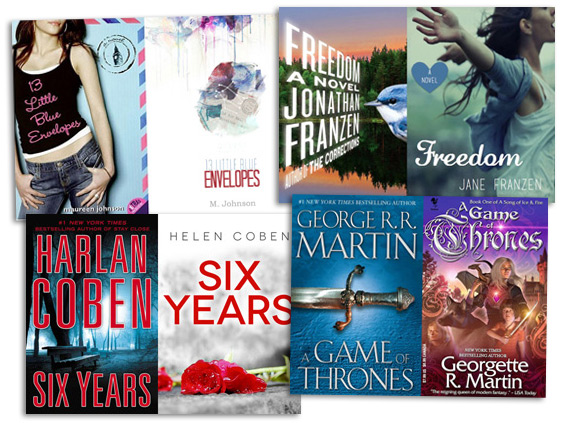
Created by: Stephen Denes; Book Revels; slodwick; and Electric Sheep Comix.
"The problem was, a lot had headlines that basically said, ‘Look at these trashy girly chick lit covers!’ Which misses the entire and extremely subtle and prickly point of how we define ‘girly’—and why ‘girly’ also seems to lead to the default assumption that said books are light, breezy, and trashy, often of generally poor quality.” This is the heart of the issue, Johnson notes.“The term “chick lit” drives me absolutely insane, as it has no real, identifiable meaning except books by women, for women,” she explains.
“I’ve never seen ‘chick lit’ used in a positive critical light. It’s invariably something seen as lesser than literature. It’s wrong. The label gets slapped on things pretty indiscriminately. The only common factor is that the books are by and for women. Period. Easiest case in point: Jane Austen. I’ve seen so many people call Jane Austen ‘chick lit.' It goes on and on.”
Created by: Hannah; Emily Rosenfield; Miller; and Monica.
But there are no easy solutions for solving the dilemma, Johnson admits. “This is a bigger and more complex problem,” Johnson says, noting that “publishers really just want to get the books out there. I can’t fault them for that.” She adds, “Selling books is hard, and people are only trying their best to keep books in the marketplace. It just also happens to be true that some of the decisions made about how to present and package work end up influencing how we value certain stories over others.”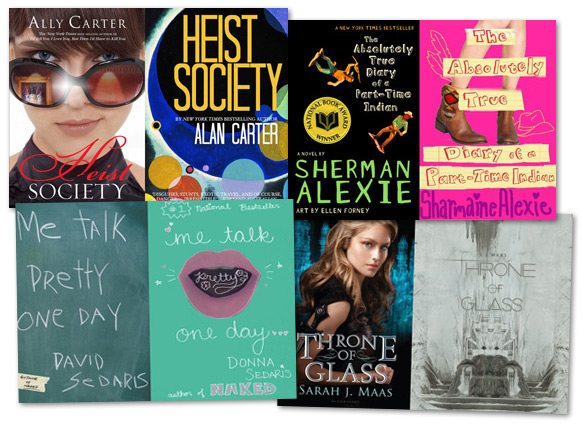
Created by: Rosianna; Gillian Berry; Autumn; and Ardawling.
This realization led Johnson to start putting together an “action plan” to help keep the conversation going. “Many teachers and librarians got into it right away, and their students started making amazing covers instantly,” Johnson says. “The kids got it within seconds. That was excellent to see.”
Johnson currently is considering creating a downloadable Coverflip lesson plan for educators, because, going forward, these teachers and librarians [will] “be the ones coming up with the solutions, not me,” she says. “But I’d be thrilled to have some of those discussions.”
Added To Cart
RELATED


RECOMMENDED
CAREERS
The job outlook in 2030: Librarians will be in demand
CAREERS
The job outlook in 2030: Librarians will be in demand
ALREADY A SUBSCRIBER? LOG IN
We are currently offering this content for free. Sign up now to activate your personal profile, where you can save articles for future viewing
ALREADY A SUBSCRIBER? LOG IN
Thank you for visiting.
We’ve noticed you are using a private browser. To continue, please log in or create an account.
Add Comment :-
Comment Policy:
Comment should not be empty !!!
lakeshore librarian
This is a great story. I think it begins with an assumption that "real literature" is written by men on serious subjects -- like war -- and not on social constructions or social interactions, as we see in the works of Jane Austen. It would be interesting to take this another step and look at the marketing of books by and about minorities, and how their cover art discourages readers who are not members of minority groups already. Please work with an English teacher to create a lesson plan that can be published by NCTE on their Read, Write, Think site, which will give your idea both credibility and exposure. And include some information on photo editing techniques and free software as well. Thanks!Posted : Jul 19, 2013 02:38
Stasia
Thanks for the Cover-Flip wrap-up. As an author, the cover design experience is almost always traumatic and this article could serve as a graphic representation of many of my concerns. As a happy aside, the creativity shown by the challenge cover designers is fantastic.Posted : Jul 17, 2013 01:26