


2018 School Spending Survey Report
Newseum Education’s Digital Classroom
The Newseum in Washington, DC has long been one of my favorite places to take students. The interactive museum, dedicated to media and journalism, now offers a Digital Classroom and you’ll want to add it to your go-to spaces for high quality, standards-based, document-driven instruction. Focused on historical inquiry, media literacy, critical thinking, document analysis, [...]
Focused on historical inquiry, media literacy, critical thinking, document analysis, and civic engagement, Newseum Education’s Digital Classroom features a wide variety of engaging interactive content for middle school through college teaching and learning.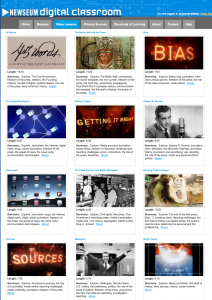
A library of 12 captioned and beautifully produced video lessons, complete with viewing guides, essential questions and lesson plans, focus on such critical media literacy issues as Bias, Getting It Right (accuracy in media), What’s News, and Sources. Historical video lessons cover such topics as The Berlin Wall and the Press, The Press and the Civil Rights Movement, Watergate and 45 Words (the First Amendment).
Currently, three comprehensive Modules aggregate a wealth of resources and activities. The latest addition, Women, Their Rights and Nothing Less,
investigates the suffragists’ pioneering use of the free press and the other First Amendment freedoms. Explore more than 250 primary sources in three interactives (See the interactive timeline and the map of persuasive materials) to see how and why movement participants dared to challenge the status quo. Then, discover their legacy in contemporary civil rights issues, and build your own case for change today.

Added To Cart
RELATED

RECOMMENDED
CAREERS
The job outlook in 2030: Librarians will be in demand
CAREERS
The job outlook in 2030: Librarians will be in demand
ALREADY A SUBSCRIBER? LOG IN
We are currently offering this content for free. Sign up now to activate your personal profile, where you can save articles for future viewing
ALREADY A SUBSCRIBER? LOG IN
Thank you for visiting.
We’ve noticed you are using a private browser. To continue, please log in or create an account.
Add Comment :-
Be the first reader to comment.
Comment Policy:
Comment should not be empty !!!