


2018 School Spending Survey Report
The Power of Empathy: Q&A with Emily Bazelon
Slate senior editor Emily Bazelon has two new professions to add to her resume this year: acclaimed book author and school bullying expert, as positive reviews for her first book, Sticks and Stones , have been pouring in. In a recent interview with SLJ , Bazelon helps debunk some of the popular myths about bullying; offers insights and advice for educators, parents, and kids; and shares some of her most surprising discoveries while researching the book.
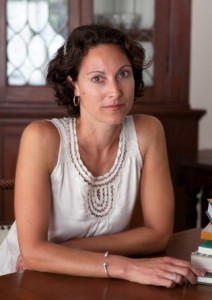
Emily Bazelon. Photo credit: Nina Subin.
Slate senior editor Emily Bazelon has two new professions to add to her resume this year: acclaimed book author and school bullying expert. Positive reviews have been pouring in for her first book, Sticks and Stones (Random House), a well-researched narrative that weaves together the stories of three communities torn apart by bullying along with the latest research on the issue and the most effective strategies for dealing with bullying in schools. No stranger to deep reporting, Bazelon has covered bullying at Slate for years, yet this book is really “a different animal,” she tells School Library Journal. “My dearest wish for this book is for teenagers to read it—either on their own or in school with teachers or, best of all, with their parents,” she says. “So they really feel like the book is a jumping off point for discussion, and especially discussion among kids and adults.” Bazelon is offering resource guides for kids, parents, and educators plus discussion questions on her site, and has enlisted the help of a New Haven (CT)-based teacher friend, a Facing History educator, to help draft a more comprehensive teachers’ guide, which is expected to be available in June, she says. Bazelon also sat down with SLJ to discuss this important issue. In our recent interview, she helps debunk some of the popular myths about bullying; offers insights and advice for educators, parents, and kids; and shares some of her most surprising discoveries while researching the book. Your book presents the challenges that communities face when dealing with this issue in a very even-handed way; was this intentional? Yes! Thank you, I really was trying for that. You know, I think there are very few real villains in my book. I think there are a lot of well-intentioned adults who make mistakes. And it’s true about the teenagers in the book, too—some of them blow it in various ways. I really tried to understand where people are coming from and to have compassion for everybody I talked to. What surprised you about the research? When I first started researching, I (like everyone else) was seeing a lot of coverage that was treating bullying as an epidemic, so it was both a surprise and a relief to find out that that’s not true and that the rates of bullying in several countries have not risen over the last 25 years. What has changed, I think, is our awareness of the problem. And that has to do with the internet and some of the stories that have linked bullying to suicide, I think. What we actually know about the link between bullying and suicide [is] essentially, kids who are bullied (or kids who are both bullies and victims) are at a higher rate of suicidal thinking...but we don’t know if it’s causal. In other words, we don’t know whether they were more at risk because of the bullying or whether the bullying feeds into their greater risk. The studies really don’t establish that. So I just wanted to put that out there; it’s such an important myth to debunk, I think. How has the internet changed bullying? I understand why people feel that bullying is more prevalent, because I think when it’s going on, it tends to move online and offline fluidly, and so for kids who are experiencing it, you don’t get a break when you go home after school anymore. You may very well have this feeling that people are posting about you on Facebook or Twitter, and that can make the bullying feel 24/7 in a way that’s very hard for people. So in terms of the internet, I think our awareness of cyber-bullying has to do with this problem of prevalence and how it tends to spin out of control in particular kids’ lives. But I also want to emphasize that, usually when cyber-bullying is going on, there’s also something going on in person, so I think it’s wrong to think of cyber-bulling as like this brand new monster on the block. It’s much more a new vehicle than it is an entirely new breed of behavior. Another surprising thing is that you discovered that the majority of kids do not bully. Right. And I think that’s really important to keep emphasizing I think, because when schools do internal surveys and they show that and they send that message to kids, they then see that kids report that the rate of bullying falls further. And I think what we’re seeing here is a process called social norming, which is if you show people that a behavior is an outlier behavior, they are less likely to do it. That’s a powerful tool. Yes! Absolutely. Agreed. What kinds of things are coming up in discussions? What advice do you give educators? I think it’s so important for the whole community and the whole school to take on this problem, and educators tend to know this already. Because they know that just targeting the kids who are bullied (or the kids who bully) doesn’t work, and that you really have to bring everyone on board and figure out how to make bullying socially unacceptable, how to change the dynamic in the school so that being mean isn’t a way to score social points and become more popular—defending other kids does that instead. So then the question of course is, How do you go about doing that? And I think there are a variety of programs that work, and I’ve outlined them on my website. What they all have in common is that they are ongoing. So you can’t just have an assembly about this problem and check it off your list. You have to keep tending to it, and you also have to really harness the power of the kids who are the bystanders, because bullying almost always takes place in front of an audience, but kids only step in about 20 percent of the time, one out of five. And when they do step in, they can stop the bullying half the time. So they are a really important piece of this puzzle, but then you have to think, Why aren’t they stepping up more? One reason is that it’s a really hard thing to confront a bully, and some people are not going to be ready to take that step. When someone is aggressive and angry and bigger than you and yelling, saying, “Hey I think you should stop” is a scary thing to do sometimes. Sometimes kids who have a lot of social status themselves or other strengths will be able to do it, and that’s great. But other kids need other strategies. Kids who have been bullied, when you ask them what did you peers do that helped, they are just as likely to name small moments of empathy as big moments of someone standing up for them. So, for example, just asking someone if they’re okay, or sending them a sympathetic text message, or going up to them in the hallway and putting a hand on their shoulder—those are things that can really mean a lot to kids. And I think if we expand what we are now calling “upstander” behavior with a variety of strategies, we can really help kids. Have you taken a stand on criminalization? I’m generally opposed to criminalization as they way for dealing with this problem and I don’t want to make an entirely blanket statement, because if you’re talking about a physical assault that is also bullying, then there could be exceptions to that rule. But I think the trend towards criminalization and punishment is really the wrong way to go. We’re being reactive instead of proactive when what we should really be doing is thinking about prevention, which starts with building up kids’ sense of character and moral development and also their capacity for empathy. And empathy can be taught? Maybe the better way to say this is that empathy can be inspired. But it can also really be concretely discussed and I actually think storytelling is a tremendously powerful vehicle for this. So in my house with my boys (10 and 13), we have used books like Wonder by R.J. Palacio, or Moon Over Manifest by Claire Vanderpoole where you have characters who are different from my kids, and they’re going through different challenges, but my kids are so drawn to the stories that they can really imagine what the world is like from those characters’ eyes, and really come to value their feelings and emotions. And we ask a lot of questions about why certain things have happened in those books, and why people behave the way they do, and I think this does foster empathy in kids. One of my favorite things about Wonder is that R.J. tells the story from different points of view, so you’re hearing from the child who is being bullied but you’re also hearing from his classmates who are struggling with their reactions to him, because he has this severe facial abnormality and he is alarming to look at. And there’s just a great deal of honesty in that, and you can think through what it’s like to be these different kids trying to figure out how to deal with that. Are there any other titles that are your go-to books for this topic? There’s a new book out called Each Kindness [by Jacqueline Woodson]; I like that book. I think it’s a good vehicle for younger kids, for thinking about social exclusion. And then the older version of that book that I loved as a child and found very powerful is A Hundred Dresses by Eleanor Estes. It’s very timeless, though. I think that it would still speak to kids. I definitely read it to my kids. What feedback have you gotten so far from your book? Most of it has been just tremendously positive. I’ve been hearing from a lot of people, especially teachers, librarians, counselors, and principals, saying “thank you,” essentially. Because I think that people who work with kids and who are on the front lines know that these issues are much more complex than media accounts often give credit for, and so I think there was a real hunger for someone to just describe what was happening with more nuance and complexity. Where do you go from here? What's next for you? I would love to write another book. I’m not sure what it’s going to be about and I want to be just as confident in my topic as I was this time, because I really like to do a lot of legwork first so I know what I’m doing. So I feel very open-ended about it. I remain perpetually fascinated by teenagers, and so I could completely imagine another book about kids but I think it would probably come from a different angle. The question is, What’s a contribution to make? How can I move the discussion forward and approach it in a way that someone else has not already done? So that’s my challenge to figure out. I’m actually covering the rest of the Supreme Court term for Slate, so I’m going to the arguments about same-sex marriage. I’ve always been really interested in family and kids. Your book also has advice about helping LGBT students. Do you feel a greater sense of urgency or relevance to this, in light of your coverage of the Supreme Court? I think that’s a really good link to make. I do think that the problem of anti-gay harassment and bullying has added urgency to the drive for full equality for gay people in all domains. And just to elaborate for a second, now that we can see gay kids are really at a higher risk, we’re also seeing an important buffer against that. It’s to instill in kids, from an early age, acceptance of different kinds of families. And so that’s a new reason for curricula that are inclusive of gay families. Are you interested in an ongoing commitment to this issue? You seem very invested!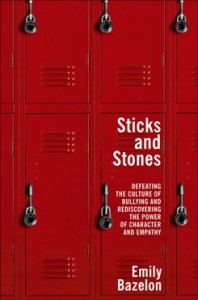 I want to stay a journalist at the end of this; I’m not going to turn into an educator or a psychologist. But in that capacity, I’m eager to stay involved. The other thing that’s happened since I started working on the book is that more studies have come out showing the long-term serious psychological effects of bullying, and that...just helps me stiffen my spine. There was the study a couple of weeks ago from Duke showing that kids who are bullied (and kids who are bullies and victims) have strikingly higher rates of anxiety, depression and suicidal thinking 20 years later. So, [the] teachers’ guide is really my effort to get my book out into the world in the most useful way possible, I hope, as a launching pad for discussion among kids and adults and I am very committed to that. And to traveling and visiting schools—whoever will have me—that supports that. We’ve heard from librarians that have spearheaded reading projects where an entire community (from kids to adults) picks a young adult novel to read and then meets with the author to discuss it. Can you envision something like that for your book? That would be fabulous. If you could help me plant that seed, I will be incredibly grateful to you. That would be wonderful to see that happen. I would love to do that. Any community that wants to read my book, I will happily come. I love these projects. Yeah, I would absolutely love that, and would absolutely come. It would be a dream come true to see that happen. Actually, just yesterday I started working on the teachers' guide by going in to talk to a class. The kids, I think, can relate to the stories of the kids in my book. They’re really real, but because it’s a book that’s about storytelling, it really gives people a chance to grapple with all the choices the characters made along the way and to think about, okay, How could this story have gone better? And what mistakes the people make, and thinking about solutions in a way that I thought was really powerful. Thanks so much for speaking with us! Our audience of librarians and other educators is always looking for these kinds of tools to use with their students. Totally! I had a childhood librarian who changed my life, he was an incredible force for good in my life, and I will never forget him, and feel so grateful to him. So I have a deep sense of how important librarians are. I’m happy to go on at length! He knew I would come every week or two and I would take out as many books as I was allowed, and he helped me pick them. He would set aside books he thought I would like; he was just an amazing resource. He was a very kind and reserved man, and I treasured my moments with him. And he opened up a whole world of reading for me that absolutely changed my life. (I just had to go on that pro-librarian rant!)
Added To Cart
RELATED

RECOMMENDED
CAREERS
The job outlook in 2030: Librarians will be in demand
CAREERS
The job outlook in 2030: Librarians will be in demand
ALREADY A SUBSCRIBER? LOG IN
We are currently offering this content for free. Sign up now to activate your personal profile, where you can save articles for future viewing
ALREADY A SUBSCRIBER? LOG IN
Thank you for visiting.
We’ve noticed you are using a private browser. To continue, please log in or create an account.

Add Comment :-
Be the first reader to comment.
Comment Policy:
Comment should not be empty !!!