


2018 School Spending Survey Report
New PTA President: Educating the Whole Child Includes School Libraries
National PTA president Laura Bay wants to create opportunities for learning throughout communities, whether in the school library, at home, or in the neighborhood.
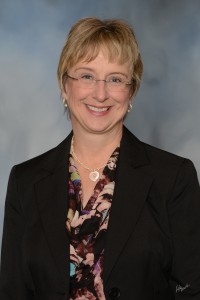
National PTA President Laura Bay.
Bake sales, pancake breakfasts, and phone trees never enter the discussion when National Parent Teacher Association (PTA) President Laura Bay talks about students’ needs. Instead, the recently elected Bay emphasizes how a school’s PTA can support learning environments, both in the classroom and out—plus what’s needed to foster that education. A key element? The resources found in a school library. “We need to make sure we create opportunities of learning,” says Bay, who took the National PTA helm in July and was Washington State PTA President from 2007–09. “Certainly that would include the school library.” Books, and access to them in school libraries and at home, are mentioned often by this mother of three who lives in Poulsbo, WA. Although Bay's children are now grown, she remembers repeatedly reading the picture book Chicka Chicka Boom Boom (S. & S., 1989), stories by Dr. Seuss, and the “Harry Potter” series with her kids, often during the summer months. That activity is one she and the national organization are hoping more families will adopt this summer on their own and through a PTA initiative, Family Reading Experience, which launched in June. Running through August, the program encourages parents and caregivers to spend time reading with children at home and sharing their experiences on Twitter, Facebook, and Instagram with the hashtag #FamiliesRead. That activity can foster a child’s life-long love of reading “for pleasure, knowledge, and research,” Bay says. Bay first experienced the PTA as many parents do: when her son, now 29, started kindergarten. She remembers the school PTA president, as well as the principal, greeting families on the first day of school. Bay began attending meetings and stayed involved throughout her children’s education, from elementary school to high school. She eventually earned a teaching degree and worked as a teacher on special assignment in the Bremerton School District, mentoring teachers in literacy skills for nearly 10 years. Most recently, she served as coordinator for assessment and instruction for the district. Bay’s vantage point as a parent and an educator helps her see school challenges from a teaching and a parental eye. To her, a successful curriculum incorporates both areas of a student’s life—home and school—along with the community. Learning best takes place when students see lessons take shape outside of school, she believes. “If a fifth grader is learning about wetlands or the drought we’re having in Washington State, you want to make the connections from the classroom to real life,” she says. “That’s how you make learning stick.” To be most effective, the PTA should, Bay believes, consider tackling just one or two initiatives a year, rather than a new concern every month. Whether the focus is ensuring every student starts the day with a solid breakfast or examining changes in a curriculum, that picking just a few projects gives a PTA more space to assess results, Bay says. If there are too many, parents and teachers run the risk of only “brushing the surface of an issue,” she says. “Those things take time.” To Bay, it all comes back to communities: whether that community is the PTA, the classroom or school library, or the neighborhood, these all coalesce into one learning environment for students. “It’s all about how we connect and support students,” she says. “Our engagement is how we support student learning.”
Added To Cart
RELATED


RECOMMENDED
CAREERS
The job outlook in 2030: Librarians will be in demand
CAREERS
The job outlook in 2030: Librarians will be in demand
ALREADY A SUBSCRIBER? LOG IN
We are currently offering this content for free. Sign up now to activate your personal profile, where you can save articles for future viewing
ALREADY A SUBSCRIBER? LOG IN
Thank you for visiting.
We’ve noticed you are using a private browser. To continue, please log in or create an account.
Add Comment :-
Be the first reader to comment.
Comment Policy:
Comment should not be empty !!!