


2018 School Spending Survey Report
Morris Nominations
YALSA’s Morris Award (technically the William C. Morris Debut Award) is a great showcase of strong new voices in the YA literature field. Often there are a few books we have had on our speculation list that end up being Morris finalists, because good writing is good writing. And, of course, sometimes the best writing [...]
 YALSA’s Morris Award (technically the William C. Morris Debut Award) is a great showcase of strong new voices in the YA literature field. Often there are a few books we have had on our speculation list that end up being Morris finalists, because good writing is good writing. And, of course, sometimes the best writing is a debut — from Looking for Alaska, 10 (TEN!) years ago (before the Morris, but still a debut) to Seraphina just two years ago.
But the thing is that the Morris pool is a LOT smaller. And often crowded with schools of commercial clone fish, against which the more original and/or literary novels tend to really shine. And we all know that a big fish in a small pond often becomes a small fish when the body of water is bigger.
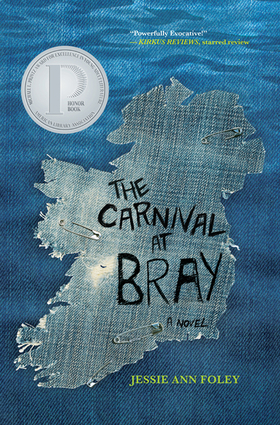
The Printz is a pretty big body of water.Two of the five Morris semi-finalists have been our list from the start of the year. Joy really liked The Strange and Beautiful Sorrows of Ava Lavender, and Sarah was a fan, albeit with reservations, of The Story of Owen, Dragonslayer of Trondheim (admission: I still haven’t read either). A third, Gabi: A Girl in Pieces, was a later addition to our list. Scar Boys sort of hovered in neither fish nor fowl territory — it has been on the pile of books to read all along, but it wasn’t quite getting much buzz so it kept getting pushed lower than other books that seemed more urgent. And Carnival at Bray came out of left field, because there’s always one…
Because there is sometimes that overlap between debuts and winners — remember Where Things Come Back, three years ago? — we like to look at the Morris shortlist with Printz glasses firmly in place. So let’s see how Gabi, Carnival, and Scar Boys fare when we give them that kind of a read.
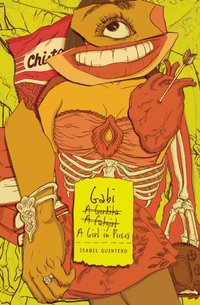
Gabi: A Girl in Pieces, Isabel Quintero
Cinco Puntos Press, October 2014
Reviewed from final copy
Gabi definitely wins the popularity vote, at least as far as critics and librarians go. It was cheerleading from you all that brought it to our attention initially, and then it snagged four starred reviews and made at least three year-end reviews based on the last big data collection I did.
And I really respect the people who are raving about this book.
I really respect this book, too. I think it’s bold and has a fantastic voice and it’s really important. But important is not the same as Printz worthy, and a strong debut that fulfills the Morris criteria may not live up to the Printz expectations.
Which about sums up how I would classify this one: a great Morris, but an unlikely Printz.
My first peeve is mild from a writing perspective — no glossary. I don’t speak Spanish. True to Gabi’s character, she peppers her journal with Spanish, especially when she is recording things her mother has said. The context sometimes gives the non-Spanish-speaking reader the gist of the statement, and occasionally the actual meaning, but sometimes the words are just there without quite enough context. Given that these are also conversations that are important (that word again, I know) — about women and body image and expectations — this was frustrating. By itself, looked at as part of the writing, I don’t think this is a fair reason to knock the book down — again, the voice is great and this is a consistent and accurate detail for the voice. But the lack of a backmatter glossary does strike me as a significant design flaw, and it’s really a shame.
My second issue is a bigger one. This book is just crowded. Two pregnant teens, an addict dad and a pregnant/single mom, rape, coming out — yes, all of this is life, it’s all going on around us, but the way in which Gabi is this still point amidst a veritable playbook of teen issues seemed artificial. It was too much like a telenovela, a point Gabi makes, but I’m not sure calling out the flaw in the text mitigates it sufficiently. It meant that the emotional beats don’t always get a chance to finish reverberating.
(On a related complaint, I found the father’s death very predictable and a little too obviously foreshadowed, and then the balance of grief and coming to terms didn’t totally gel for me. However, I am a woman who lost her father as a teen, and sometimes my own baggage gets in my way, so I’ll grant that this may be a me issue and not a book issue.)
But, again, the VOICE. This really truly reads like a diary 95% of the time (there’s the occasional infodumpish passage, and the slightly too perfect recall of conversations, but nowhere near the degree usually found in diary narratives, and a little cheating is probably unavoidable to make it work as a novel). The voice is fantastic, and one we don’t hear enough. I completely believe Gabi’s growing understanding of herself as a woman and specifically herself as a woman in the particular context of her Mexican-American identity and community. For the voice alone, this definitely deserves the Morris recognition, but I just don’t believe the voice counterbalances the plot issues enough to make this a real contender for the Printz.

Added To Cart
RELATED


RECOMMENDED
CAREERS
The job outlook in 2030: Librarians will be in demand
CAREERS
The job outlook in 2030: Librarians will be in demand
ALREADY A SUBSCRIBER? LOG IN
We are currently offering this content for free. Sign up now to activate your personal profile, where you can save articles for future viewing
ALREADY A SUBSCRIBER? LOG IN
Thank you for visiting.
We’ve noticed you are using a private browser. To continue, please log in or create an account.

Add Comment :-
Be the first reader to comment.
Comment Policy:
Comment should not be empty !!!