


2018 School Spending Survey Report
Mississippi School Librarians, Despite Low Funding, Enjoying Higher Profiles
School librarians in Mississippi are experiencing a renaissance thanks to a rubric that puts school libraries back into focus with details on how districts can—and should—improve their school libraries.
increased accountability through audits across the state
“We wanted to establish what is the minimum for the areas for collection development and school programs and facilities, so that districts would be able to know exactly what is required,” says Limeul Eubanks, division director II, Office of Elementary Education and Reading/Office of Secondary Education, Visual and Performing Arts, Library, Foreign Language, Approved Course Codes for Mississippi’s DOE. Every K–12 public school in Mississippi has always been required to have at least a part-time certified school librarian and a school library, says Emily Gray, school librarian at Tupelo (MS) High School and the school library section chair for the Mississippi Library Association (MLA) for the past two years. Last year, districts were given the 18-page rubric outline on how to improve their library standards, which has helped to boost respect for the position. DOE’s Eubanks says that districts are now being audited to verify whether they meet all of their accountability standards, not just those pertaining to school libraries, and have been for the past three years. They are encouraged to improve libraries if they don’t meet minimum requirements. For example, schools are expected to have a minimum of 10 books per student. If they don’t, districts are asked to come up with a plan for building the collection, he says.Funding doesn’t necessarily follow
That’s not to say that these school librarians are enjoying a bounty of funding. Mississippi has one of the lowest per-student spending levels, just $8,130 a year for each child, according to the United States Census Bureau as of 2013. (Only Arizona, Idaho, Oklahoma, and Utah are lower.) If audits discover areas that need improvement, where does the money come from? “That’s a local decision on where to look for funds and how to appropriate funds,” Eubanks says. “We work with them on their plan, encourage them to write more grants and look for other funding options.” In addition, Mississippi’s voters voted down a potential constitutional amendment in November, called Initiative 42, that would have increased school funding—and would also have potentially increased taxes. School librarians in the state feel those effects of low funding, as budgets for school libraries are left up to the discretion of the district, says Gray. She says she received more than $5,000 a year, but her school has 2,000 students—and can afford a media budget for her and the library. “I live in a community that has really stepped up and is very school-centered,” she says. “I have also written grants for the library, so we have some support. But it depends on the school.”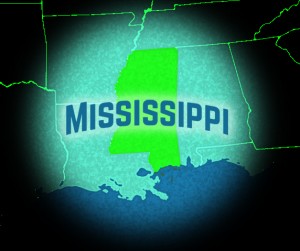
Still, some are basking in the limelight
Even if funding is sparse, school librarians are enjoying the renewed focus on their role in schools, which they believe stems from the rubric. “We had a decline in [Mississippi Library Association (ALA) membership],” says Gray. “But we had a revitalization this year, and had a record number of participants at our annual conference.” MLA’s annual conference saw on average about 20–30 school librarians attending from 2004–2014, says Gray. This year, however, the organization wrote 87 continuing education certificates for attendees, and more than that came to the event, she says. The new accreditation model has definitely spotlighted school librarians and the role they play in the state, Gray adds. Gray says that to have districts paying attention to the importance of school librarians and school libraries is a clear vote of support from the state—one that’s very welcome. “We kind of took a back seat for a while,” says Gray. But we’re stepping back into the spotlight again.”
Added To Cart
RELATED


RECOMMENDED
CAREERS
The job outlook in 2030: Librarians will be in demand
CAREERS
The job outlook in 2030: Librarians will be in demand
ALREADY A SUBSCRIBER? LOG IN
We are currently offering this content for free. Sign up now to activate your personal profile, where you can save articles for future viewing
ALREADY A SUBSCRIBER? LOG IN
Thank you for visiting.
We’ve noticed you are using a private browser. To continue, please log in or create an account.
Add Comment :-
Be the first reader to comment.
Comment Policy:
Comment should not be empty !!!