


2018 School Spending Survey Report
Maker Spaces, STEM, Library Management | Professional Reading
Maker space projects galore; "a fascinating look at the intersection of science and the maker movement"; and an accessible guide on management for school librarians.
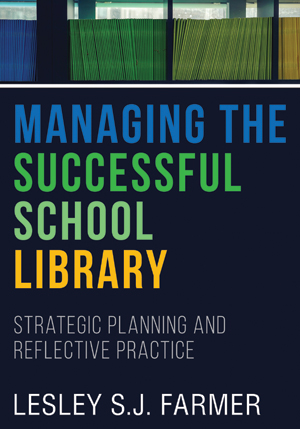 Farmer, Lesley S.J. Managing the Successful School Library: Strategic Planning and Reflective Practice. 264p. bibliog. index. ALA Editions. Dec. 2016. pap. $60. ISBN 9780838914946.
School librarians who are balancing the demands of curriculum and teaching, collection development, and technology may not see themselves as managers or leaders, but according to Farmer, they are. The author emphasizes how, beyond vision and mission statements, librarians need to take the time to analyze what it means to manage a successful school library in order to strengthen their programs. Delving into what an ideal school library program looks like and how the library should align with school goals, she challenges readers to examine their own schools and their cultures and to consider their personal management styles. Many helpful resources are included in each chapter, along with a list of references. “Managing Resources” offers some useful tools for maintaining print and electronic materials. In “Managing Funding,” the author refers readers to websites that provide fund-raising advice, but there is no listing for library grants. That omission notwithstanding, the content is valuable. Throughout, “Food for Thought” boxes raise questions for contemplation. Each chapter ends by encouraging users to apply the tenets of school librarianship to themselves. VERDICT Whether readers have just begun their careers or have years of experience, they will benefit from this thorough dissection of each aspect of managing a school library. An excellent addition.
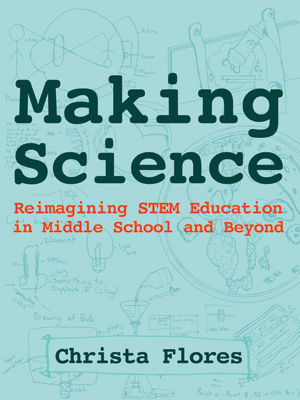 Flores, Christa. Making Science: Reimagining STEM Education in Middle School and Beyond. 194p. bibliog. photos. Constructing Modern Knowledge. Nov. 2016. pap. $24.95. ISBN 9780997554304.
A fascinating look at the intersection of science and the maker movement. Flores focuses on constructionism, or the science of learning by doing. True constructionist education is achieved through problem-based science in the learning space. Aimed at teachers and librarians seeking evidence of the benefits of the maker movement in the classroom or library, this title serves as a sampling of successfully executed projects for a wide range of ages. Case studies in electronics, robotics, recycling, and more provide excellent examples of learning in action. Open-ended questions fuel the projects, and students are asked to produce evidence of learning not through tests but through journals, portfolios, and other self-driven projects. However, the book does have drawbacks. The activities described were completed in schools, where there is already structure in place for maker-based learning. Reading the descriptions of these amazing endeavors will be inspiring but also potentially frustrating for those just starting to plan a maker space, especially since the schools mentioned are almost exclusively private or charter. However, the stories included are worth reading. VERDICT Despite some flaws, this resource has a place in the professional collection of any school or library interested in the maker movement.
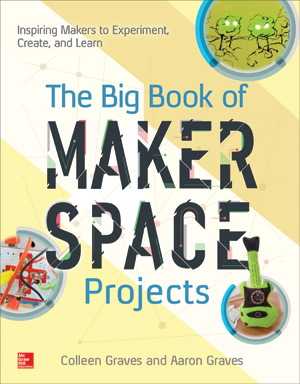 Graves, Colleen & Aaron Graves. The Big Book of Makerspace Projects. 304p. illus. index. photos. McGraw-Hill. Oct. 2016. pap. $20. ISBN 9781259644252.
Equal parts guide and inspirational tome, this volume fills a gap in the existing maker literature as a one-stop source for easily achievable, clearly described classroom projects. The authors present 51 tried and tested activities with concise instructions and clear photos. Each entry contains insightful tips for classroom use to ensure that novice and expert maker librarians alike will be able to lead students with confidence. The book effectively incorporates both projects requiring pricey materials (Sphero robots, Makey Makey kits) and those necessitating supplies that many libraries will already have on hand (balloon hovercrafts, Popsicle stick kazoos). Libraries with an existing maker space and a budget to accrue additional materials will find the equipment-intensive projects far more achievable than will libraries with limited funds. Both authors teach in high school settings, but some projects are suitable for younger makers; middle and even upper elementary school students could certainly tackle some of the more difficult projects with a supportive teacher-librarian at the helm. The Graveses also include hashtags and their social media account information to encourage project sharing and maker community building. VERDICT Librarians clamoring for a maker guidebook will appreciate this much-needed resource full of projects for almost all levels.

Added To Cart
RELATED
FICTION
PREMIUM
Who Will Rule the Trees?
FICTION
PREMIUM
Go Bananas!
FICTION
PREMIUM
The Dark Is For
BOOKS
PREMIUM
How the Other Half Die


RECOMMENDED
CAREERS
The job outlook in 2030: Librarians will be in demand
CAREERS
The job outlook in 2030: Librarians will be in demand
ALREADY A SUBSCRIBER? LOG IN
We are currently offering this content for free. Sign up now to activate your personal profile, where you can save articles for future viewing
ALREADY A SUBSCRIBER? LOG IN
Thank you for visiting.
We’ve noticed you are using a private browser. To continue, please log in or create an account.
Add Comment :-
Comment Policy:
Comment should not be empty !!!