


2018 School Spending Survey Report
Hunters, Helpers, Engineers, & Invaders: Animals | Series Nonfiction
Animal books don't sit on the shelves long, and the best of these series will keep students thinking long after they've finished reading. Poison dart frogs, feral pigs, and Tasmanian devils are just a few of the wild things covered here.
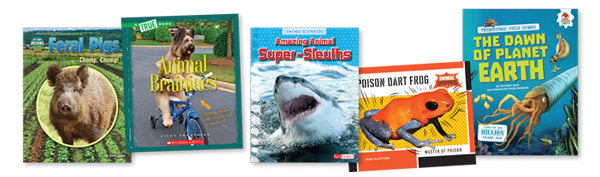 Most animal books don’t sit on the shelves for long. The strong appeal of fascinating facts and dynamic visuals draw browsers, while school assignments generate year-long subject demand. The simplest animal profiles can be especially popular with new readers more interested in nonfiction than stories. Many animal books of at least average quality can fill these circulation-boosting functions, but it’s what happens after checkout that really matters. Will the writing inspire meaningful learning by building on what students know and introducing new information and thought-provoking questions? Does visual content lead to fuller understanding of the concepts? Will readers who check out one book from a series return immediately for more of the same? Several of the sets below are likely to generate some of these positive outcomes, and the best ones should reach all of them when matched with the right readers.
Elementary
Aronin, Miriam. Florida’s Burmese Pythons: Squeezing the Everglades. ISBN 9781627248273; ISBN 9781627248907.
Blake, Kevin. Feral Pigs: Chomp, Chomp! ISBN 9781627248297; ISBN 9781627248891.
––––. Guam’s Brown Tree Snakes: Hanging Out. ISBN 9781627248303; ISBN 9781627248914.
Goldish, Meish. Red Imported Fire Ants: Attacking Everything. ISBN 9781627248310; ISBN 9781627248921.
ea vol: 32p. (They Don’t Belong: Tracking Invasive Species). bibliog. further reading. glossary. index. maps. photos. websites. Bearport. 2015. lib. ed. $26.60. ebk. $39.93.
Gr 3-5 –Covering multiple aspects of a fascinating topic, each title in this excellent set examines a single invasive species. Each selection opens with a current example of the animal’s impact and then traces the history of its arrival and provides reasons for its proliferation. The writing is lively and direct and makes good use of specific, intriguing facts, such as the brown tree snake’s effect on Guam’s electricity. Readers will appreciate learning about efforts being made to deal with the problem, such as traps to reduce the feral pig population. Among the other strong features are frequent quotes from scientists in the field. Page layouts include a well-chosen mixture of large photographs and spot images. One spread, for instance, demonstrates the diversity of the cane toad’s diet using separate photos of the creatures feasting on a smaller toad, pet food, and a kangaroo carcass. VERDICT Lively, engaging presentations on specific species and on the general concept.
Borgert-Spaniol, Megan. Cranes. ISBN 9781626172111.
––––. Platypus. ISBN 9781626172128.
––––. Red Pandas. ISBN 9781626172135.
––––. Sloths. ISBN 9781626172142.
ea vol: 24p. (Animal Safari). chart. ebook available. further reading. glossary. index. photos. websites. Bellwether. 2015. lib. ed. $22.95.
K-Gr 2 –Basic facts and easy-to-read text are the key features of these animal introductions. Each spread contains a page with one or two short sentences of text that faces a large photograph and occasional insets. Topics covered include habitat, physical features, diet, and life cycles. Only Cranes mentions predators. Facts are clear and accurate, but the straightforward narrative is low on excitement. Readers learn that platypuses lay eggs, for instance, but nothing about how rare that is among mammals. Photographs provide some measure of excitement to supplement the text, such as an image of dancing cranes and one of a baby sloth hanging from a tree. In some cases, though, the visuals don’t support the specific facts especially well. VERDICT The consistent, if unexciting, structure makes this series a good fit for beginning readers hoping to digest introductory data, but they will need to look elsewhere for more engaging treatments of these highly interesting animals.
Franchino, Vicky. Animal Architects. ISBN 9780531215470.
––––. Animal Brainiacs. ISBN 9780531215432.
––––. Animal Camouflage. ISBN 9780531215487.
––––. Animal Mash-Ups. ISBN 9780531215449.
––––. Animal Migrations. ISBN 9780531215456.
Gregory, Josh. Animal Predators. ISBN 9780531215463.
ea vol: 48p. (A True Book: Amazing Animals). further reading. glossary. index. photos. websites. Children’s Pr. 2015. lib. ed. $29.
Gr 3-5 –Logical organization, lucid writing, and clean layouts highlight these topical titles. After introducing the general subject, each book examines a couple dozen creatures, providing well-varied and meaningful examples. The statement that “some species change their camouflage over time,” for example, is followed by fascinating details about the peppered moth. Animal Mash-Ups looks at hybrids such as ligers and grolar bears, a subject not often covered in children’s books. Most photographs are a half-page in size and relate directly to the text. Chapters are generally grouped by the broad environments of air, water, and land. Prose generally flows smoothly, though it is occasionally disrupted by abrupt jumps from one example to the next or by awkward language. The roles of science and human impact are noted throughout, both in full chapters and as part of an individual profile. VERDICT Strong introductory overviews on interesting topics.
Gagne, Tammy. Crocodiles: Built for the Hunt. ISBN 9781491450383.
––––. Sharks: Built for the Hunt. ISBN 9781491450376.
––––. Snakes: Built for the Hunt. ISBN 9781491450390.
Polydoros, Lori. Grizzly Bears: Built for the Hunt. ISBN 9781491450437.
Vogel, Julia. Tigers: Built for the Hunt. ISBN 9781491450369.
Zuchora-Walske, Christine. Killer Whales: Built for the Hunt. ISBN 9781491450420.
ea vol: 24p. (Predator Profiles). further reading. glossary. index. photos. websites. Capstone. 2015. lib. ed. $24.65.
Gr 2-4 –A consistent focus on an appealing theme is the hallmark of this series. The text addresses features and behaviors related to predation, including body parts, senses, diet, and intelligence. Other attributes, such as caring for offspring or geographical range, earn mention only when they impact hunting. The predator’s role in the food chain is not mentioned. Most spreads include one full-page photograph with another smaller inset, offering a good balance between key attributes, behaviors, and the actual capture of prey. Most images lack captions, which detracts slightly from the text in Snakes and Sharks, in which multiple species are shown but only some are identified. Fact boxes and an “Amazing but True” feature at the end of each volume add engaging content. Glossary terms are defined at the bottom of each page, which, thanks to the clean layouts, is unobtrusive. VERDICT Above-average treatment of a high-interest topic.
Gray, Susan H. Allosaurus. ISBN 9781 631439759.
––––. Ankylosaurus. ISBN 9781631439766.
––––. Apatosaurus. ISBN 9781631439773.
––––. Compsognathus. ISBN 9781631439780.
––––. Iguanodon. ISBN 9781631439797.
––––. Maiasaura. ISBN 9781631439803.
––––. Oviraptor. ISBN 9781631439810.
––––. Spinosaurus. ISBN 9781631439827.
––––. Stegosaurus. ISBN 9781631439834.
––––. Triceratops. ISBN 9781631439841.
––––. Tyrannosaurus Rex. ISBN 9781631 439858.
––––. Velociraptor. ISBN 9781631439865.
ea vol: 32p. (Exploring Dinosaurs). ebook available. further reading. illus. index. photos. websites. The Child’s World. 2015. lib. ed. $27.07.
Gr 4-6 –Species facts and paleontology blend effectively in this dinosaur set. Each title starts with a story about a dinosaur in action; these are not especially gripping, but some link neatly to actual fossil discoveries that readers learn about later. A fairly thorough treatment of physical features follows, accompanied by images of dinosaurs, bones, fossils, and scientists. Though not tremendously eye-catching, the visuals effectively support the written content. Captions, presented in a handwritten font that resembles field notes, add more specific details. Subsequent chapters look at fossil discoveries and sometimes provide interesting details about the scientists involved as well as information about species behavior and the eventual disappearance of the dinosaurs. Some chapters end with a couple of pages featuring either a broader look at dinosaurs in general or a specific aspect of the featured dinosaur, such as the triceratops’s head. VERDICT Smooth prose and strongly organized text and illustrations make this a better-than-average choice for the dinosaur shelves.
Gray, Leon. Amazing Animal Communicators. ISBN 9781491469811.
––––. Amazing Animal Engineers. ISBN 9781491469804.
––––. Amazing Animal Shape-Shifters. ISBN 9781491469835.
––––. Amazing Animal Super-Sleuths. ISBN 9781491469828.
––––. Amazing Animal Tool-Users and Tool-Makers. ISBN 9781491469842.
ea vol: 32p. (Animal Scientists). further reading. glossary. index. photos. websites. Capstone. 2015. lib. ed. $26.65.
Gr 4-6 –The potentially confusing series title refers not to people who study animals but to creatures whose abilities parallel those of human experts. Through eight or nine two-page “case studies” per volume, the author examines the special abilities of a particular species or animal group. Each profile opens with a brief explanation of the creature’s significant trait and then explores its physiology and behavior in more detail. Layouts suggest a scientist’s notebook, with busy but not overly cluttered combinations of text, illustrations, and insets. One large photograph is typically accompanied by two or three smaller photos or illustrations, which sometimes provide useful details. Text boxes offer either extra facts, such as “Copycat” notes, which highlight human creations that resemble the animal’s attribute (for instance, electronic inks that are similar to chameleon skin). VERDICT Plenty of information is packed into each book, with visuals that are effective, if not especially eye-catching.
Gray, Susan H. Ant. ISBN 9781633625884.
––––. Grasshopper. ISBN 9781633625907.
Marsico, Katie. Honey Bee. ISBN 9781633625914.
––––. Scorpion. ISBN 9781633625945.
Orr, Tamra B. Praying Mantis. ISBN 9781633625938.
––––. Walking Stick. ISBN 9781633625952.
Shoulders, Michael. Cicada. ISBN 9781633625891.
––––. Katydid. ISBN 9781633625921.
ea vol: 24p. (Creepy Crawly Critters). further reading. glossary. index. photos. websites. Cherry Lake. 2015. lib. ed. $18.95.
Gr 2-4 –These introductions to insects (plus one arachnid) include accurate facts and plenty of photographs but never rise above average in terms of appeal or learning potential. Each spread is comprised of a page with three or four sentences opposite a half-page photograph. Text boxes prompt readers to ponder questions about the animals. Most titles examine behavior more than physical features, with some variation from book to book. Insect body structure is mentioned in just a couple of the titles, and no photographs show them clearly. Endings are sometimes abrupt. Predators and other dangers are usually but not always noted. While some of the photos are effective, information frequently suffers from lack of visual support. Ant tunnels and honeycombs, for example, are mentioned but not shown, and only some titles provide an image of an egg or newborn. VERDICT Adequate, but there are more effective sets on arthropods available for young readers.
Hayes, Amy. We Need Worms. ISBN 9781499410495.
Kawa, Katie. We Need Bacteria. ISBN 9781499410204.
Machajewski, Sarah. We Need Plants. ISBN 9781499410426.
Nagelhout, Ryan. We Need Honeybees. ISBN 9781499410396.
Niver, Heather Moore. We Need Bats. ISBN 9781499410365.
Shea, Therese. We Need Spiders. ISBN 9781499410440.
ea vol: 24p. (Creatures We Can’t Live Without). diags. glossary. index. photos. websites. PowerKids. 2015. lib. ed. $23.60.
Gr 3-5 –Well organized and visually appealing, this set examines animals and other organisms that provide multiple benefits to the Earth and to humans. After opening with a brief overview, the authors present facts about each creature or plant, consistently linking them to positive impacts. A description of dangerous spiders, for instance, leads into possible medicinal uses of venom. There’s a good balance between general information and specific details. Main text appears in white font against a dark box, keeping pages clear and uncluttered, with smaller “Creature Clues” insets that offer related facts. Photographs are generally effective and supplemented by one or two useful diagrams. A closing chart in most, but not all, books, neatly lays out the variety of ways each organism helps us. VERDICT The scope necessarily varies depending on the topic, but the theme of balanced ecosystems is well supported by words and images.
Herriott, Charlotte. Boa Constrictor vs. Grizzly Bear. ISBN 9781482427820.
––––. Cheetah vs. Ostrich. ISBN 9781 482427868.
––––. Rat vs. Cockroach. ISBN 9781 482427905.
McAneney, Caitie. Scorpion vs. Black Widow. ISBN 9781482427943.
Roza, Greg. Tasmanian Devil vs. Hyena. ISBN 9781482427981.
Sabatino, Michael. T. Rex vs. Crocodile. ISBN 9781482428025.
ea vol: 24p. (Bizarre Beast Battles). further reading. glossary. index. photos. websites. Gareth Stevens. 2015. lib. ed. $22.60.
Gr 3-6 –Each title of this high-interest set compares the fighting abilities of two animals unlikely to meet in the natural world. After a separate introduction for each creature, subsequent spreads highlight a shared feature, with each facing page including a photograph of and facts about each animal. Information ranges from general qualities, such as size and speed, to specific characteristics (e.g., hunting techniques). The main paragraph of text is supported by insets with statistics and factoids. Some of the side-by-side comparisons, such as cheetah claws and ostrich talons, are surprising; others are obvious and less intriguing. The opposing photographs on each spread are most effective when they have a strong visual tie, as in the paired close-ups of a boa constrictor and the teeth of a grizzly bear. While readers are told which animal is faster, tougher, or stronger, they are left to judge for themselves which would actually win an imagined battle. VERDICT An intriguing premise with some appeal, but not completely engaging.
Hinman, Bonnie. Keystone Species that Live in Deserts. ISBN 9781680200683; ISBN 9781680200690.
––––. Keystone Species that Live in Grasslands. ISBN 9781680200584; ISBN 9781680200591.
––––. Keystone Species that Live in Ponds, Streams, & Wetlands. ISBN 9781680200621; ISBN 9781680200638.
––––. Keystone Species that Live in the Mountains. ISBN 9781680200607; ISBN 9781680200614.
––––. Keystone Species that Live in the Sea and Along the Coastline. ISBN 9781680200645; ISBN 9781680200652.
ea vol: 64p. (A Kid’s Guide to Keystone Species in Nature). further reading. glossary. index. maps. photos. websites. Mitchell Lane. 2015. lib. ed. $29.95. ebk. $29.95.
Gr 5-8 – After an identical two-page introduction to the concept of keystone species, each title presents five examples from the featured habitat. Chapters provides fairly detailed descriptions of the species, then note its importance to the ecosystem, threats to survival, and strategies to keep it safe. A one-page feature on a related concept typically builds strongly on the previous content, though some act more as filler. There’s lots of information woven into the text, with language that is generally clear and direct. Footnotes and citations provide strong source support not typically found at this level, with current facts and research. Visual support is less consistent: for some animals, just a single photograph is provided; with others, there’s a second photo, a range map, and/or images of habitats. VERDICT Though the series is not perfect, it fills an important subject gap, since print resources for kids on the topic of keystone species are sparse.
Larson, Kirsten W. Mutants in Nature. ISBN 9781607537809; ISBN 9781681520315. LC 2014036515.
––––. Super Powers in Nature. ISBN 9781 607537816; ISBN 9781681520322. LC 2014036514.
––––. Vampires in Nature. ISBN 9781 607537823; ISBN 9781681520339. LC 2014037645.
––––. Zombies in Nature. ISBN 9781 607537830; ISBN 9781681520346. LC 2014038738.
ea vol: 32p. (Freaky Nature). ebook available. further reading. glossary. index. photos. websites. Amicus. 2015. lib. ed. $28.50. pap. $9.99.
Gr 2-4 –This series draws parallels among animals and superheroes and monsters, with limited success. A few sentences of text, accompanied by a photograph, explore unusual features or behaviors. Some connections, such as the blood-sucking practices of mosquitoes and vampire bats, fit neatly. Others are more tenuous, such as when the platypus’s sixth sense is compared to Spider-Man’s. At times analogies are stretched to the point of inaccuracy: a honey badger’s skin is not “as tough as Iron Man’s armor.” Jumping quickly from one animal to the next results in some lack of clarity. Though many photographs are visually impressive, several are standard full-body photos that don’t highlight the animal’s featured ability. Added facts appear in a question-and-answer format at the bottom of some spreads. VERDICT There are plenty of fascinating bits of animal information throughout the series, particularly in Zombies and Super Powers, but the sometimes scattered presentation limits its general usefulness.
Meister, Cari. Chameleons. ISBN 9781 620311943.
––––. Crocodiles. ISBN 9781620311950.
––––. Horned Lizards. ISBN 9781620311967.
––––. Komodo Dragons. ISBN 9781620311974.
––––. Pythons. ISBN 9781620311981.
––––. Snapping Turtles. ISBN 9781620311998.
ea vol: 24p. (Reptile World). ebook available. glossary. index. photos. websites. Jump!/Bullfrog. 2015. lib. ed. $25.65.
PreS-Gr 1 –These basic reptile introductions offer judiciously selected facts coupled with strong visual content to appeal to early readers. Spare text offers a couple of sentences per page, with simple vocabulary. One or two features of each animal are highlighted over multiple pages. In Horned Toads, for example, defense against predators is the main topic; Crocodiles covers hunting and babies. The tight focus is supported by vivid, well-chosen photographs. The text of Komodo Dragon, for example, basically lists its physical features, but the dynamic images, many of which expand beyond a single page, convey the uniqueness of the animal in ways that young readers will absorb and remember. A captioned photograph closes each book, highlighting a few body parts and adding a bit more information. VERDICT Bare-bones material paired with strong visual appeal makes this set an excellent choice for beginners; older readers will want more content.
Plattner, Josh. Alligator: Master of Might. ISBN 9781624037351; ISBN 9781629696690. LC 2014048270.
––––. Mantis Shrimp: Master of Punching. ISBN 9781624037368; ISBN 9781629696706. LC 2014048271.
––––. Octopus: Master of Disguise. ISBN 9781624037375; ISBN 9781629696713. LC 2014048272.
––––. Peregrine Falcon: Master of Speed. ISBN 9781624037382; ISBN 9781629696720. LC 2014048273.
––––. Poison Dart Frog: Master of Poison. ISBN 9781624037399; ISBN 9781629696737. LC 2014048274.
––––. Salamander: Master of Regrowth. ISBN 9781624037405; ISBN 9781629696744. LC 2014048275.
ea vol: 24p. (Animal Superpowers). glossary. illus. photos. ABDO. 2015. lib. ed. $25.65. ebk. $25.65.
Gr 1-3 –Each title in this series briefly identifies one “superpower” for each animal, such as the alligator’s strong jaws or the regeneration ability of the salamander. This brief introduction is followed by straightforward species basics. Using a few sentences per page, the author covers habitat, behavior, physical features, and other general topics. The simple writing is appropriate for early readers, but the series of facts sometimes feels disjointed. Two or three photographs per spread add some visual appeal; a tooth-first image of an alligator is a particularly strong example. The superhero theme is reinforced at each book’s close with a cartoon drawing of the animal in superhero garb and a prompt for readers to imagine what its powers might be. VERDICT Adequate species data for beginners, with minimal tie-ins to the superhero motif.
Middle TO High School
Rake, Matthew. The Dawn of Planet Earth. ISBN 9781467763486; ISBN 9781467771931.
––––. Dinosaurs Rule. ISBN 9781467763493; ISBN 9781467771955.
––––. The Last Days of the Dinosaurs. ISBN 9781467763509; ISBN 9781467771917.
––––. The Rise of Mammals. ISBN 9781467763516; ISBN 9781467771979.
ea vol: illus. by Peter Minister. 32p. (Prehistoric Field Guides). ebook available. illus. chron. index. Lerner/Hungry Tomato. 2015. lib. ed. $26.65. pap. $7.99.
Gr 4-7 –Starting with the first appearance of life on Earth, this series covers a large span of prehistoric history, highlighting one or two animals with well-chosen facts and useful, eye-catching illustrations. An anthropomorphized animal from the Devonian era introduces the species and appears in each scene as an observer or participant. The writing is conversational but also clear, with informative details that capture readers’ attention. Illustrations include action scenes and straightforward species drawings; both support key points of the text effectively. Spreads include three or four text boxes, along with a time line and fact box. Careful, varied layouts avoid overcrowding for the most part, although the haphazard placement of the guide’s introductory word balloon is potentially confusing. Information about evolution concerns more the “what” and “when” than “how,” which is an appropriate treatment for this level. VERDICT High-quality individual titles stand alone, and the whole set provides a strong introduction to prehistoric life.
Some of the higher quality series this season also fill subject needs for most collections. Mitchell Lane’s “A Kid’s Guide to Keystone Species in Nature” offers thorough treatment of a needed topic. The mix of evolutionary progress and species facts in Lerner’s “Prehistoric Field Guides” provides a fresh presentation on early life on Earth. Bearport’s “They Don’t Belong” introduces invasive species more thoroughly than other books, with engaging and up-to-date content. Though similar in scope, the titles from Scholastic’s “True Book” and Capstone’s “Animal Scientists” both succeed in presenting the unique characteristics of multiple animals in well-organized packages. High visual appeal and appropriately basic content make Jump!’s “Reptile World” a strong choice for new readers in search of accessible, high-interest nonfiction. Most libraries will already have books on the topics included in Capstone’s “Predator Profiles” and Child’s World’s “Exploring Dinosaurs,” but both series are strong enough in content and appeal to warrant purchase.

Added To Cart
RELATED
BOOKS
PREMIUM
Babies at the Zoo
BOOKS
PREMIUM
Construction
NONFICTION
PREMIUM
Hooray for My Brain!


RECOMMENDED
CAREERS
The job outlook in 2030: Librarians will be in demand
CAREERS
The job outlook in 2030: Librarians will be in demand
ALREADY A SUBSCRIBER? LOG IN
We are currently offering this content for free. Sign up now to activate your personal profile, where you can save articles for future viewing
ALREADY A SUBSCRIBER? LOG IN
Thank you for visiting.
We’ve noticed you are using a private browser. To continue, please log in or create an account.

Add Comment :-
Be the first reader to comment.
Comment Policy:
Comment should not be empty !!!