


2018 School Spending Survey Report
Embracing Diversity in YA Lit
From social media to publishing industry-led initiatives, the call for diversity in children’s and young adult literature has steadily grown into a loud roar in the past months. As part of School Library Journal’s SummerTeen virtual conference, the “Embracing Diversity” panel featuring Karen Arthurton, Jonathan Friesen, James Klise, and Amanda Sun, led to a lively and ongoing conversation about the importance of not only publishing books for kids by and about diverse people, but also getting them in the hands of readers. SLJ spoke to industry professionals who are raising awareness on the need for different perspectives in young adult books, and compiled a list of resources to find these titles.
 The CBC Diversity Committee was established in 2012 as one of the committees created by the Children's Book Council, the national nonprofit trade association for children's trade book publishers. It strives to increase the diversity of voices and experiences contributing to children’s and young adult literature. Alvina Ling, executive editor at Little, Brown, is a founder and chair, and has edited titles by Grace Lin, Matthew Quick, Bryan Collier, Libba Bray, and Karen Healey. Ling says that it is important for young readers to have access to books with diverse characters because “it helps foster acceptance and understanding of different people. These titles are for that child who is not seeing himself in the books he’s reading or a child from a different culture to have compassion towards people who are not like him.”
  Stacy Whitman, editorial director of Tu, multicultural publisher Lee & Low’s young adult fantasy and science fiction imprint, agrees. She adds, “In our growing multicultural world, kids need to know what it is to empathize with people that are different. I think fantasy and science fiction does that best, because you’re already putting yourself in a setting that is already so different.” Whitman cites recent projects such as Joseph Bruchac’s Killer of Enemies—a postapocalyptic Apache steampunk novel—and Karen Sandler’s conclusion to the Tankborn trilogy, Rebellion, as examples of non-Northwest European and Tolkien-influenced fantasies. In recent weeks, #DiversityinSFF was a trending conversation on Twitter, of which Whitman was an avid participant. And though according to her it is very similar to the Race Fail 2009 discussion—in which fantasy and sci-fi fans lamented the lack of diversity in the genres—she hopes that this recent flare up will stir into action those with influence in the industry. “The recent Twitter conversation pushed agents to change their submission guidelines, encouraging people of diverse backgrounds to send their work. The publisher Tor also changed their guidelines. I hope others will do the same.” And wh
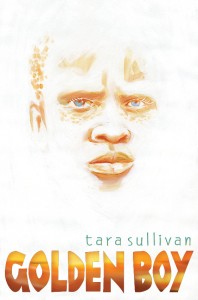 ile Putnam editor Stacey Barney agrees that the clamor for more diverse books isn’t a recent one, she has noted a change in the discussion in recent years. “It’s creeping up to the top of more people’s agenda. The tenor in the conversation has changed in a positive way. It’s moved beyond ‘we need to have more black characters or black authors’ to ‘we need characters of color who are experiencing everyday events,’ not historical landmarks or in an urban setting.” She cites Crystal Allen’s How Lamar's Bad Prank Won a Bubba-Sized Trophy (HarperCollins, 2011) as a great example of this. Barney, who has edited several books with diverse characters, such as Tara Sullivan’s Golden Boy (2013), about the albino killings in Tanzania, and Kristin Levine’s The Lions of Little Rock (2012, both Putnam), does believe that more can be done to market books and authors of diverse backgrounds. "I think people miss the point when they argue that there should be more editors of color, which I think is true," Barney says. "However, what we lack is an infrastructure that will support these books once they’re published. We’ll see more acquisitions when we have more success stories. We have to remember that this is a business. Editors want to acquire books that will get the best marketing launch possible. We just don’t have that in place yet.”
  The desire to promote their books is what inspired Malindo Lo and Cindy Pon to start the Diversity in YA tour and website in 2011. The two authors discovered that they were both publishing Asian-inspired fantasies that year, and wanted to celebrate them and all diverse teen literature with this initiative. Relaunched in 2012 with a Tumblr account, Pon and Lo continue to promote books about all kinds of diversity, from race to sexual orientation to gender identity and disability. And while Lo agrees that there’s been a recent explosion in the blogosphere about the subject, she’s also discovered that writers continue to struggle to get their LGBQT books to the public. “As I have talked to more authors, I have heard stories about many of them—published and unpublished—who have been blocked in their endeavors," she says. "I’m getting this impression that we’re in this stuck point. I’m hoping that the continued discussion raises awareness of this issue, and that there will be considered effort to change that for the better.” What can librarians do? Whitman suggests, “The last few years people have been talking about the need for diversity, but it’s time to put our money where the mouth is. Librarians have always had finger on the pulse of what their readers need, but these resources haven’t always been available to them." Responding to the point that Sun made during Summer Teen about the importance of diversity in YA book covers, one attendee asked how librarians should act in regards to cases of “whitewashing.”
Logo for Disability in Kid Lit website.
Klise, an author and a librarian replied, “I work at an urban high school in Chicago, and know that to engage my very diverse student population in reading for fun, I need to display books with faces they can identify with. We have to be aware of the [whitewashing] cases. It makes for really provocative conversation for my book club at school. The teens share my outrage—and outrage, when funneled into activism, is what makes the world change for the better.” Whitman adds that librarians can make sure to include diverse books in their collection development budget, even if their communities are not diverse. “Look for awesome books no matter what the characters’ backgrounds may be. Even if your community isn’t diverse, the world is. Buy your books accordingly. Seek out resources to help you booktalk those titles. The resources are out there; become aware of them and use and share them with your colleagues.” RESOURCES FOR FINDING DIVERSE BOOKS FOR TEENS AND KIDS From School Library Journal: Collection Development Tamora Pierce’s Fantasy Novel Picks | SLJ SummerTeen By Tamora Pierce Straight Talk on Race: Challenging the Stereotypes in Kids' Books By Mitali Perkins LGBTQ Lit: Speaking Out By Megan Honig From Diversity to Civil Rights | Nonfiction Notes By Daryl Grabarek Jackie Robinson: Remembering an American Hero | Watch and Read By Joy Fleishhacker Islam in the Classroom By Lauren Barack Books to Celebrate the Everyday Heroes of the Civil Rights Movement By Rhona Campbell Resources for Finding Latino Kid Lit By Shelley M. Diaz Kick-Starting a New Life | Recent YA Titles By Mahnaz Dar Our Bodies, Our Minds | Confronting Self-Image in YA Fiction By Mahnaz Dar YA Underground: Books for Teens You Might Have Missed By Amy Cheney Interviews Between Violence and Tenderness: Aristotle and Dante Author Sáenz Talks to SLJ By Karyn M. Peterson Lesléa Newman Discusses her Novel in Verse About the Death of Matthew Shepard, ‘October Mourning’ By Mahnaz Dar The “Radioactive Energy” of Bullies | An Interview with Meg Medina By Jennifer M. Brown The Power of Pictures: A Visit with Bryan Collier By Rocco Staino Andrea Cheng on Etched in Clay, Which Charts the Courageous Life of Dave the Potter By Rick Margolis Looking for Light: In Darkness Author Nick Lake talks to SLJ By Karyn M. Peterson News Articles First Book’s “Stories for All Project” Lobbies for Kid Lit Diversity By Karyn M. Peterson Community Angered by Tossed Black History Collection By Lauren Barack Picture Book About Islam Ignites Twitter Battle By Shelley Diaz Librarians Sound Off: Not a Lack of Latino Lit for Kids, but a Lack of Awareness By Shelley Diaz Kid Lit Authors Discuss Diversity at NYPL By Mahnaz Dar Blog Posts/Opinion 2013 Middle Grade Black Boys: Seriously, People? By Betsy Bird America’s Changing Face | Consider the Source By Marc Aronson From The Horn Book: A Very Good Question By Roger Sutton Young dreamers By Christopher Myers Indigenous protagonists and people of color By Elissa Gershowitz Horn Book Resources for Talking About Race By Horn Book Staff Other recommended sites: Children's Books by and about People of Color Published in the United States CCBC Blog As Demographics Shift, Kids' Books Stay Stubbornly White from NPR CBC Diversity (Maintains a Goodreads account with updated booklists of diverse books and resources.) Stacy Whitman’s Pinterest Board on Diverse YA Fantasy Disability in Kid Lit The Brown Bookshelf American Indians in Children’s Literature Rich In Color (Reviews YA books that feature or are by people of color.) Gay YA De Colores Blog (Reviews books that feature Mexican American characters.) Diversify YA (A collection of short interviews that focus on all sorts of diversity.) Cynthia Leitich Smith has compiled resources on diverse books, including multiracial titles with biracial characters. Forever Young Adult’s new series on diversity in YA Articles on Diversity on YALSA’s Hub Blog It Matters if You’re Black or White: The Racism of YA Book Covers Lee & Low Blog (The multicultural children’s book publisher’s blog.) First Book Blog (The organization’s commitment to diversity in children’s books.) Crazy QuiltEdi (Promoting literacy for teens of color, one book at a time.)
Added To Cart
RELATED


RECOMMENDED
CAREERS
The job outlook in 2030: Librarians will be in demand
CAREERS
The job outlook in 2030: Librarians will be in demand
ALREADY A SUBSCRIBER? LOG IN
We are currently offering this content for free. Sign up now to activate your personal profile, where you can save articles for future viewing
ALREADY A SUBSCRIBER? LOG IN
Thank you for visiting.
We’ve noticed you are using a private browser. To continue, please log in or create an account.
Add Comment :-
Comment Policy:
Comment should not be empty !!!
Lyn Miller-Lachmann
Thank you for this article that adds to the call for more diversity in publishing and provides such a valuable resource list. I appreciate your inclusion of Disability in KidLit along with the logo, because it's an important site for the discussion of invisibility, stereotypes and tropes, and other issues related to an aspect of diversity that a lot of people write about but few as insiders. I have written diverse characters as both a cultural outsider (Gringolandia) and an insider (Rogue) and appreciate both perspectives. I also think there needs to be more discussion on what each perspective can contribute and the limitations of each because my experience is that the outsider's perspective tends to get more positive attention from publishers and critics because it's seen as speaking to a mainstream audience as opposed to just the people from that community.Posted : Mar 08, 2014 01:21
mclicious
I adore Diversity in YA and have enjoyed contributing to it, and I love Lee and Low/Tu as well. But as far as major publishers are concerned, I'm really tired of them talking about how much they care about diversity and being fluffy, but then doing nothing but publishing the same old stuff, plus maybe one "diverse title" each season. Until they take the time and care to establish writers of color and stories about PoC and publish them widely, perhaps even at the expense of a just as decent book about white people, and then stop promoting them as "multicultural" or "diverse" and instead as "books," they're just going to continue to ghettoize them and to imply that these types of books are different and special. If you care about diversity, DO something about it. If you care about diversity, make your frontlist reflect that in a way that says "I don't think of this as weird or different. I think this is natural, because I think books should reflect the world." Otherwise, in my book, these editors don't have the right to claim to be allies. If you're not acting, you're not an ally. Period.Posted : Oct 04, 2013 10:52
cindy pon
thank you for taking the time to write such a great article on diversity in kidlit, and also for including Diversity in YA tumblr, shelley.Posted : Sep 14, 2013 12:21
Ingrid Abrams
Well done, Shelley. As an avid reader of YA LGBTQ lit, I long for the day when I get more stories that don't revolve around white, middle class men. Malinda Lo is great, but we need to clone her!Posted : Sep 13, 2013 09:04