


2018 School Spending Survey Report
"When We Was Fierce" Pulled as Demand Grows for More #OwnVoices Stories
Amid increasing controversy around author e.E. Charlton-Trujillo’s use of a made-up dialect along with what some deem as stereotypical characters in her most recent book, Candlewick Press has postponed publication.
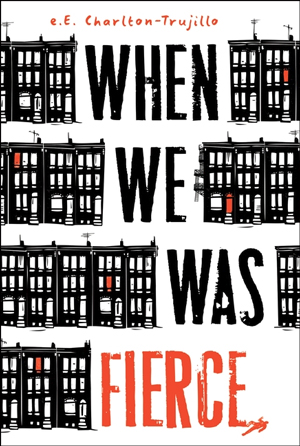 Amid increasing controversy around author e.E. Charlton-Trujillo’s most recent book, When We Was Fierce, and her use of a made-up dialect along with what some deem as stereotypical characters, Candlewick Press has postponed publication of the book. “After discussion between the author, her agent, and Candlewick about the dramatic contrast between the pre-publication reviews as compared to many of the social media and blog responses to When We Was Fierce, we decided together to take some time for further reflection and thus postponed publication,” said Tracy Miracle, executive director of publicity and marketing campaigns for Candlewick Press, in an email to School Library Journal (SLJ). The decision is just one that follows a line of recent concerns around representation of characters in stories, from Scholastic’s decision to pull A Birthday Cake for George Washington to discussions around the use of the word “tribe” alongside images of children in natural surroundings with feathers in their hair, in Lane Smith’s There Is a Tribe of Kids. Some in the literary community are now wondering if publishers will start to lean away from titles and subjects that could invite heated debate—or instead choose to enlist sensitivity readers to pore over manuscripts while also seeking more #ownvoices submissions, which are considered books about diverse characters, written by those in the same diverse group. Candlewick Press’s Miracle says the publisher not only supports the mission of #ownvoices, but also actively welcomes submissions from writers who “...work from their own diverse life experiences and stories,” she says. Additionally, in terms of sensitivity readers, the publisher has “employed outside readers in the past and will continue to do so. The decision is made on a case by case basis, generally between the editor and author,” Miracle says. In the case of When We Was Fierce, some educators, librarians, and authors found that sensitivity lacking. Jennifer Baker, Minorities in Publishing podcast creator and member of We Need Diverse Books, is one. She posted a guest review of a pre-publication copy of When We Was Fierce on the blog, Crazy QuiltEdi, calling the title “off-the-mark” with narration that was “deeply insensitive,” she writes. Although she is emphatic that she is not attacking author Charlton-Trujillo, she joins the ranks of educators and librarians, including K.T. Horning and Edi Campbell, who have also posted on why they have found the book problematic. Baker herself hopes to see more stories told from diverse viewpoints. But to Baker, Charlton-Trujillo’s novel was “glaringly offensive,” she says. “When We Was Fierce was highly problematic from the inaccuracies to this very arm’s length approach, [and] the stereotyping of black characters specifically,” she says. “The made up dialect the author used was so egregious, it is horrible.” When We Was Fierce tells the story of 15-year-old T and the decision he makes, after watching the beating of a disabled teen, that puts him and his friends in danger. Early reviews lauded the story, from Publishers Weekly calling the book a “heartbreaking and powerful modern American story,” to Kirkus referring to the novel as “...a compassionate, forceful look at the heartbreak and choices these black boys and men face.”” Amazon still lists the book with an August 9 publication date. (SLJ has held its review for now.) But Baker is unclear on how the novel could have been seen as anything other than problematic. Nor does she see how the story could be revamped, even as Miracle says they are talking about possible next steps with Charlton-Trujillo, and will discuss those plans “..when we and the author are ready to do so,” she writes. “It’s too offensive,” says Baker of the book. “It is not salvageable.” Even as Candlewick Press says it has used outside readers to review manuscripts, Baker believes more must be done. At a recent American Association of University Professors’ panel, she learned that some university presses, including, she says, Duke University Press and The MIT Press, are looking not just to increase diversity in their books, but also putting structures and guidelines into place to ensure goals, aligned to a clear mission statement, are met. “I think the industry is looking at this with a BAND-AID approach,” she says. “Diversity in books seems easy. They’re getting books with this content. But they’re not making sure this content is respectful, responsible, and accurate.”
Added To Cart
RELATED


RECOMMENDED
CAREERS
The job outlook in 2030: Librarians will be in demand
CAREERS
The job outlook in 2030: Librarians will be in demand
ALREADY A SUBSCRIBER? LOG IN
We are currently offering this content for free. Sign up now to activate your personal profile, where you can save articles for future viewing
ALREADY A SUBSCRIBER? LOG IN
Thank you for visiting.
We’ve noticed you are using a private browser. To continue, please log in or create an account.
Add Comment :-
Comment Policy:
Comment should not be empty !!!
SKS
Responding to the Color Purple argument. Alice Walker is black a child of the south and yes that is how rural black folks spoke back then. I still have some rural cousins who speak in that dialect. Walker's classic is definitely an authentic rendering of one section of historical AA life and culture.Posted : Sep 14, 2016 07:18
Sharon Mentyka
Actually, this is not censorship at all. Censorship is the practice of officially examining books, movies, etc., and suppressing unacceptable parts or refusing to make the book, movie, speech etc inaccessible to others. This is a very different case, where a business decision was made by the publisher to pull its own book. Part of the confusion probably stems from the fact that since books are pre-released for reviews, the content was read by some but is now inaccessible to others.Posted : Aug 27, 2016 11:38
Allison Williams
If we prevent certain titles from being published because they don't meet the standards of outside readers, do we also require publishers to publish books that support the opinions of said readers? Why did the publisher do a complete 180? Did they really change their minds because they saw the error of their ways or were they just too cowardly to take a stand? The marketplace should be broad enough to support a multitude of ideas whether we are comfortable or not.Posted : Aug 26, 2016 02:36
peri
The cool thing about tolerating just the things you approve of from every possible angle is, it makes tolerance so much easier to practice. It becomes something any one of us can aspire to. And indeed, if it results in far fewer worthless books being published than are currently, then it's a regime I can certainly tolerate! With no offense meant toward this particular author or book, neither of which I am familiar with - y'all had this conservative at "pulled from publication"!Posted : Aug 24, 2016 08:26
Allie Jane Bruce
These arguments very much echo those made by D.W. Griffiths when the NAACP protested his baby, "The Birth of a Nation," a century ago. His next project, "Intolerance," was in response to the meanies who'd dared to make him feel uncomfortable by citing how racist his movie was. In his view, the NAACP protesters were the intolerant ones. BECAUSE we live in a society in which freedom of speech is a protected right, people like Edi Campbell and Jenn Baker (and to set the record straight, Jamie, Jenn Baker is a podcaster, writer, and a We Need Diverse Books team member who has extraordinary expertise in the field) have the right to criticize. BECAUSE we live in a free society, Candlewick and e.E. Charlton-Trujillo are free to *change their minds*. Y'all are confusing free speech with consequence-free speech.Posted : Aug 23, 2016 10:19
Realitor76
You - the website owners - are exerting censorship (i.e committing a crime against humanity and against reality itself) by upholding the false notions that (a) there is any such thing as "vulgar language" and (b) that the "idea" and the "messenger" are separable.Posted : Aug 23, 2016 02:43
Realitor76
The tag censorship is appropriate because censorship is the issue. (True definition of censorship = anybody telling anybody else not to say something-or-other). Let's face the facts - if anybody was really offended (felt wounded, dehumanised, and/or threatened) by the invented dialect in this book, that person would be mentally under-developed, and in need of constant care because they unable to cope with everyday life. The complainants are NOT like this. They are power-hungry egomaniacs who have discovered that assuming the role of "professional offence-taker" gives you the power to stifle freedom of expression, and stifle creativity - and that is the single most degrading dehumanizing thing one person can do to another, beyond any physical violence. Because it is an attack on their very Self. I suppose the people who object to the dialect in When We Was Fierce would also object to Thing-Fish if it were written / staged / recorded today?Posted : Aug 23, 2016 02:37
K.B.
@LaShelle @Jamie @rkhurana I find you all's post very interesting in your defense of creativity in using and relying on stereotypes to represent a group. You feel as though people shouldn't be offended and want better from creators. Well in that case you can also defend: Early 20th century films portrayals of Black people with dark skin and big pink lips eating watermelon with low language skills. By you all's logic, they were also being creative so they get a pass. Mid 20th century portrayal of women as simple minded damsels in distress who need men for validation and only like to gossip. Creativity should give these portrayal a pass with you all. When you use a stereotypical portrayal of real world mannerisms and vernacular to portray a people, then yes, it is offensive.Posted : Aug 20, 2016 10:20
LaShelle
As a aspiring black ya author, I find this form of censorship very disturbing. It's called creativity and if you don't like, don't read it. We as African American author must be very careful when playing in this game of respectability politics and shallow diversity. So, the characters' vernacular is not up to their standards; who are they too judge? Should books about black life meet a certain criteria of not offending certain people.Posted : Aug 18, 2016 06:21
Pam
"Postponed publication" isn't quite accurate -- our library as well as others in our consortium have copies on our shelves now.Posted : Aug 17, 2016 09:56
rjones2818
It's an interesting conundrum: Should the publisher be more concerned about placating the author of an offensive piece, or should they be more concerned about offensive materials? I can see going either way on both sides.Posted : Aug 17, 2016 02:53
Kathy Ishizuka
The tag “censorship” was inappropriate to this news story and has been removed. Thank you, readers, for bringing this to our attention.Posted : Aug 13, 2016 05:52