



2018 School Spending Survey Report
Diversity Resources Explode: What Are Your Current Options?
Yesterday a little blog post floating in the ether caught my eye. Called Selecting While White: Breaking Out of the Vendor Box, the article is written by Chelsea Couillard-Smith, the Senior Librarian in Collection Services at Hennepin County Library in Minnesota. I was particularly interested in the subject because I’ve been tossing about the idea […]
Yesterday a little blog post floating in the ether caught my eye. Called Selecting While White: Breaking Out of the Vendor Box, the article is written by Chelsea Couillard-Smith, the Senior Librarian in Collection Services at Hennepin County Library in Minnesota. I was particularly interested in the subject because I’ve been tossing about the idea of a similar blog post along the same veins. These days, I’m very interested in how what I was taught about book selection in library school (rules like “always use professional reviews for any purchase”) has aged and dated. Ms. Couillard-Smith doesn’t go into what they’re teaching kids in MLIS classes these days, but she does offer a keen glimpse into the challenges facing a lot of libraries when it comes to selection.
The other reason the piece seemed timely is that we’ve been seeing a variety of different resources crop up as of late, all dedicated to the idea of helping YOU find diverse books as quickly and easily as possible. Three come immediately to mind, so I’ll do a quick dive into each one.
Beanstack
Let’s do this chronologically. And if I’m going to be honest with you, my first resource is one that I have personally had a hand in. You may recall that each year I produce the Diversity List of picture books, easy books, and early chapter books of the year (here’s 2016 as an example). The whole reason I even have this list is that I’m reading, vetting, and collecting these titles for something called BeanStack. BeanStack is a children’s book discovery platform, and reader’s advisory tool. Initially the idea was that parents could use filters such as “Recommended Age,” “Language,” “Favorite Genres,” and even get a granular as to find books with characters that have a particular ethnicity or religion. You would plug in your filters and it comes up with a list of recommended titles. And who’s vetting those titles? Folks like me.
These days, those filters have been broadened and aren’t as precise. A pity since I’d argue that a recommendation service of that sort was ahead of its time and would be highly sought after now. Today, to access BeanStack you find a participating library. The one closest to me that provides the service is Skokie. You sign-in and it asks you some questions, like so:
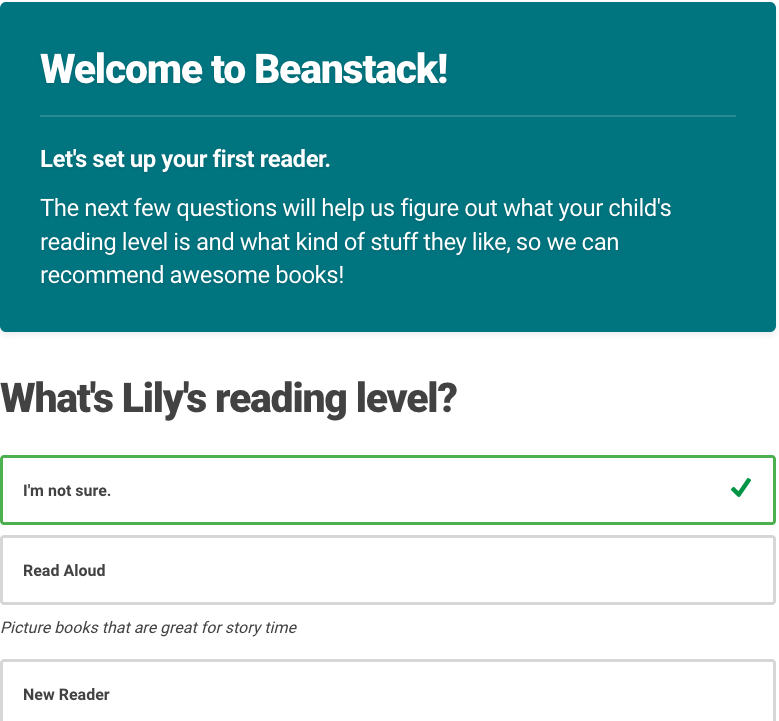
It then gives you a list of recommendations alongside other lures, like badges for reading, a log for keeping track of books, and a lot more.
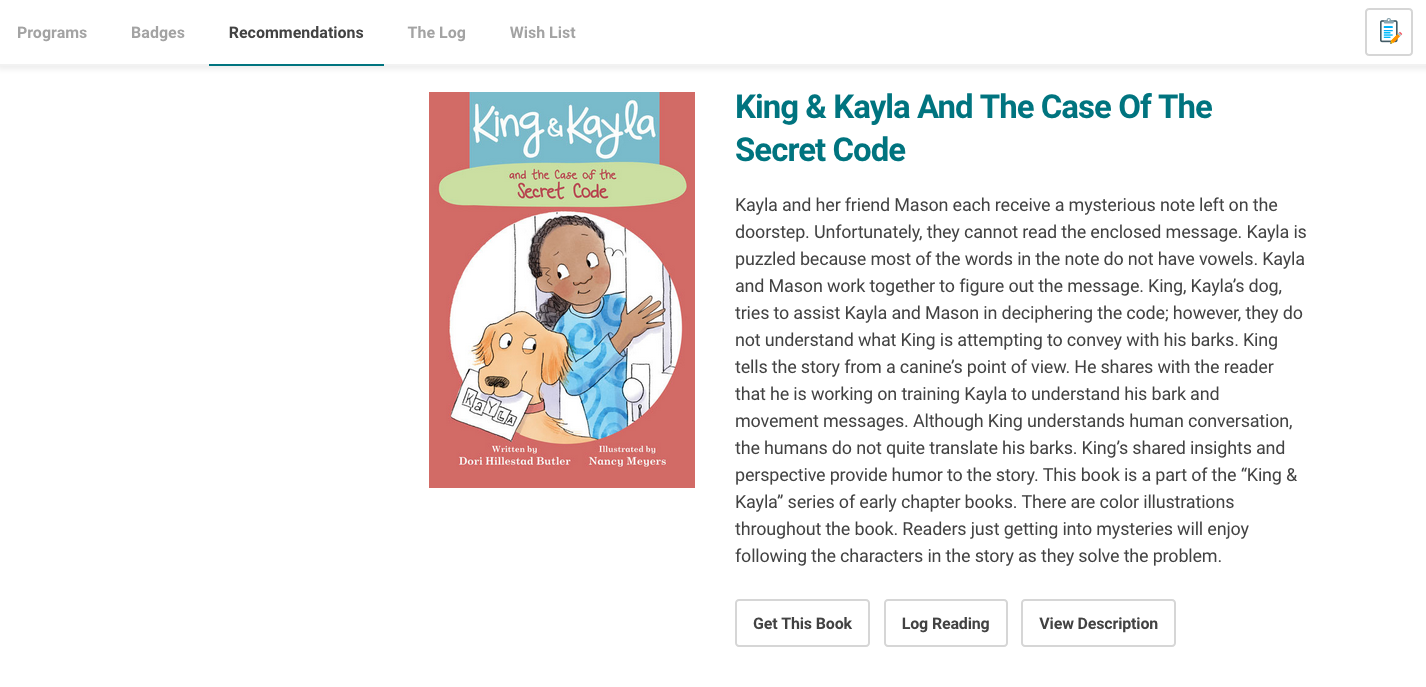
The results are diverse, no question (I’m not sending them titles for nothing, after all) but broad. You simply can’t drill down to find precise books you want.
Diverse BookFinder
Next up, The Diverse BookFinder. Produced by Bates College and helped in part by an advisory board, including such folks as Cheryl Klein from Lee & Low, Diverse BookFinder is, “a public database that went live this week. Designed to mirror the ever-growing Picture Book Collection, the DBF makes — for the first time — diverse picture books findable by both the human characteristics and, importantly, narrative messages that recur in them.”
Well . . . “the first time” isn’t entirely true since they weren’t taking BeanStack (in its original form, Zoobean) into account when they wrote that, but okay. This article discusses the BookFinder’s origins. It’s correct when it says at one point that doing a search for books with specific types of characters in a library catalog is a difficult proposition. Traditional library cataloging doesn’t tend to indicate the race or ethnicity of the people in a book, as they say.
So the BookFinder debuted and the response was pretty swift. A cataloger on the Niblings Facebook page highlighted one of the issues with the Finder:
“ I looked at this from a cataloger’s perspective. Diverse Bookfinder appears to be based on keyword searching–not very specific–and seems to use some kind of tag to indicate content. Unfortunately, as others have pointed out, the usefulness depends on the selection criteria and the rules for classifying materials. As an experiment, I can see the potential. As an actual search engine, I think it needs more granular rules for how headings or tags are applied and a larger database to search. This only seems to apply to one library’s small collection and the subject analysis/tagging acts like it’s applied as a yes/no–are there POC characters, are there characters of different ages–but no analysis of whether the cultures are depicted respectfully and accurately within the work. It’s easier to code for yes/no than to address the actual quality of content. I think the search engine is not quite ready. I hope they have the resources to keep working on it and to improve the approach to the literature.“
That mention of “no analysis of whether the cultures are depicted respectfully and accurately within the work” refers to some of the books that have been coming up in various searches. For example, one of the books that will come up if you perform a search is Tikki Tikki Tembo. By any standards, this is a bizarre inclusion. Other criticisms that have arisen include the fact that Native religious stories are cataloged under “folktales”. And, as Debbie Reese pointed out, the fact that books by Louise Erdrich or Cynthia Leitich Smith are not included is very strange. All this is to say that in its current form the BookFinder needs work. That said, it looks like it may be upgraded continually, and if it makes changes it could potentially be very useful.
Kirkus Collection
Which brings us to the final resource and it’s a doozy. Not too long ago Baker and Taylor (which alongside Ingram is one of the largest book distributors in the country) announced that it was pairing with Kirkus to create the “Kirkus Collection”. Basically, it’s a way for librarians who purchase their books through B&T to find lists of diverse titles from a vetted source. Vicky Smith, children’s book editor at Kirkus, put it this way:
“Kirkus Collections begins with positive Kirkus reviews of books with diverse content, which have been checked against resources such as Disability in KidLit, Latinxs in Kid Lit, and American Indians in Children’s Literature and also reviewed by experts in the various categories in order to identify those books that meet current standards of sensitivity and respect. To those reviews we have applied metadata to capture both marginalized identities and basic genre and format information. We have used this metadata in various combinations to curate lists: “Black & Disabled”; “Latinx Read-Alouds”; “LGBTQIAP Love Stories”; “Teen Romance with Male Asian Love Interests” (a small but, we hope, growing collection that may provide some redress of the wrongs wrought by Long Duk Dong and others of his ilk).
These lists are further refined with a filter that indicates a reader’s experience: learning, identification, or inclusion.”
There’s a webinar on October 26th that discusses this more fully.
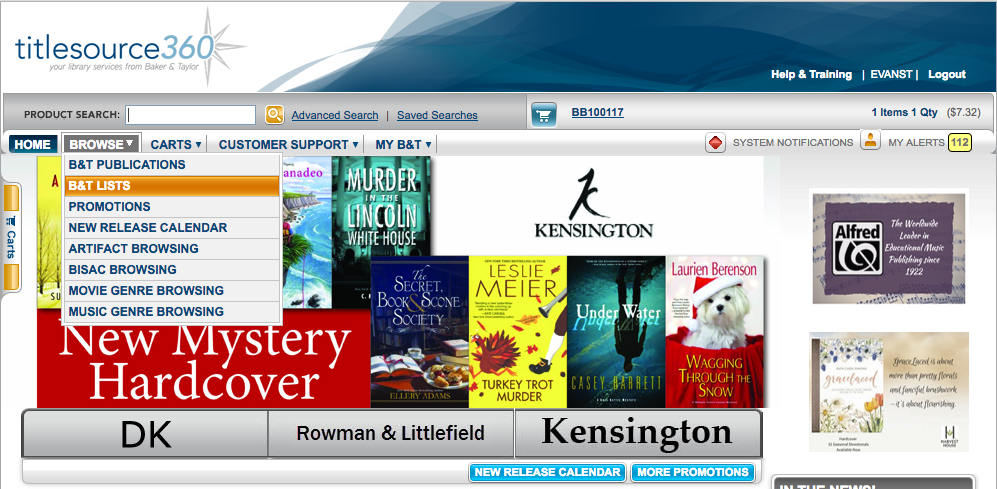
Now these lists are only available to folks that have accounts with Baker and Taylor, so here’s just a quick peek on what they look like. You go to B&T
You select this:
You go here to “Kirkus Collections”:
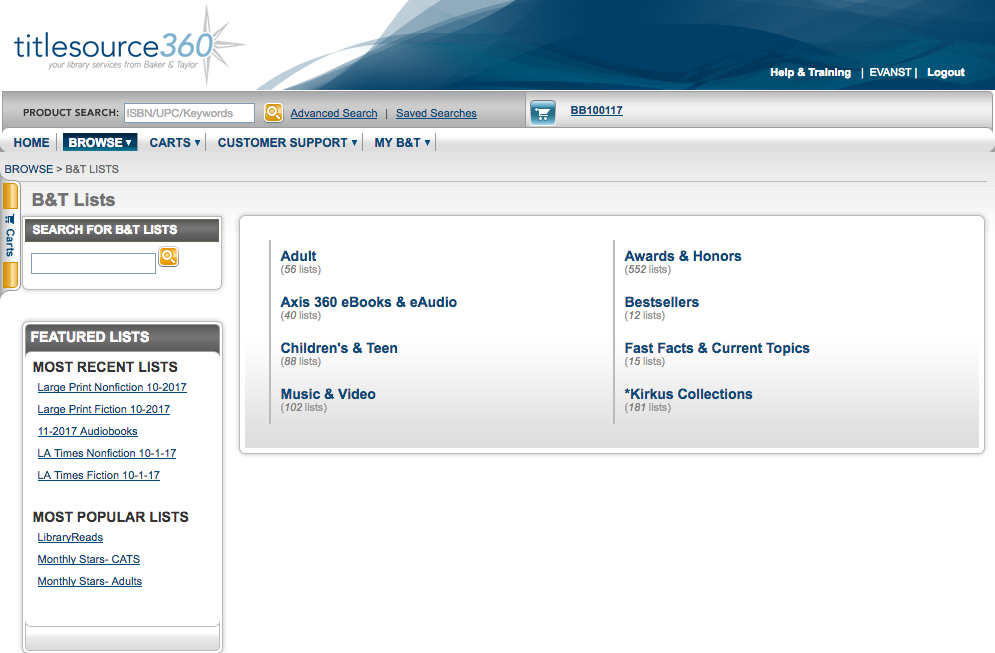
And you get this:

Now because the BISACs on these lists are from Baker & Taylor you’re still going to have some issues. For example, Native religious stories under the “folktale” category from time to time. At the same time, the books I was able to spot were clearly vetted individually. They do lump all the age levels together, which isn’t do or die, just somewhat annoying when you have to apply additional filters. At this point some of the categories are a bit sparse, but one assumes that as they continue to add to these lists (as they have said that they would) they’ll fill up.
So there you have it. Three options and three different methods. And if I don’t miss my guess, this may just be the beginning. I wouldn’t be surprised to see Ingram try to create something similar, or Amazon offering similarly curated lists in the near future. Don’t count out Goodreads or apps we haven’t even seen yet. We’re on the cusp of this. Things may go very fast, very soon.

Added To Cart
RELATED


RECOMMENDED
CAREERS
The job outlook in 2030: Librarians will be in demand
CAREERS
The job outlook in 2030: Librarians will be in demand
ALREADY A SUBSCRIBER? LOG IN
We are currently offering this content for free. Sign up now to activate your personal profile, where you can save articles for future viewing
ALREADY A SUBSCRIBER? LOG IN
Thank you for visiting.
We’ve noticed you are using a private browser. To continue, please log in or create an account.
Add Comment :-
Be the first reader to comment.
Comment Policy:
Comment should not be empty !!!