


2018 School Spending Survey Report
Creating a School Library Makerspace: The Beginning of a Journey | Tech Tidbits
After chasing down the funding, and getting input from colleagues and adviser, Phil Goerner is about to launch a makerspace focused on the basics—with room to grow—in Silver Creek (CO) High School’s library.
 We have great models to guide us as we select the equipment to purchase and the procedures to follow. I was lucky enough to have the cofounder of the very successful community makerspace, Tinkermill, volunteer in my library. He encouraged me to visit their campus several times to see their woodworking and metalworking labs and their huge 3-D printer area. Most importantly, through this, we started to grasp how individual creative ideas could grow into an invention or huge collaborative effort fed by resources and very smart people. We garnered lots of advice and initiated some great partnerships. We even had Tinkermill members donate to our makerspace. They, along with other librarian colleagues, helped us figure out the resources we needed to acquire, experts to contact, and a direction to pursue as we begin to set up a makerspace within our library. While we are still very much in the planning and early implementation stages, things are coming together. We are in the process of setting up a workable location, have ordered supplies, and have begun promoting our program. Where to get the money? There are several online fundraising sites to help raise funds for our venture, such as Kickstarter, GoFundMe.com, and adoptaclassroom.org. You can even sign up for online fundraising with PayPal. We chose to use DonorsChoose.org and I’m glad we did. DonorsChoose has a great model for fundraising. They walked us through what we needed to do to be successful. For example, we briefly described our students and school, wrote about our project, and pitched the sale. A quick online shopping trip filled up our cart, and then we began promoting our project. As people donated money, we wrote immediate thank you notes, and before we knew it, our project was funded, which was a pretty big deal. We also received a grant from our district and local school education foundations to help us purchase a 3-D printer. Each funded grant added up and now we have a solid initial toolkit to offer our students. Next steps
 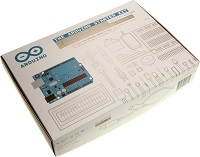 This week we will receive our first purchases. To launch our makerspace, we decided to start with the following tools: the Arduino starter kit, Snap
  Circuits, light and motion kits for simple circuitry concepts, Cubelets, the Sphero Robotic Ball, and a Makerbot Replicator2 3-D printer with supplies. We will soon begin our student-centered Makerspace club, guided by community volunteers and myself. It is amazing how interest grows and new connections are made. Several volunteers come from Tinkermill, while others were grant readers or donors for our project with interest in its success. Others just started showing up, hearing about the project through word of mouth and local press. These Makerspace volunteers will assist with mentoring, training and learning, and recruiting other experts to work with our kids. As we grow, student projects will inform how we move forward. Their interests will direct who we seek out to collaborate with and the tools we’ll need to acquire to meet their needs. Embarking on this journey has been, and continues to be, an incredible learning experience for all involved. Neither my assistant nor I are experts in this field, but we refuse to let that stop us. I fully anticipate that our students will be kind as they teach us what they discover, and what they hope to create.
 See also:
Meet the Makers: Can a DIY movement revolutionize how we learn?
Low Tech, High Gains: Starting a Maker Program Is Easier Than You Think
Community Is Key to Successful Library Maker Spaces
Phil Goerner is a teacher librarian at Silver Creek High School, Longmont, CO.

Added To Cart
RELATED


RECOMMENDED
CAREERS
The job outlook in 2030: Librarians will be in demand
CAREERS
The job outlook in 2030: Librarians will be in demand
ALREADY A SUBSCRIBER? LOG IN
We are currently offering this content for free. Sign up now to activate your personal profile, where you can save articles for future viewing
ALREADY A SUBSCRIBER? LOG IN
Thank you for visiting.
We’ve noticed you are using a private browser. To continue, please log in or create an account.
Add Comment :-
Comment Policy:
Comment should not be empty !!!
Rene Hohls
I work with library staff in schools across my county to help them develop, grow and maintain their school libraries in different ways to meet the needs of their students and staff - and comply with CA Ed Code. I am a huge proponent of makerspaces - especially in libraries - and I have worked with some to begin, revamp and expand those programs and facilities within their libraries. However, I have one district that is essentially planning to replace their school libraries with makerspaces, keeping only a small nonfiction collection in the actual room, and dispersing the fiction and other library books out into other parts of the school on carts. I am horrified because to me, the reasons not to do this seem obvious and abundant. But I am unclear exactly where the new boundaries are around "Library services" required here in CA and specifically, the EdCode that is written in a way that assumes a library is a place and that library services and staffing of a certain kind is recommended to facilitate it. Any insight or ideas? I believe in the best-case scenario, the makerspace is a place within the place - the LIBRARY place. It must be a physical space where literacy, reading, exploring, making, communing, collaborating, and all types of learning may occur. It should be part geographic location, part virtual destination, and part maker/innovator and constantly evolving. But what can we do in California to ensure that students receive equitable access to libraries like that when spending and funding are based on LCFF and the independent visions and interpretations of each district in each county? I feel like the Lorax! I speak for the BOOKS and the kids who READ them!Posted : Jun 19, 2015 12:27
Judy Houser
Congratulations on your new Makerspace. Your students are going to love it!Posted : Jan 22, 2015 01:30