


2018 School Spending Survey Report
Could It Be Published Today?
This past Saturday I hosted a Children’s Literary Salon at the main branch of NYPL that discussed the past, present, and future of children’s book publishing. It was a stellar line-up, moderated by author Jane Zalben. To kick off the panel discussion, the panel was asked a question that has been posed many times before [...]
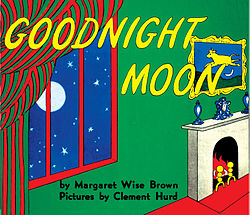 This past Saturday I hosted a Children’s Literary Salon at the main branch of NYPL that discussed the past, present, and future of children’s book publishing. It was a stellar line-up, moderated by author Jane Zalben. To kick off the panel discussion, the panel was asked a question that has been posed many times before but not always in this context. Let us consider the case of Goodnight Moon. Here we have a book that is often considered right up there with Where the Wild Things Are in terms of picture book popularity. So the question is, could it be published today?
This type of question is raised fairly regularly on the internet. It ranges from the sane (Rebecca: Could It Be Published Today?) to the ridiculous (Could The Hunger Games Be Published Today?). It is usually raised to highlight changes in the publishing industry. Then vs. now. The distant (or maybe not so distant) past and our much improved/much impoverished present.
What made this discussion so interesting to me was how it examined the publishing history of Goodnight Moon himself. I was aware that it wasn’t a hit when it came out. It just didn’t make the sales, which seems ridiculous at first glance. What could the public have had against it? But Leonard Marcus made it clear that the book was, itself, a bit of an anomaly. It was a pre-schooler / toddler title in an era when that market simply didn’t get books of their own. Public libraries, the major buyers, weren’t set up to cater to the very young, and books for that age range just didn’t exist. So Margaret Wise Brown’s book came out and missed its mark. It wasn’t until at least five years had passed and a columnist recommended it that the sales started to take off.
The takeaway from all of this is the difference in how long books were allowed to stay in print back then vs. today. These days if you don’t make back your advance in two years (at least) it’s to the out-of-print dustbin with your remainders. Back then a book had a bit more of a chance to find its audience. And as any children’s librarian who has had to deal with summer reading lists from schools will attest, five years is sometimes precisely how long it takes for folks to discover a book.
All this is a roundabout way of saying that the question is impossible to answer because when we are discussion a genre, like picture books, it’s not as though they are published without owing something to their forbears. Goodnight Moon set the tone for all the “quiet books” to come. Bedtime fare was forever changed, and continues to be affected, by its presence in the marketplace. The same could be said if we tried to consider if children’s books as diverse as Where the Wild Things Are or Harriet the Spy or The Phantom Tollbooth could be published today. That said, it’s still fun to ask. And then to look at books being published now, one wonders what books they’ll be saying this about in the future.


Added To Cart
RELATED


RECOMMENDED
CAREERS
The job outlook in 2030: Librarians will be in demand
CAREERS
The job outlook in 2030: Librarians will be in demand
ALREADY A SUBSCRIBER? LOG IN
We are currently offering this content for free. Sign up now to activate your personal profile, where you can save articles for future viewing
ALREADY A SUBSCRIBER? LOG IN
Thank you for visiting.
We’ve noticed you are using a private browser. To continue, please log in or create an account.

Add Comment :-
Be the first reader to comment.
Comment Policy:
Comment should not be empty !!!