


2018 School Spending Survey Report
From Dangerous Journeys to Quiet Revolutions | Nonfiction Notes, June 2013
This month's publications include a range of titles about people, places, and things, in tantalizing formats and glorious color. In both text and images, they're eye-openers, each one likely to whet readers' appetites and send them to the bookshelves looking for more information on the topics they explore.
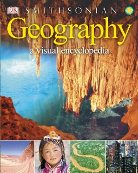 Geography: A Visual Encyclopedia (DK/Smithsonian Institution; Gr 5-8). Combining photographs, artist’s renderings, diagrams, and maps, and paragraph-length introductions and captions across topical spreads, this attractive survey covers subjects from “Planet Earth” to “Mapping the World.” While subtopics are not dealt with in great depth, the book will delight the curious and offer a sampling of subjects to investigate. From the nearly surreal spectacle of the Northern Lights to a desert in bloom, readers will witness some wondrous sites.
 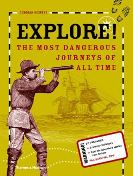 Kespert, Deborah. Explore! The Most Dangerous Journeys of All Time (Thames & Hudson, Gr 4-7). In all, 20 climbs, voyages, treks, and missions by individuals or teams are recorded in this plush-with-illustrations survey. Four pages are devoted to each journey, which note the challenges and dangers and provide background information on the person(s) making the trip (women are well represented), and often, a full-page portrait or photo of the adventurer. Loads of other captioned images are also included: archival photos, diagrams, maps, and drawings, among others. A few sidebars of related information or facts about others who completed or attempted similar journeys are also related. This book is bound to send readers on a trip to the biography section looking for longer works on these intrepid travelers. It’s also a great introduction to nonfiction for children who like adventure stories.
 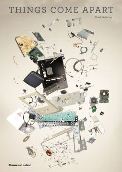 McLellan, Todd. Things Come Apart (Thames & Hudson; Gr 9 Up). Here’s a book for every teen (and adult) who can’t resist an opportunity to take things apart. While exposing the “teardown” of objects, the text, written by conservators, engineers, and tinkerers, will have readers thinking about design (past and present), and the people around the world who people who have created, assembled, and repaired these objects from an upright piano to an iPad 2, all photographed in glorious detail and full color.
 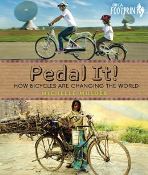 Mulder, Michelle. Pedal It! How Bicycles Are Changing the World. Tate, Nikki. Down to Earth: How Kids Help Feed the World. (Both Orca; Gr 3-7). There are many revolutions occuring around the world, and these titles in the “Orca Footprint” series are covering those of the quiet sort.
  Each book provides a little history on its topic, then jumps into an engaging text filled with personal notes in fact boxes and sidebars (Mulder’s “On My Route” and Tate’s “On Dark Creek Farm”). The abundant color photos will have kids poring over scenes of bicyclists pedaling their businesses about towns and villages and a Maasai child milking a goat. These informative books will encourage readers to think about how people around the world live, feed themselves, and get around. Consider them for science and social studies classrooms. They'll also be enjoyed by any child looking for a good book to read. Engaging and eye opening.
 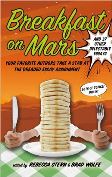 Stern, Rebecca and Brad Wolfe, eds. Breakfast on Mars (Roaring Brook, Gr 6-9). Have you ever tried to find essays for middle school students to serve as mentor texts? Not so easy. The 37 selections here include the typically assigned essays from persuasive to the “how-to.” Featuring selections by Rita Williams-Garcia, Elizabeth Winthrop, Scott Westerfeld, and Kristen Miller, among others, they range from the poignant (Alane Ferguson on the death of a friend), to the informative (Michael Hearst on “The Incredibly Amazing Humpback Anglerfish”), to the humorous (Ned Vizzini on “Why We Need Tails”). Kids will find more than a few entries to suit their tastes, by authors that Margaret Cho comments, “believe that boundaries can be crossed and lines erased, and that sometimes the weirdest ideas are the best ones.”
Added To Cart
RELATED


RECOMMENDED
CAREERS
The job outlook in 2030: Librarians will be in demand
CAREERS
The job outlook in 2030: Librarians will be in demand
ALREADY A SUBSCRIBER? LOG IN
We are currently offering this content for free. Sign up now to activate your personal profile, where you can save articles for future viewing
ALREADY A SUBSCRIBER? LOG IN
Thank you for visiting.
We’ve noticed you are using a private browser. To continue, please log in or create an account.
Add Comment :-
Be the first reader to comment.
Comment Policy:
Comment should not be empty !!!