


2018 School Spending Survey Report
Calling All Environmentalists | SLJ Spotlight
Four nonfiction titles take an innovative approach to ecology.
Books on ecological awareness are nothing new, but these recent books call attention to the environment in innovative ways. Leahy’s Your Water Footprint uses strikingly memorable infographics to impart some unmissable--even shocking--information on how much water it really takes to sustain our life choices, while Kallen’s Running Dry gives readers additional framework on this global issue. Russo’s Birdology encourages kids to find the joy in nature for themselves, through bird-watching and other interactive activities. Finally, Burns’s Beetle Busters, by turns fascinating and frightening, highlights how human error resulted in a massive infestation of longhorn beetles.
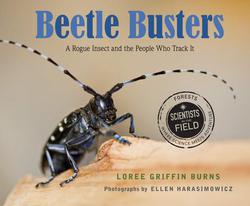
 Burns, Loree Griffin. Beetle Busters: A Rogue Insect and the People Who Track It. photos by Ellen Harasimowicz. 64p. bibliog. further reading. glossary. index. photos. websites. Houghton Harcourt. 2014. Tr $18.99. ISBN 9780547792675.
Gr 5-9 –They arrived unseen, burrowed in wooden pallets, spools, and crates, aboard ships from China. The first group spotted in the United States, in Brooklyn, NY, was contained, and quickly taken care of, but since then infestations have been discovered from Massachusetts to Illinois, and as far north as Canada. They’re Asian longhorned beetles, pests with “powerful jaws and a taste for wood” and the frightening potential to eat their way through North American forests. Griffin takes readers alongside a team of dedicated scientists and citizen volunteers working to eradicate this invasive species in a quarantined area in Worchester County, MA. Along the way, she explains how the creatures can go undetected for years (their life cycle begins inside trees, which keeps them heavily camouflaged) and offers information that early studies on the creature have yielded—not all of it hopeful. Abundant, close-up, color photos of the insect (from egg to pupa to mature adult), damaged trees, onsite workers, and informative labeled diagrams and maps help tell this disquieting story. Burns questions the approach of the scientists she followed and both admires and “trusts.” But for her, the story is also personal. The author lives within the quarantined area in Massachusetts and has seen firsthand areas where swatches of infested (and other) trees have been cut down. Her questions about the method employed will leave readers asking some of their own—as they should. A timely, well-told story and a call to action. School Library Journal
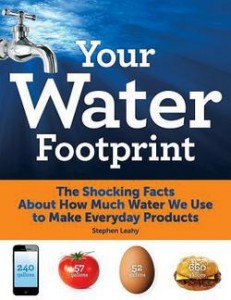 Leahy, Stephen. Your Water Footprint: The Shocking Facts About How Much Water We Use To Make Everyday Products. 144p. further reading. index. maps. notes. photos. websites. Firefly. 2014. Tr $35. ISBN 9781770854994; pap. $19.95. ISBN 9781770852952.
Gr 4-8 –With exceptionally clear and informative prose and an abundance of well-designed infographics, this book presents the shocking facts about our water usage. Quite simply, we are using too much water in our everyday lives and this consumption cannot be sustained. Consider, as Leahy points out, that it takes 634 gallons of water to produce a single cheeseburger or 660 gallons of water to produce one cotton shirt. This title provides an impressive amount of data, making the issue of water use concrete and inescapable. Leahy helps readers understand the nature of the problem by highlighting what is important to know about our global, national, and local water consumption and why; explaining the significance of concepts such as water footprint (or the amount of water it takes to produce the goods and services consumed by an individual or community); emphasizing noteworthy ideas; and providing suggestions for making wise choices. To assist readers in becoming informed decision-makers, the text and infographics work together to describe the scope of the problem by providing information about water consumption at home, in our foods, and in farming and manufacturing. The urgency of the situation is emphasized, but so, too, are the steps readers can take to address the crisis. This is an exemplary book for focusing on Common Core standards that emphasize the integration of text and graphics in both reading and writing. Pair this book with Paul Fleischman’s Eyes Wide Open (Candlewick, 2014) to enlighten readers further about urgent water and ecology issues.
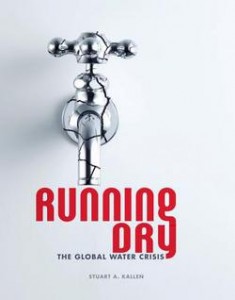 Kallen, Stuart A. Running Dry: The Global Water Crisis. 64p. bibliog. diag. ebook available. filmog. further reading. glossary. index. notes. photos. websites. Twenty-First Century. Feb. 2015. RTE $33.32. ISBN 9781467726467. LC 2014003223.
Gr 4-8 –This title provides a clear and concise look at the importance of fresh water in sustaining life on earth. An introduction explains where fresh water is available and where it is most needed, while subsequent chapters discuss how water is tainted and where, the concept of supply and demand, and our changing climate. Fast facts, statistics, and information on governmental policies and scientific innovations that may help save water are all presented, allowing readers a brief overview of this global issue. The information is organized well, and the accompanying photos will enhance understanding. Both the length and format (comprised of short sections that shed light on various topics, such as water conservation, water rights, fracking, and the water cycle) of the book will appeal to those with little or no background on the subject. An excellent source for student research.
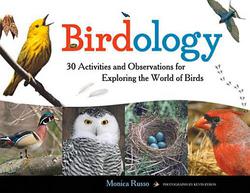 Russo, Monica. Birdology: 30 Activities and Observations for Exploring the World of Birds. photos by Kevin Byron. 128p. bibliog. index. photos. Chicago Review. Jan. 2015. pap. $15.95. ISBN 9781613749494.
Gr 4-6 –One way to address today’s “nature deficit” is to focus on the birds outside almost every window. Observation activities set off in color text boxes are designed to develop observation skills and cultivate an understanding of bird behavior. Each chapter focuses on a different aspect of birds, such as field marks, beaks and feet, wings, eyes and nests, and more. Feathers make birds unique, and the first chapter describes the different kinds. Color photos of wing and tail feathers highlight their different shapes, and photographs of birds in flight show how the feathers function. One “Eyes Only” box explains that since picking up a wild bird feather is not only illegal but also not healthy, looking without touching is best. “Try This” boxes highlight such activities as bird feeding, walking like a heron, and building a small brush pile where birds can roost. One “Listen For” alerts novice bird observers to figure out different bird songs, calls and alarm signals, and the honking and quacking of birds in flight. An excellent glossary of “Bird Words” provides definitions, and the four-page index differentiates pictures from text with italics. Beautifully illustrated with full color photographs and sketches, this is sure to create new bird watchers.

Added To Cart
RELATED


RECOMMENDED
CAREERS
The job outlook in 2030: Librarians will be in demand
CAREERS
The job outlook in 2030: Librarians will be in demand
ALREADY A SUBSCRIBER? LOG IN
We are currently offering this content for free. Sign up now to activate your personal profile, where you can save articles for future viewing
ALREADY A SUBSCRIBER? LOG IN
Thank you for visiting.
We’ve noticed you are using a private browser. To continue, please log in or create an account.

Add Comment :-
Be the first reader to comment.
Comment Policy:
Comment should not be empty !!!