


2018 School Spending Survey Report
Build It, and They Will Come | The National Museum of African American History and Culture
On Saturday, September 24, 2016, the Smithsonian’s National Museum of African American History and Culture (NMAAHC) will open its doors.
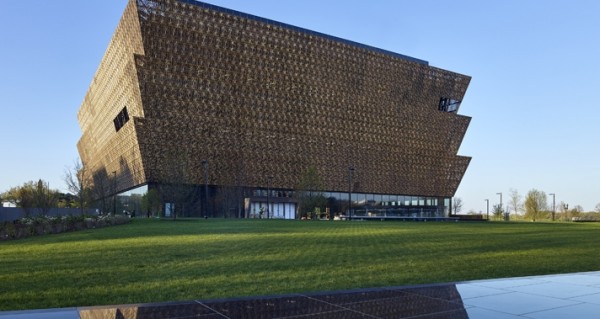
The National Museum of African American History and Culture. Building by David Adjaye, Philip Freelon, and Freelon Adjaye Bond/SmithGroup
On Saturday, September 24, 2016, on the National Mall in Washington, DC, a place once bordered by "pens for enslaved people bound for the Deep South,” the Smithsonian’s National Museum of African American History and Culture (NMAAHC) will open its doors. Originally conceived of as a memorial, this testament to the history, culture, and contributions of African Americans to our nation has been 100 years in the making. In her book How to Build a Museum (Viking, 2016; Gr 5 Up), distinguished author Tonya Bolden discusses the museum's long road to fruition, the visions of its director, designers, and architects, and the collection.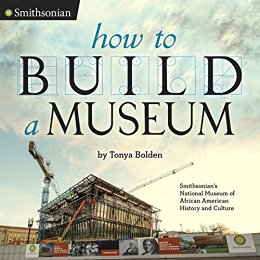 The idea for a National Museum of African American History and Culture grew from a 1915 proposal to honor African American veterans. Why did it take so long to build? The original dream was to have in our capital a tribute to blacks who had fought for the nation in the American Revolution and in subsequent wars. By the late 1920s, the dream was bigger: a national museum celebrating black achievement not only in the military but also in the arts and sciences, in education—in the whole universe of human endeavor. It took 100 years for the dream to have “wings,” because, sadly, outside of the black community, most Americans, from workaday folks to politicians, simply did not believe that black lives, black contributions matter. Not until 2003 was NMAAHC established. Then it took 13 years to get it built. How significant is it that the museum stands on the National Mall? Major-major! The National Mall is the center of our nation’s capital. The National Mall is the country’s front yard. Lonnie G. Bunch III, the museum’s director, had a monumental task. Not only did he have to build a team, he had to formulate and articulate a vision for the museum. What is important to know about his vision? Director Bunch had to build a team, build a collection, get the building constructed—and raise $250 million. He once likened it to being on “a cruise in uncharted waters at the same time that you are building the ship.” And, yes, there was the vision. NMAAHC presents American history through an African American lens. It strengthens our grasp of American history. It helps all people understand that black history is everybody’s history. As Martin Luther King, Jr. stated, “We are made by history.” As James Baldwin said, “...history is literally present in all that we do.” Equally important, presenting the black experience upon these shores—the pain, the progress, the promise—NMAAHC’s emphasis is on people vs events. It’s all on a very human, humanizing scale. I loved reading about the museum’s Antiques Roadshow-style tour and search for artifacts, documents, photos, recordings, books, and other materials. What are some of the items the tour yielded, and what we can look forward to seeing on display? People brought family heirlooms to NMAAHC’s Save Our African American Treasures workshops to learn more about their items—for example, how best to preserve them. Inevitably, some participants decided that NMAAHC would be the ideal home for their treasures. That’s how NMAAHC acquired a badge from a 1910 convention sponsored by the beauty-care company built by Madam C. J. Walker, one of our first black female millionaires. Can you talk about the symbolism of the building’s design? The central feature is a three-tier corona inspired by Yoruba sculpture. That’s significant because the Yoruba people are one of the largest ethnic groups in West and West Central Africa, and the home of most of the millions of children and adults ripped from their homes and families for enslavement in Europe and the Americas. The 3,600 gorgeous bronze-colored panels—the corona’s skin—are an homage to the exquisite gates, fences, railings, window grilles, and other ironwork created ages ago by black artisans, enslaved and free, in different parts of the South. And finally, will you be attending the festivities this weekend? Yes! I will have the wonderful opportunity of setting foot inside this monumental, majestic, long-sought, long-fought-for museum on Saturday after my presentation and signing at the Library of Congress’s National Book Festival. A weekend like no other!
Added To Cart
RELATED


RECOMMENDED
CAREERS
The job outlook in 2030: Librarians will be in demand
CAREERS
The job outlook in 2030: Librarians will be in demand
ALREADY A SUBSCRIBER? LOG IN
We are currently offering this content for free. Sign up now to activate your personal profile, where you can save articles for future viewing
ALREADY A SUBSCRIBER? LOG IN
Thank you for visiting.
We’ve noticed you are using a private browser. To continue, please log in or create an account.
Add Comment :-
Be the first reader to comment.
Comment Policy:
Comment should not be empty !!!