


2018 School Spending Survey Report
15 New Manga Series to Freshen Up Teen Collections
"Good Comics 4 Kids" blogger Brigid Alverson offers a look at 15 new manga series for teens that libraries will want to add to their collections.
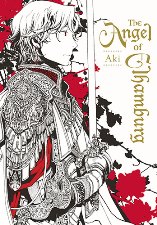 The Angel of Elhamburg by Aki. Yen Pr. 1 vol. Complete. Gr 8 Up–This quiet story of a king and his loyal friend is complete in one volume, and it’s a beautiful hardcover, too. As the story opens, Madeth has overthrown the evil lord and become king, but his friend Lalvan has done a lot of the work. That continues as Madeth rules his new kingdom, with Lalvan running the army and even writing love letters for the king. The tension between them remains unspoken until the king’s son is born, and then it grows into an irreparable rift. Overseeing it all is a silent angel, whom Lalvan can see but Madeth cannot and whose existence is a mystery that threads through the story.
  A Certain Magical Index by Chuya Kogino, Kazuma Kamachi, & Kiyotaka Haimura Yen Pr. 13 vol. Ongoing. Gr 8 Up–The students in Academy City learn to develop their psychic powers using scientific means, and while Touma Kamijou isn’t a great student, he does have one very useful power: he can block the powers of others. He’s heading for a boring summer of makeup classes when Index, a nun, drops into his apartment (literally) and he finds himself protecting her from various evil forces. This shonen manga has plenty of action, but it also mixes in a quasi-religious plot: Index has thousands of grimoires (evil spells) stored in her brain, and there’s tension between the two different systems for developing superpowers, one based on science and one on magic.This manga is based on a series of light novels, also published by Yen, and there’s an anime as well.
  The Demon Prince of Momochi House by Aya Shouoto. Viz. 7 vol. Ongoing. Gr 8 Up–Himari’s parents died when she was young, but on her 16th birthday, she learns that she has inherited a house from them. Even though it’s falling apart and located in a forest, she’s determined to live there, as it’s her only connection with them. Condition and location turn out to be the least of her worries, though: the three young men squatting there, who refuse to leave, are a much bigger issue. It turns out that the house was built in the space between the human and spirit worlds, and it serves as a gateway for the spirits. One of the squatters is the guardian of the house, who must keep the spirits at bay and protect Himari from them. The story hews fairly closely to the shoujo romance genre but brings in some interesting twists as the spirits use their magic to try to lure Himari to their side of the divide.
 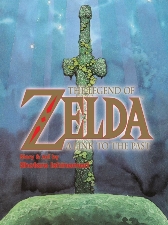 Legend of Zelda: A Link to the Past by Shotaro Ishinomori. Viz. 1 vol. Complete. All Ages–This manga, first published in the 1990s in Nintendo Power magazine, closely follows the story line of the Legend of Zelda game. The large, full-color format makes it easy to distinguish from Akira Himekawa’s later “Legend of Zelda” series, also published by Viz. Ishinomori is the creator of the classic sci-fi manga “Cyborg 009,” and his art may look a bit dated, but the manga should appeal to fans of the game.
  Let’s Dance a Waltz by Natsumi Ando. Kodansha. 3 vol. Complete. Gr 8 Up–From the creator of Kitchen Princess (Kodansha, 2013) comes another comfortable shoujo romance, this one about a lonely girl, Hime, who finds a new life in the world of competitive ballroom dancing. Her partner is the aptly named Tango, a dance instructor who has shied away from competitive dancing since he was a child, and what little tension there is here centers on whether Hime will lure him back. Although the plot sounds a lot like Your Lie in April, except with dancing instead of classical music, this story is much more emotionally subdued.
  Log Horizon by Mamare Touno and Shoji Masuda. Yen Pr. 2 vol. Ongoing. Gr 8 Up–The setup of this manga is not that different from that of the series “Sword Art Online”: Players are trapped inside a game, whose world becomes their new reality. Log Horizon has a different feel to it, though. Players in this game don’t die, so the stakes are not as high, and while in-game life is not that pleasant, there isn’t the same urgent need to escape. As a result, this title reads like a fantasy tale with a few gaming elements thrown in. The manga is based on a series of light novels (a type of Japanese young adult novel, often illustrated), which Yen Press is also publishing in English.
 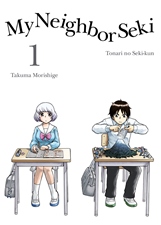 My Neighbor Seki by Takuma Morishige. Vertical. 7 vol. Ongoing. Gr 8 Up–Rumi Yokoi is having trouble focusing in class, but it’s not because she has ADHD—it’s because of Seki, who sits next to her. Seki amuses himself with a constant stream of games and tricks, and Yokoi can’t help but get caught up in the action. This is a great classroom comedy that plays off of Seki’s nonchalance and Yokoi’s over-the-top reactions. Every chapter is a self-contained story, so you can start with any volume.
  Planetes by Makoto Yukimura. Dark Horse. 2 omnibus vol. Complete. Gr 9 Up–This tale of space junkmen got great reviews when it was first published by Tokyopop in the mid-2000s, but as so often happens, sales did not mirror the critical reception. Dark Horse will bring it back in an omnibus edition, with the first volume due out in December. Yukimura is also the creator of the historical manga Vinland Saga (Kodansha, 2013).
 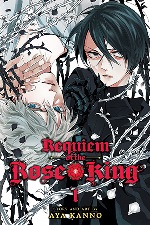 Requiem of the Rose King by Aya Kanno. Viz. 4 vol. Ongoing. Gr 11 Up–Kanno is best known for her gender-bending comedy Otomen (Viz, 2009), a high school romance about a boy who likes girly things. This much darker story is a gender-bending tragedy, loosely based on Shakespeare’s Richard III, but with a twist: Richard is non-gender binary. The story is filled with symbolism (roses, a white boar), violence, and family drama of all sorts, and it’s told in a cinematic, sometimes elliptical way, with flashbacks and dream sequences. This approach makes for a sophisticated but somewhat difficult read; that coupled with the violence and a few mild sexual situations make this a better choice for older teens.
  A Silent Voice by Yoshitoki Oima. Kodansha. 7 vol. Complete. Gr 8 Up–Shoya Ishida regards life as a constant struggle against boredom, and he pushes his friends toward more extreme stunts, such as leaping off bridges, until they become uncomfortable. When a deaf girl, Shoko Nishimiya, comes to his class, he finds her an irresistible target, and he leads his classmates in bullying her until she is forced to leave school. Even before that happens, however, Shoya’s classmates turn on him, and he finds himself living in near isolation. Six years later, he decides to apologize to the bullied girl and then commit suicide. Instead, he finds his life starting to come back together—but because of all the pain he caused, he has a bumpy road ahead. This is a refreshing story: Oima avoids the usual tropes, and the characters act like real people. It’s a powerful tale dealing with sometimes troubling themes, but a very worthwhile read.
  So Cute It Hurts! by Go Ikeyamada. Viz. 12 vol. Ongoing. Gr 8 Up–Twins who switch places are a common shoujo manga trope, but the twist here is that the book involves a brother and sister. Megumu is a history nerd, while Mitsuru, her twin brother, is a fighter and a ladies’ man. They go to different schools, so when Mitsuru needs Megumu to take his place for a history test, and they switch places (and clothes), things get complicated: Megumu gets dragged into a fight at her brother’s all-boy school, while Mitsuru learns that girls’ lives are more complicated than he realized—especially after he falls for a deaf girl who is being bullied. Throw in a super-nasty supermodel (she’s the bully) and a mysterious dude who smells of lavender, and you have the setup for a pretty good romantic comedy with a few interesting angles.
  Steins;Gate by Nitroplus. Udon. 3 vol. Complete. Gr 11 Up–Based on a video game, Steins;Gate is a science fiction story about a group of students who accidentally make a time machine from a microwave and a cell phone and who figure out how to send texts to the past. Naturally, their invention brings them to the attention of the wrong people. The narrative wraps in some real-world elements, such as John Titor (who showed up on bulletin boards in 2000 claiming to be a time traveler from the year 2036) and the Large Hadron Collider at CERN.
  Twin Star Exorcists by Yoshiaki Sukeno. Viz. 5 vol. Ongoing. Gr 8 Up–The exorcists in this series have nothing to do with devils; they fight monsters called Kegare that prey on humans. When he was young, Rokuro wanted to be the best exorcist ever and kill all of the Kegare, but he gave up on his dream after a terrible incident in which all his friends were killed. The problem is that being an exorcist is the only thing he’s good at. Then Benio, a female exorcist, appears, and he travels with her to the land of the Kegare to rescue two children. Here’s the twist: after Rokuro and Benio fight side by side a few times, they are told by their leader that they are fated to marry and give birth to the greatest exorcist of all. This story mixes plenty of shonen battle action with another common manga plot, the couple who hate each other but are forced to live under the same roof—although, as they are 14, the marriage thing is still purely theoretical.
 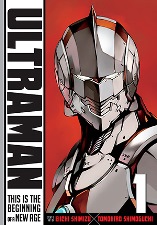 Ultraman by Eiichi Shimizu and Tomohiro Shimoguchi. Viz. 5 vol. Ongoing. Gr 8 Up–“Ultraman” started as a superhero TV show in the 1960s (you can see the early episodes on Netflix) and expanded into one of the most popular media franchises ever, with dozens of spin-off movies, comics, and television shows. This volume goes back to the series’ roots, featuring the teenage son of the lead character from the original show. Shinjiro Hayata has inherited some superpowers of his own, and he gets a boost from a special suit. While this story borrows the characters from the original, it’s more serious than the campy original and reads like a superhero comic, with emphasis on the action scenes and a hero who must overcome his insecurity in order to fight against evil.
  Your Lie in April by Naoshi Arakawa. Kodansha. 11 vol. Complete. Gr 8 Up–Arima Kosei was a piano prodigy, thanks in part to his mother, a former pianist whose strict training crossed the line into abuse. After she died, he became unable to hear piano music and could no longer play—until a free-spirited violinist, Kaori Miyazono, came into his life and forced him to go back onstage. This manga is rooted in the romance genre, but it folds in serious issues, such as abuse and depression (Arima describes his world as monotonous) as well as some interesting visual tropes (notes peel off the page when Arima tries to play) and discussion of classical music, including references to pieces and musicians.
Added To Cart
RELATED


RECOMMENDED
CAREERS
The job outlook in 2030: Librarians will be in demand
CAREERS
The job outlook in 2030: Librarians will be in demand
ALREADY A SUBSCRIBER? LOG IN
We are currently offering this content for free. Sign up now to activate your personal profile, where you can save articles for future viewing
ALREADY A SUBSCRIBER? LOG IN
Thank you for visiting.
We’ve noticed you are using a private browser. To continue, please log in or create an account.

Add Comment :-
Comment Policy:
Comment should not be empty !!!
Janee
This is a wonderful article! Thank you!Posted : Aug 08, 2015 01:29