




2018 School Spending Survey Report
THEY’RE ALIIIIIIIIVE! 2017 Out-of-Print Books Back From the Dead
I like too many things. It’s beginning to get suspicious. One day I might write a post about the necessity of world literature on our children’s bookshelves. The next day I turn around and start beating the drum for small publishers. Blink again and it is imperative that I talk to you about the importance […]
I like too many things. It’s beginning to get suspicious. One day I might write a post about the necessity of world literature on our children’s bookshelves. The next day I turn around and start beating the drum for small publishers. Blink again and it is imperative that I talk to you about the importance of showing kids that women can be funny. And today? Well, today’s an easy one. Couldn’t be simpler:
LET’S HEAR IT FOR OUT-OF-PRINT BOOKS!!!
Think about them for a moment. Unless a book is lucky enough to somehow zero in on the cultural zeitgeist and becomes an evergreen classic, the likelihood is that it will go out-of-print somewhere between its publication and its first decade mark. And if you think the sheer number of books being published for kids this year is impressive, that number’s got NOTHING on the thousands upon thousands of children’s books that have gone out-of-print. Children’s librarians know what I’m talking about. After all, we’re the ones that field the requests from patrons who say, “Okay, so there was this book I loved as a kid . . .”
But once in a great while a book is given a new lease on life. It’s back in print! Thus you have publishers like New York Review Books and their Children’s Collection that deal exclusively in the realm of out-of-print materials. On the flip side are regular publishers that make an exception for a beautiful reprint once in a while.
Folks have been asking me about 2017 trends lately. Here are the only three I’ve been able to identify:
- It’s a weird Newbery year
- Nonfiction is VERY prolific in 2017
- There appear to be more reprinted out-of-print titles this year that I’ve seen in a long long while.
Today I cannot say that this is a complete list of those reprinted books. For example, on the reprinted novel side of the equation I’ve failed to take my usual meticulous notes. What I can say, however, is that this is a smattering of some pretty remarkable titles. I don’t know who’s been behind their republication, but a hat tip to them. I hat tip them one and all!
Picture Books Reprinted in 2017
The Camping Trip by Sven Nordqvist
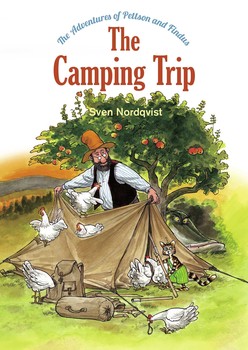
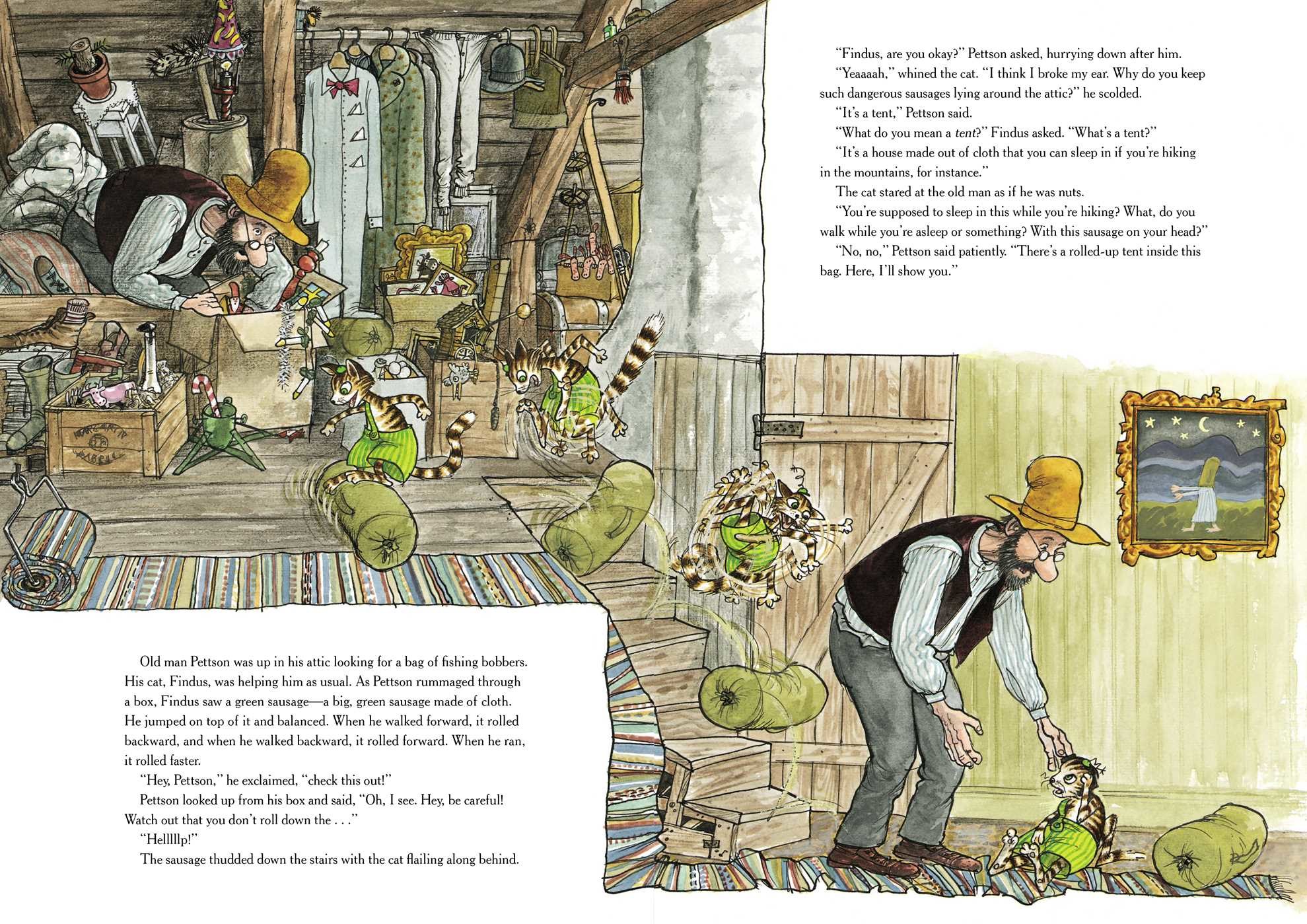
You might quibble with whether or not a translated title can count as “reprinted” but I am under the distinct impression that the books in the Pettson and Findus series (which are Swedish in origin) were originally published in America by NorthSouth books. Now they appear to be coming out with Simon & Schuster. Not sure where the switch happened there. In any case, the books as a whole are utterly charming and “The Camping Trip” is particularly fine. By my thinking any book that displays a cat with a beanie is doing something right.
Cat Goes Fiddle-I-Fee by Paul Galdone
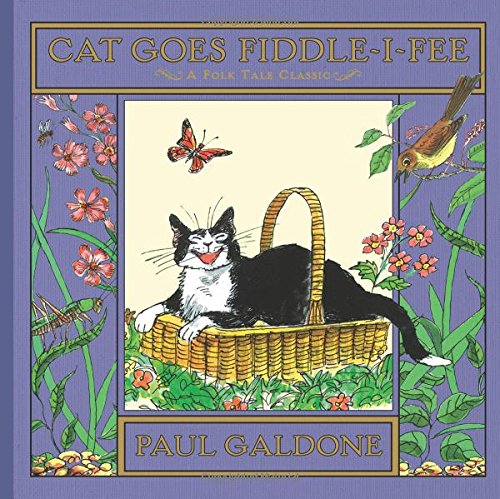
I’ll confess that I’ve no idea if any of Galdone’s books have actually gone out-of-print. All I’m going by here is the fact that Galdone’s books have been released in beautiful new hardcover editions slowly over time. This one is perfect for singing storytimes, so it’s good to see it back. No word if his truly terrifying Tailypo is in the works for the future.
Crocodile Tears by Andre Francois
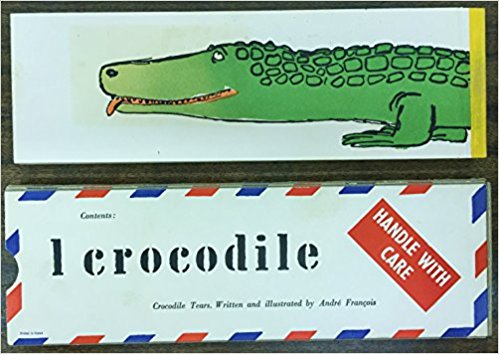
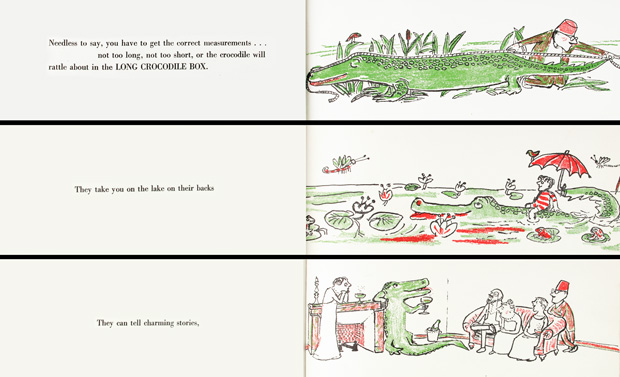
Years ago, when I worked for NYPL, some librarians and I were in the Children’s Collection of 42nd Street’s stacks (below Bryant Park) trying to assess how many copies of each book to keep. In our travels we stumbled on Crocodile Tears by Andre Francois, notable not just for its peculiar horizontal length but also the cute little box case it came in. As it turns out, children’s literature scholar Leonard Marcus is a huge fan of the book. I never really had a chance to read it back in the day, but now at long last I have and it’s delightful! Sort of a predecessor to Lyle Lyle Crocodile and I, Crocodile amongst others.
The Fire Horse: Children’s Poems by Mayakovsky & Kharms, translated by Eugene Ostashevsky
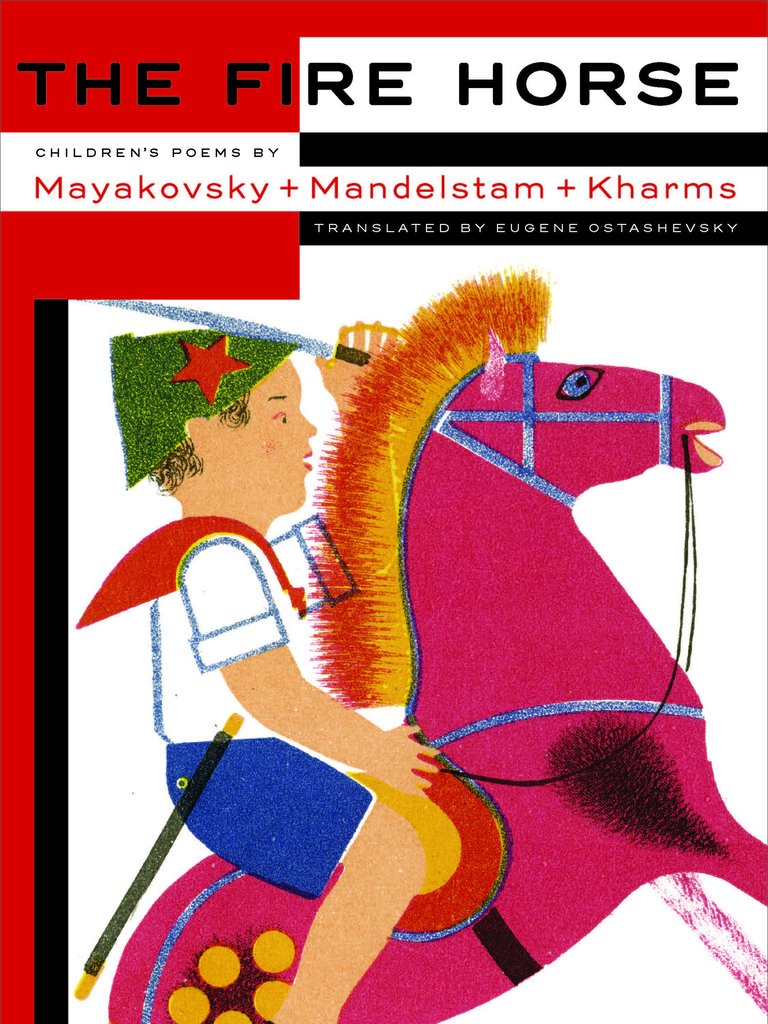
I mentioned this book in my recent post on Russia and Children’s Literature but it bears repeating. As I wrote:
“Rather than a collection of poems the book contains three children’s books, originally published in Russian in the 20s. There’s a Philip Pullman blurb in the accompanying letter from the publisher saying, “The early Soviet period was a miraculously rich time for children’s books and their illustrations.” This is borne out by the tales inside. The first is a 1928 title called “The Fire-Horse” where a boy acquires an appreciation for everyday workers as each one helps to make him a part of a toy horse to ride. The 1928 “Two Trams” is an odd, dreamlike tale of anthropomorphic tramcars named Click and Zam who work the tracks of Leningrad. Finally, there’s the 1930 story “Play”, my personal favorite, with a concept that could be published easily today. Three boys play pretend, one as a car, one as a plane, and one as a ship. The fates of the authors of these stories are almost as engrossing (for grown-ups) as the tales themselves. Daniil Kharms was an absurdist poet and founder of the avant-garde collective OBEIRU. He died at the age of 37. Vladimir Mayakovsky was part of the Futurist movement. Osip Mandelstam wrote a poem called “Stalin Epigram” and died in a transit camp in 1938.”
The Frog in the Well by Alvin Tresselt, ill. Roger Duvoisin
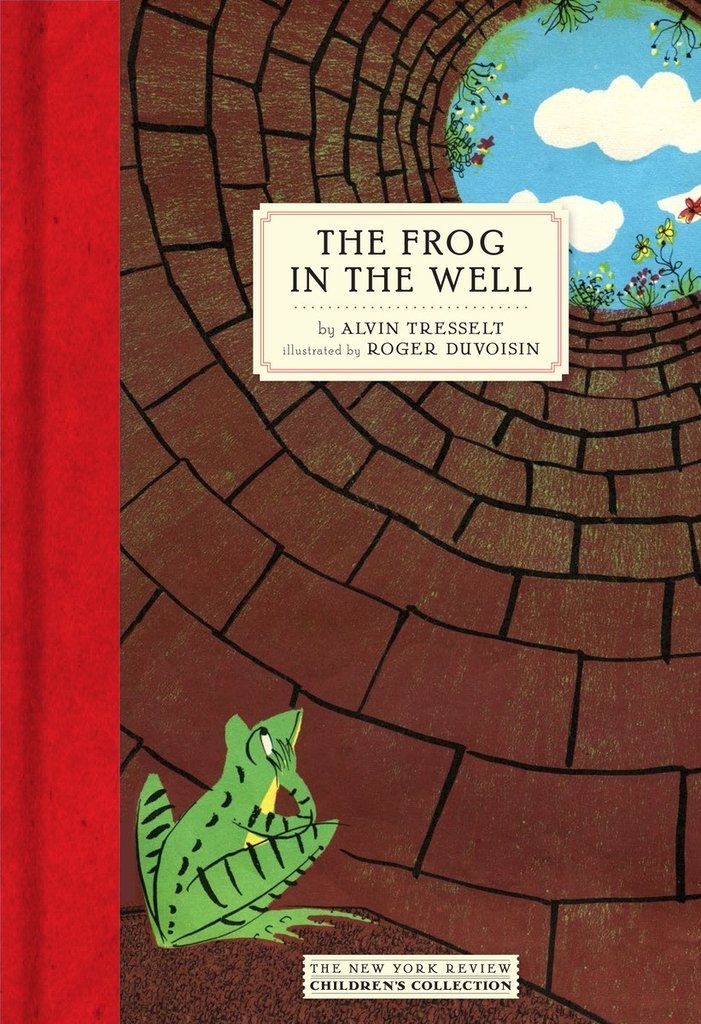
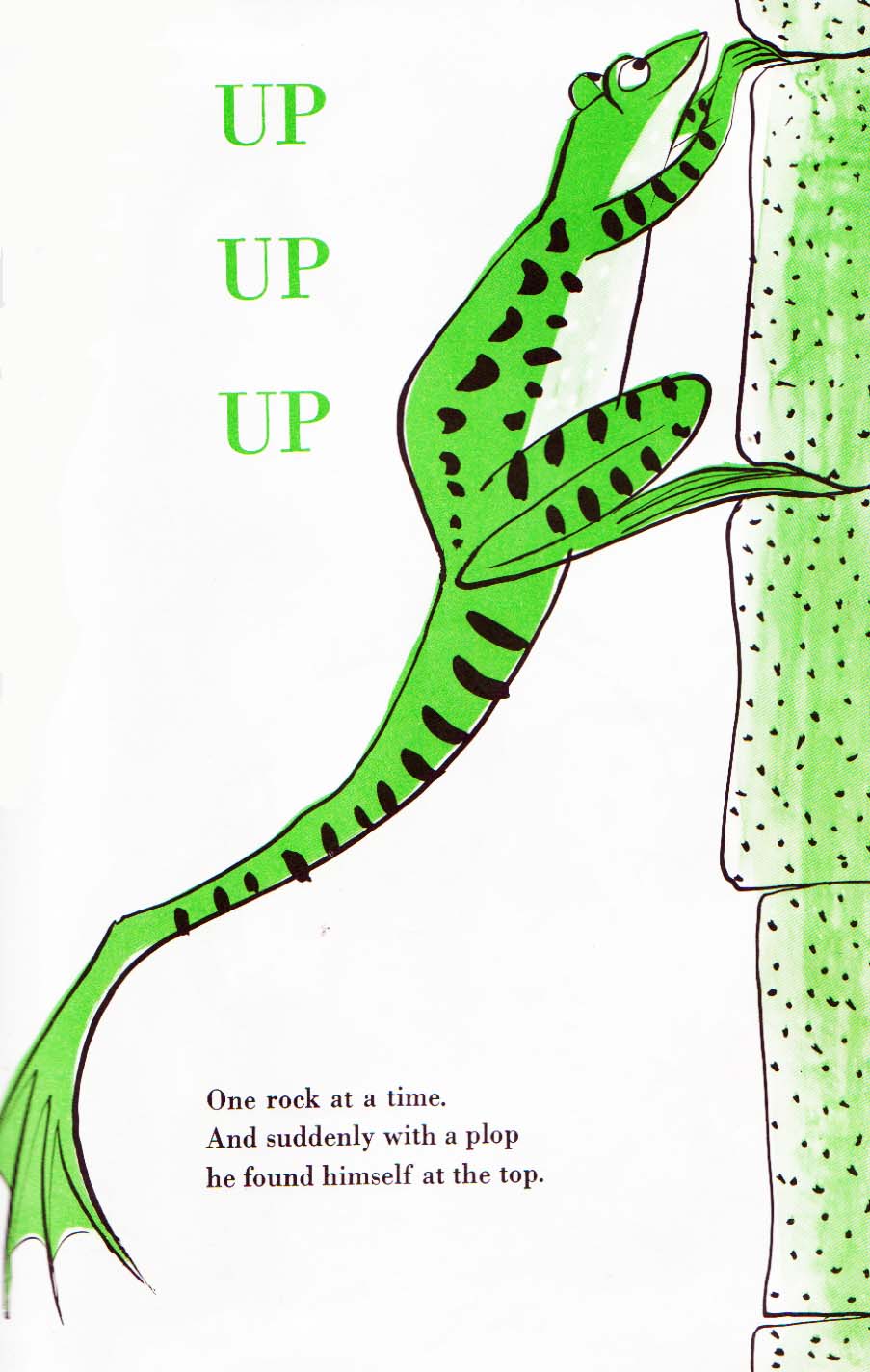
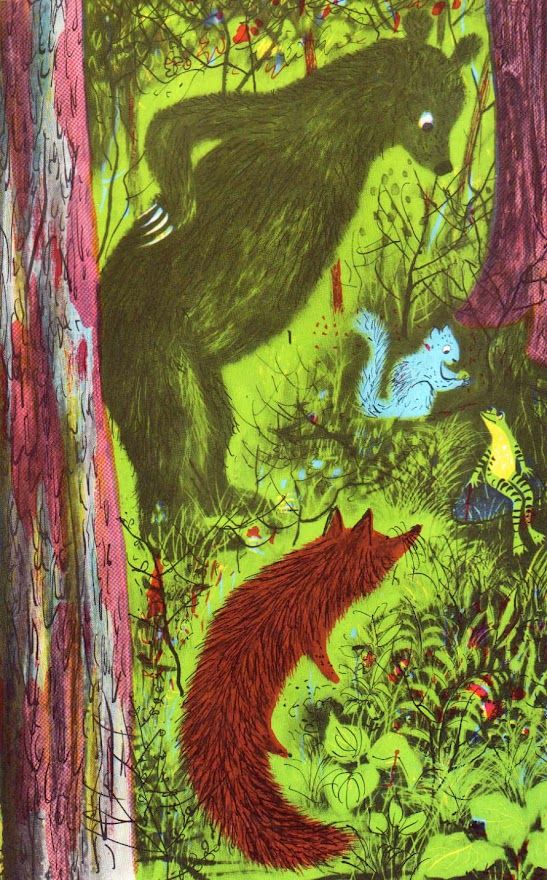
It seems fitting to mention Galdone and Duvoisin in the same post. I often lump their stories together in my head, but this is probably unfair to both of them. This Duvoisin title in particular has a lot more pathos and wisdom to it than you’d expect to find in your average everyday picture book reprint. The story centers on a frog that has lived its entire life at the bottom of a well. Naturally, since this is all it has ever known, it is all that it thinks exists. Eventually circumstances force it to climb out of the well and explore. When it does, it meets other animals that also sport limited world views. The more the frog travels, the wiser it becomes, until at last it finds its own tribe. It’s a beautiful metaphor and probably would make for a far better graduation gift than old Oh, the Place You’ll Go.
George Shrinks by William Joyce
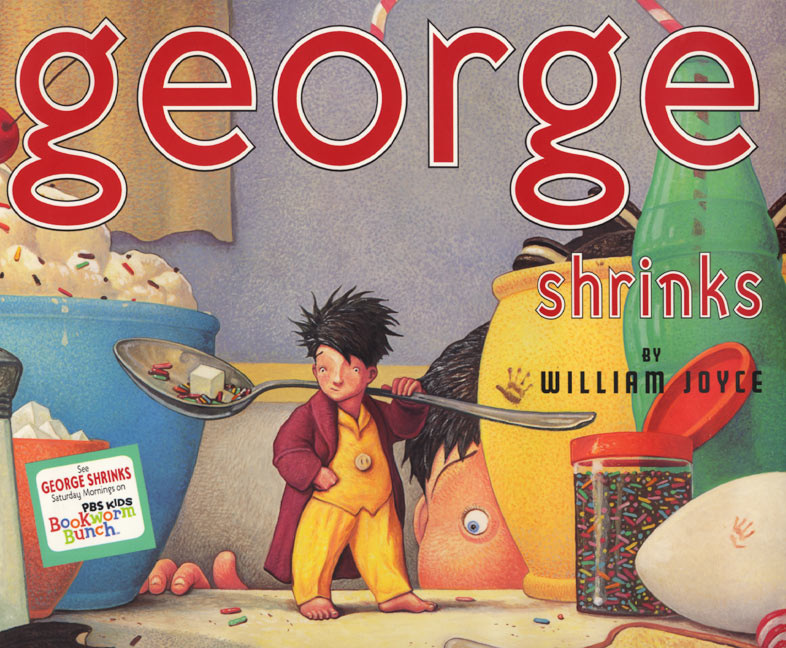
Bill Joyce is having a banner year. Or, rather, his old books are. Carefully I considered each one as it crossed my plate. In the end, I decided to pick only one Joyce book to highlight today. And for all that I love Bentley and the Egg, The Leaf Men, and even Dinosaur Bob and His Adventures with the Family Lazardo, George Shrinks is the one that, to my mind, has the greatest staying power. It has all the elements you love in a Bill Joyce book: Throwback 50s tropes, high adventure, and a bit of magic thrown in for kicks. Yep. Team George Shrinks, that’s me.
Gerald McBoing Boing by Dr. Seuss
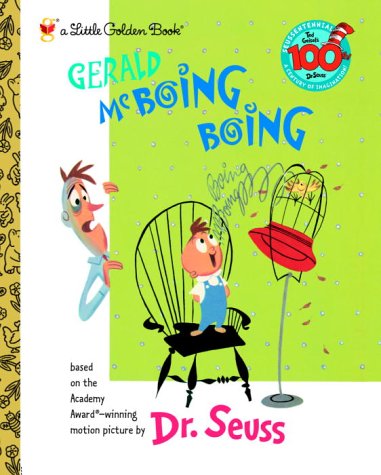
Again, not sure if this was ever officially out of print, but when the beautiful new edition arrived on my desk the other day all I could think was how happy I was to see it again. If you’ve ever wondered to yourself, “What’s the straightest line between Dr. Seuss and Mo Willems?” it is this. Something about that intersection between animation and picture books. So, naturally, I had to throw in the animated short as well:
Miss Jaster’s Garden by N.M. Bodecker
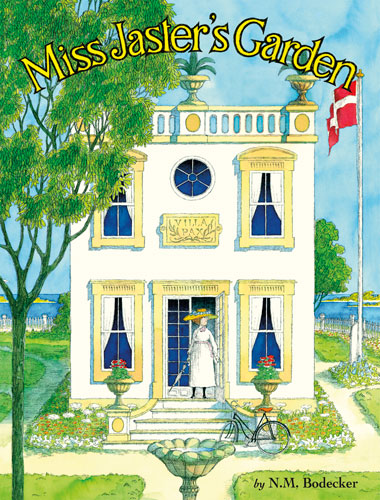
I was just reading Half Magic by Edward Eager to my daughter for the first time the other day. And truly, would those books be as beloved as they are today if they didn’t contain N.M. Bodecker’s inspired line art inside? I think not! It was with great joy that I found this picture book by Mr. Bodecker, newly republished this year. Interestingly enough, when you see Bodecker illustrated in color, it becomes shockingly apparent how similar he could be to, of all people, Edward Gorey. The storyline, however, is purely light and charming. A little hedgehog accidentally ends up sprouting flowers and all sorts of miscommunications arise as a result.
Oliver Button Is a Sissy by Tomie DePaola
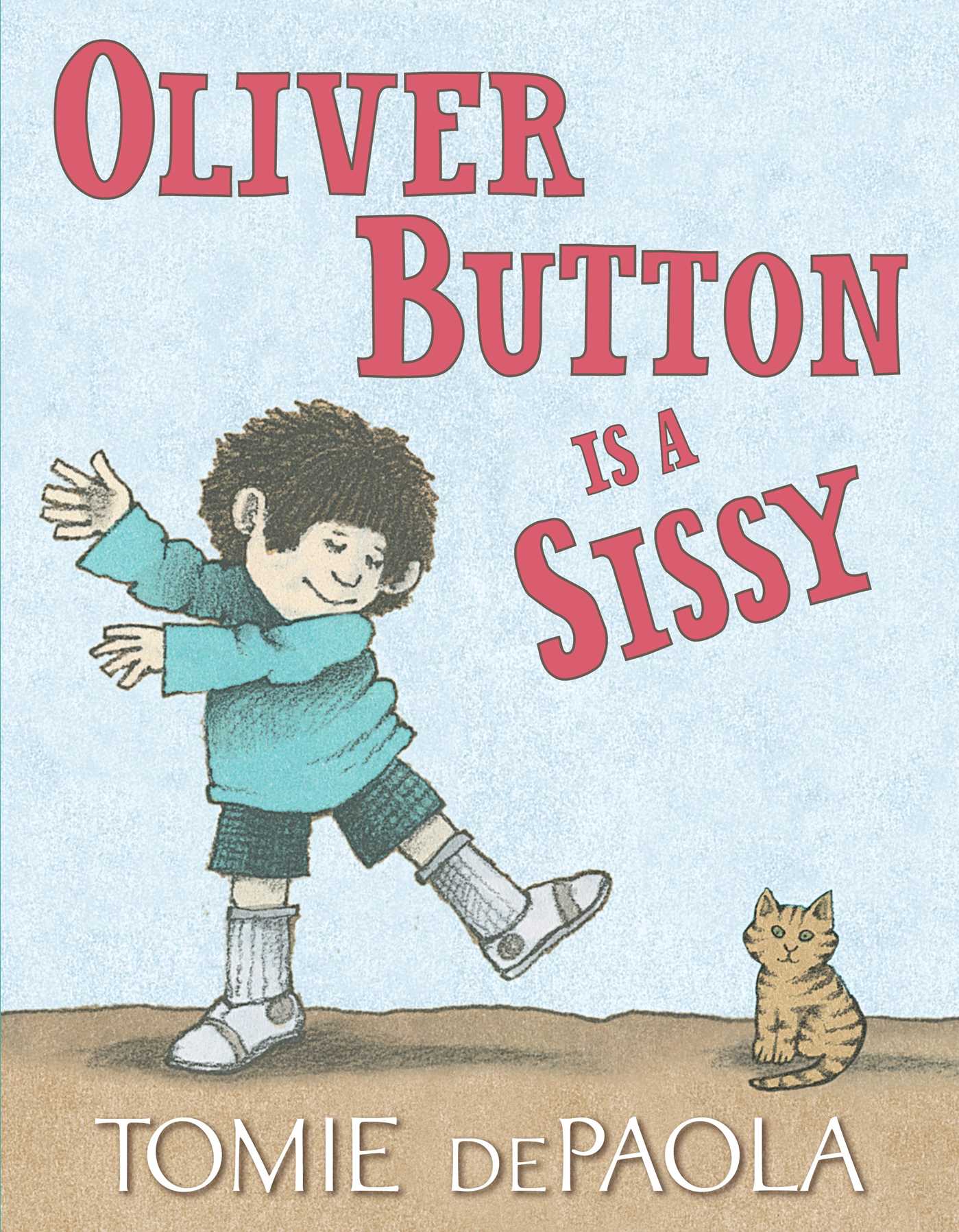
Yes. Good. Thank you. You know that theory that states that when a book for children is ground-breaking it doesn’t actually have to have any literary merit? Well, this book grinds that theory into the dust. It is, in many ways, DePaola’s seminal work. I love me my Strega Nona, but Oliver Button has probably changed lives. There are quite a few recordings of the book as performed by Gay Men’s Choruses around the country online. This one by the Gay Men’s Chorus of Washington, D.C. is probably the best.
The Paper-Flower Tree by Jacqueline Ayer

Originally published in 1962, this is one of those rare diverse picture books of the past. If you had just handed me the book and told me that it was published this year I wouldn’t have even blinked. It’s a fun story too. A girl sees a man with a tree made out of paper flowers. He gives her a “seed” but says the tree may not grow. She plants it and waits. And waits. And waits. It’s sort of like The Carrot Seed except it really doesn’t come up. When the man returns later he learns what has happened. The next morning as he leaves she discovers a paper-flower tree growing in her yard.
Fiction Books Reprinted in 2017
The Breadwinner by Deborah Ellis

Doesn’t this look amazing?! Apparently this Ellis classic has been produced as an animated film. That cover is a still from the movie, but it also makes the book look much more appealing.
The Winged Girl of Knossos by Erick Berry
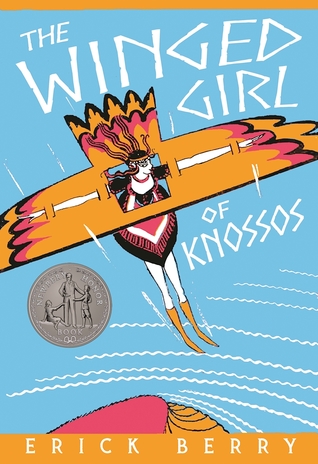
Yay! My beloved Newbery Honor winner, out-of-print for decades upon decades, and now it’s back! Back and beautiful. Back and beautiful and with an Afterword by me, but that’s besides the point. I’m just so pleased it has a new lease on life. Read it! Love it!


RECOMMENDED
CAREERS
The job outlook in 2030: Librarians will be in demand
CAREERS
The job outlook in 2030: Librarians will be in demand
ALREADY A SUBSCRIBER? LOG IN
We are currently offering this content for free. Sign up now to activate your personal profile, where you can save articles for future viewing
ALREADY A SUBSCRIBER? LOG IN
Thank you for visiting.
We’ve noticed you are using a private browser. To continue, please log in or create an account.

Add Comment :-
Be the first reader to comment.
Comment Policy:
Comment should not be empty !!!