




2018 School Spending Survey Report
Newbery / Caldecott 2017: Final Prediction Edition
Normally published in December, now pushed up to January for your reading pleasure. But I’m shaking things up this time around. Let’s do something a little different. In all my past Final Prediction Editions of Newbery/Caldecott winners, I cling stubbornly to the same format: name the predicted winner and honors. This year I’m going a […]
Normally published in December, now pushed up to January for your reading pleasure. But I’m shaking things up this time around. Let’s do something a little different.
In all my past Final Prediction Editions of Newbery/Caldecott winners, I cling stubbornly to the same format: name the predicted winner and honors. This year I’m going a slightly different route. Something a little more thoughtful and introspective. Bear with me.
2016 was an odd year. I think we can all agree on that much. The future will hold a great number of challenges for librarianship, books, and education in general. But 2016 is not the first year to have poised a challenge to us or our nation. In its way, the Newbery and Caldecott Awards reflect the tenor and conversations of the national sphere. How could they not? When a committee gathers they choose the award that is “most distinguished”. And in many ways, books that speak to their times in cool, clear voices can be the very definition of distinguished. That said, committees can also go the opposite route. They may prefer books that speak to absolutely nothing but the comfort of nostalgia. Here are some examples of what I’m talking about:
WWII breaks out: As America debated intervention in the war in Europe, the Newbery was handed continually to books that celebrated American history above all else. Unfortunately a lot of that means slaughtering American Indians. So in 1940 you get Daniel Boone by James Daugherty, in 1942 it’s The Matchlock Gun by Walter Edmonds, and in 1944 it’s Johnny Tremain by Esther Forbes (which happily didn’t kill off any Native Americans that I recall and was well poised to speak to Americans fighting for a cause during the war years).
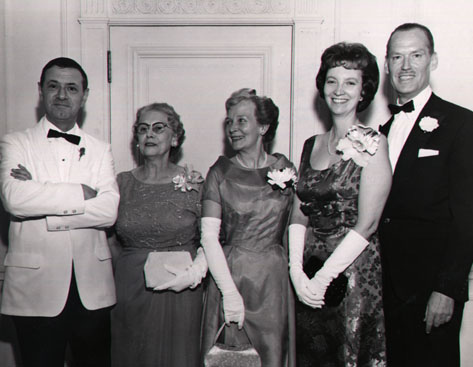
Ezra Jack Keats on the far left, Madeline L’Engle second from the right.
JFK is shot: When the president was assassinated in 1962, it set the world on its ear. Little wonder that in 1963 the Caldecott would go to The Snowy Day while the Newbery went to the wildly weird Wrinkle in Time. Both books, in their small ways, fought against hate and fear prevalent in the nation.
The Rodney King decision and the riots of L.A.: It would take a couple years between the riots of 1992 and the publication of Smoky Night in 1994, but when it won the Caldecott Award in 1995 there was no doubt that it had something to say.
9/11/01: The Twin Towers fell and though some children’s books spoke to the tragedy immediately it wasn’t until we were in the thick of the War in Afghanistan that The Man Who Walked Between the Towers won the Caldecott in 2004.
You could argue, and rightfully so, that I’m picking and choosing my examples AWFULLY carefully. For example, when Martin Luther King Jr. was shot in 1968 the 1969 Newbery Medal went to Lloyd Alexander’s The High King and the Caldecott went to The Fool of the World and the Flying Ship by Uri Shulevitz. For that matter, am I implying that committees walk into those hotel rooms where they make their decisions with a clear cut purpose of making some kind of a political statement?!?! Anyone who has ever served on a committee will tell you point blank that when you go into that room you have NO agenda on your mind. You are choosing the best books of the year. That’s it. Case closed. Leave your agendas at the door.
Completely true, all of it. Plus a committee is, in large part, limited to what’s being published in a given year. If you have a weak year then there’s little you can do about your final choice.
So with a full and clear acceptance that this year’s committees will NOT under any circumstances chose their winners based on some personal drive to “say something” about the state of the world today, let’s look at some of the top contenders of the year. After all, it’s not difficult to see how their messages and themes apply to the year 2016, one way or another.
If the Newbery Award Goes To:
Cloud and Wallfish by Anne Nesbet
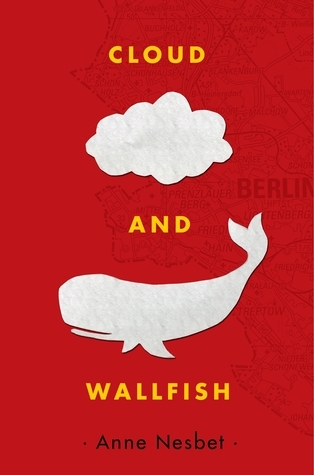
The book is a basic introduction for kids to a world in which the government operates at a high level of hypocrisy and totalitarianism. It’s about what happens when you have to hide who you are because the world in which you live is dangerous. Few books this year actually talk about the government as directly as Nesbet’s book does. The fact that it’s historical is hardly the point.
Freedom Over Me: Eleven Slaves, Their Lives and Dreams Brought to Life by Ashley Bryan
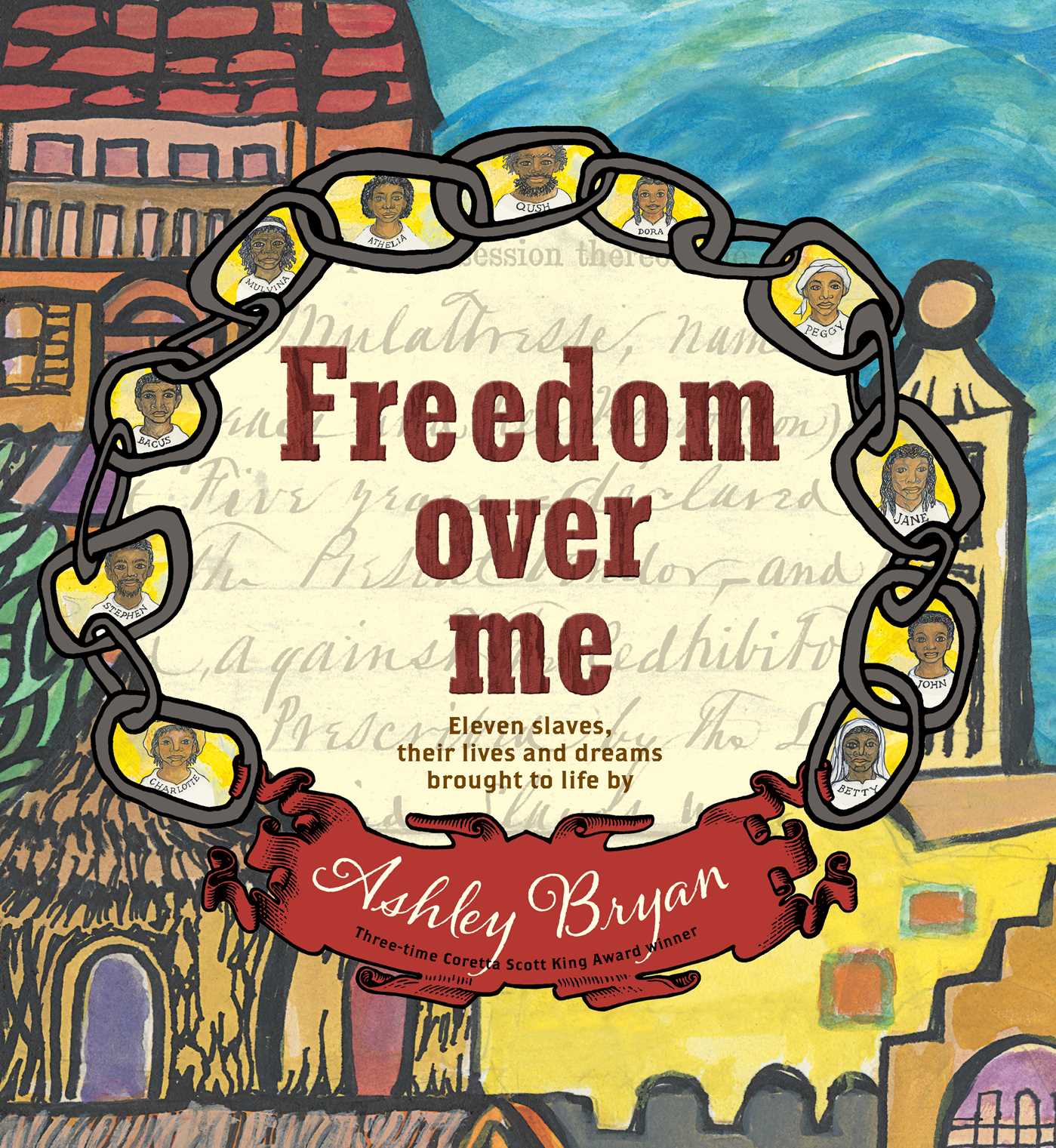
Such a good book. So here you have Ashley Bryan seeking out people that were rendered voiceless. He gives them not just their voices but names and hopes and dreams. He takes the term “slave” and turns it from an object into a person. Now we live in a time when large numbers of people are giving names and terms (“illegal aliens”) so that we can forget that they’re people. A book that celebrates our common humanity would make an excellent Newbery Award winner, that’s for sure.
Ghost by Jason Reynolds
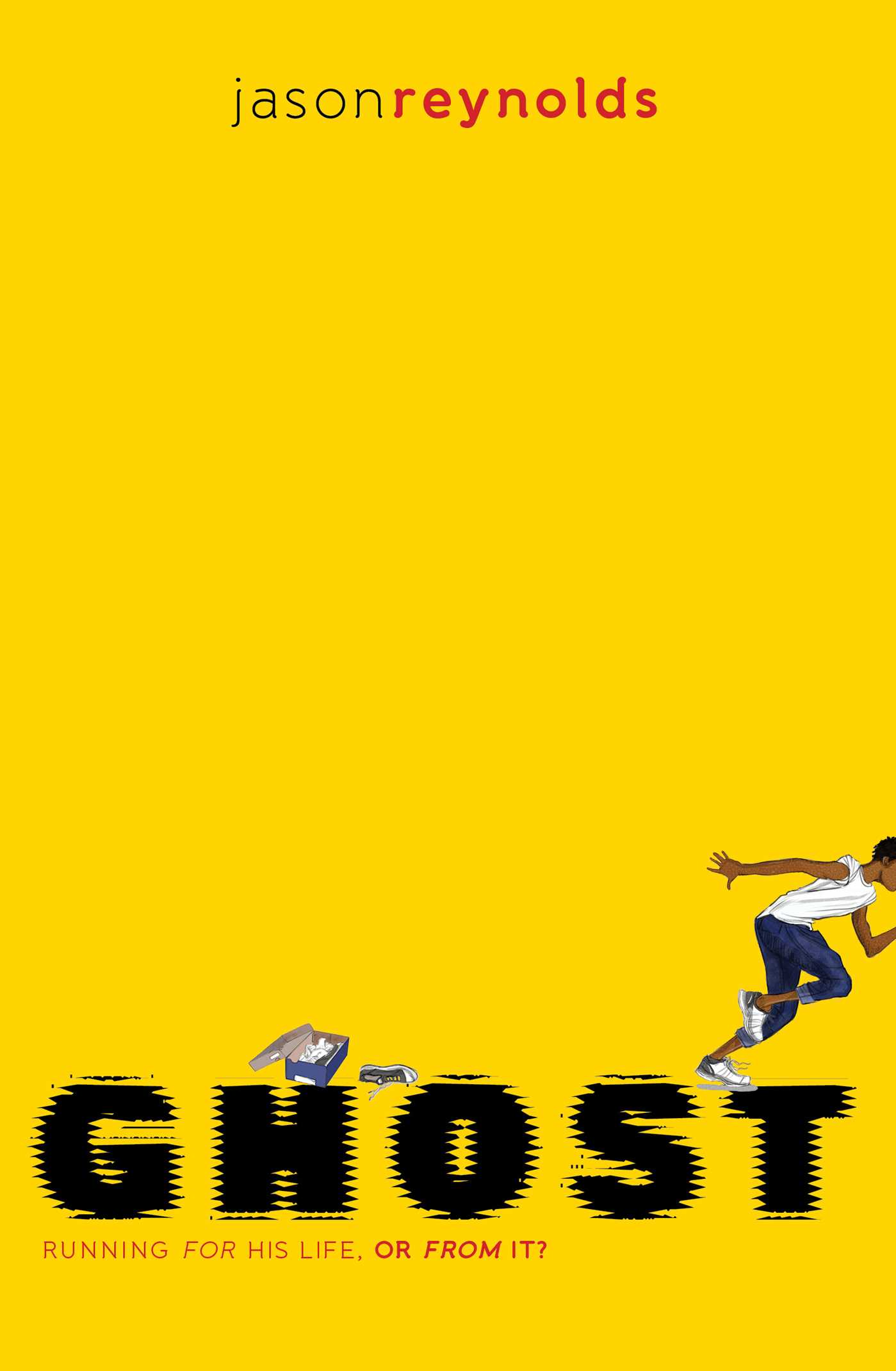
A book in which an African-American boy escapes not just the low expectations of the world around him, but the low expectations he’s held himself to for a long time. It’s about running towards something as much as it is running away from something. Ghost has a tough life but he also has strong adult figures who care about him. If the book goes on to win, it could be construed as a title that gives voice and dignity and power to a kid, thereby inspiring other kids in the process. In a year when police brutality against African-American boys is higher than ever, we need more books like this.
The Inquisitor’s Tale by Adam Gidwitz
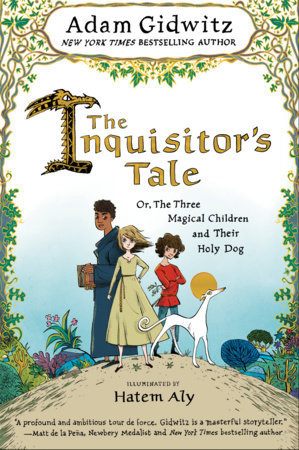
Well, let me see here. A book about ongoing tensions between different religions. Persecution. How you can’t believe every story you hear. How ignorance leads to the destruction of knowledge. Mob mentality. God’s will.
Nope. Can’t think of a single thing this book has to say about 2016.
Pax by Sara Pennypacker
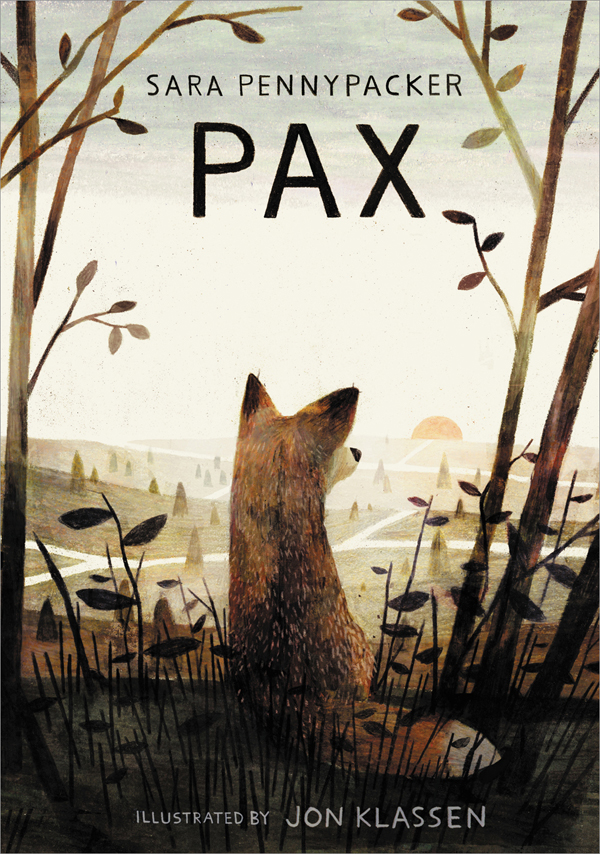
If Pax were doing only one thing on the page this would be an easier book to talk about. It has a lot to say about war’s effect on children and animals. Which is to say, the smallest and weakest amongst us. There’s a war veteran who is coming to terms with her life again. It’s not speaking to 2016 in as direct a manner as, say, Gidwitz’s book is, but there’s still a fair amount to chew on.
Presenting Buffalo Bill: The Man Who Invented the Wild West by Candace Fleming
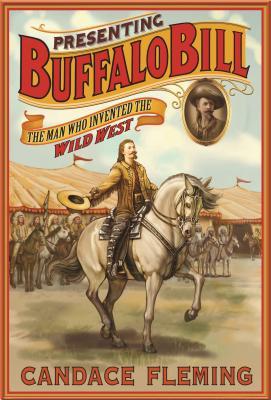
Oh, it won’t win. When was the last time a nonfiction chapter book biography won a Newbery Award? 1988’s Lincoln: A Photobiography by Russell Freedman, that’s when. But it’s such an interesting book. Here you have a man who used outright lies and storytelling to make people hear what they wanted to believe. He exploited people, lied to people, mislead them, cheated on his wife, and made terrible business deals. Sounding familiar at all? Add in the fact that he created the Wild West myth of America and then proceeded to sell that myth across the globe . . . well. I mean to say.
Wolf Hollow by Lauren Wolk
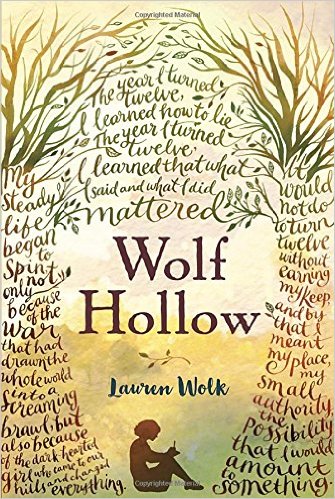
You may have heard a lot of talk earlier in the year about how this book would pair well with To Kill a Mockingbird. The reasoning is that this book speaks to the dangers of leaping to conclusions when those conclusions speak to your already existing prejudices. A lot of it is about the spread if misinformation and how people who are different can be construed as “the enemy”. And let’s not glaze over the fact that one of the characters in the book is a war veteran suffering from PTSD. Yep. Lot of meat to chew on here.
Now, it’s entirely possible that the Newbery could go to Raymie Nightingale by Kate DiCamillo or Full of Beans by Jenni Holm or any number of other books. I don’t include them here not because they aren’t great titles, but more because they’ve the feeling of classic “Newbery” types of books. DiCamillo already has two Awards under her belt and Holm a number of Honors (three, I think). If they win they’ll sort of be considered the types of books that typically win Newberys since their authors have won before (though I do think it’s high time Ms. Holm got herself some gold for once). I’d put Some Writer: The Story of E.B. White (which could also win a Caldecott) in the same category. A very beautifully told, classic biography by an already award winning artist. And how cool it would be if it won the gold!
And now a word on the Caldecott Award.
A lot of people have commented that 2016 was a shockingly strong Caldecott year. My condolences to the committee. If people were shocked by the six Honors of 2015 just imagine how they’ll feel when they see the seven Honors of 2017. I assume that is what will happen since the idea of cutting any of my favorites this year cuts me to my core. And I have a LOT of favorites.
The funny thing is that if these books have something to say, it’s more about the state of children’s book publishing today than the nation. With that in mind, here’s what I personally will be reading into each of these books if they win the gold . . .
If the Caldecott Award Goes To:
Jazz Day: The Making of a Famous Photograph by Roxane Orgill, ill. Francis Vallejo
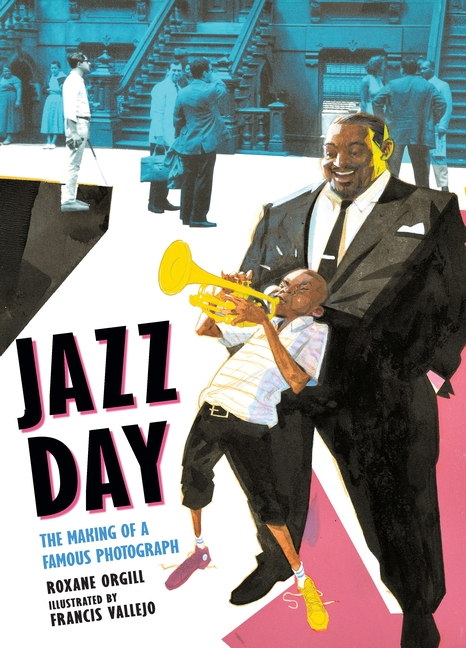
When this book won in the Picture Book category of the Boston Globe-Horn Book Awards its placement there was entirely arbitrary. A work of poetry based on a true incident with true famous jazz figures inside, it’s neither fish nor fowl. It straddles three different genres (poetry, picture books, nonfiction). Of course, the Caldecott committee will be looking primarily at that amazing art of debut illustrator and Detroit-based artist Francis Vallejo. Yet if the book is chosen it will still have a lot to say about books that defy categorization.
Miracle Man by John Hendrix
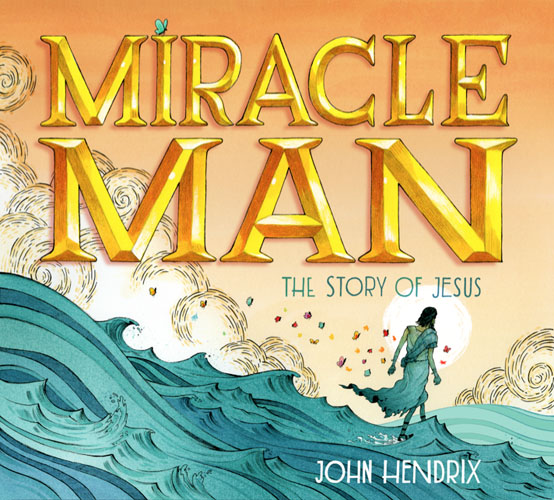
A Jesus book winning a Caldecott. If Animals of the Bible and A Prayer for a Child can do it, why not Hendrix? The committee won’t consider the subject matter as either an impediment or point in its favor. They’ll be examining the typography, determining whether or not it works sufficiently well on the page. That mix of text and image is so integral to the storyline, and not something present in most of the books published in 2016. Has a Caldecott Award winner ever had creative typography that integrated the text into the images, by the way? I’m looking at the list here and drawing a blank. A little help?
Radiant Child: The Story of Young Artist Jean-Michel Basquiat by Javaka Steptoe
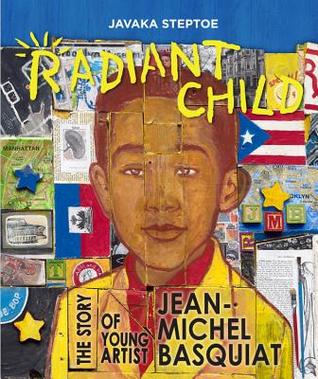
Almost since the award’s inception artists have bemoaned the fact that the highest honor a picture book illustrator can receive is granted not by their peers or people who necessarily have degrees in art, but by librarians. Some would argue that this makes perfect sense. The award is not for art on its own as an object but how well the images work with the book’s text and produce something wholly new. Now we consider Steptoe’s masterpiece. If you were to see the art in person you’d be able to admire how perfectly he’s connected the found wood pieces and painted on top of them. You do get a sense of that when you see the book but the effect is different. Now if this book were to win it would go to the son of a previous winner (John Steptoe’s 1988 Honor for Mufaro’s Beautiful Daughters). It would go to a book honoring a man who struggled with mental illness and addiction but created something wholly new. The book is itself a testament to the power of art. Art for people that need an escape.
Snow White: A Graphic Novel by Matt Phelan
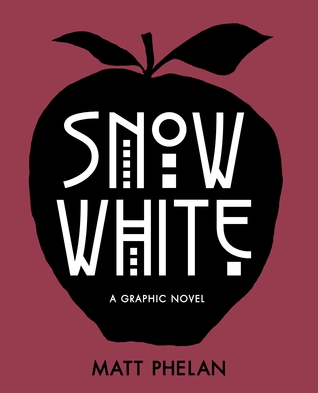
It’s the only graphic novel this year that’s been gathering talk. If it wins the Award itself it would be the first graphic novel to do so, though others have won Honors. Set in the Depression the book is about a woman in New York City who gains money and, through it, power but it’s not enough. It’s never enough. It can’t be enough. And that stock ticker would be enough to drive anyone insane . . .
They All Saw a Cat by Brendan Wenzel
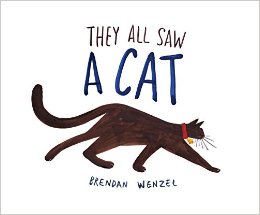
That’s an easy one! The whole book is about seeing something through someone else’s eyes. I can’t think of a better lesson for 2016. Case closed!
My other favorites include The Storyteller by Evan Turk, Thunder Boy Jr. by Sherman Alexie, ill. Yuyi Morales, The Airport Book by Lisa Brown, and many others but since they don’t quite fit into my thesis I guess I won’t write them up. Ah well.
And, as ever, it could easily be that NONE of the books I’ve listed here will win. That is what I love about these awards. Anything is up for grabs.
So. What do you think has a good chance?


RECOMMENDED
CAREERS
The job outlook in 2030: Librarians will be in demand
CAREERS
The job outlook in 2030: Librarians will be in demand
ALREADY A SUBSCRIBER? LOG IN
We are currently offering this content for free. Sign up now to activate your personal profile, where you can save articles for future viewing
ALREADY A SUBSCRIBER? LOG IN
Thank you for visiting.
We’ve noticed you are using a private browser. To continue, please log in or create an account.
Add Comment :-
Be the first reader to comment.
Comment Policy:
Comment should not be empty !!!