


2018 School Spending Survey Report
Ballerinas Behaving Badly: Sona Charaipotra and Dhonielle Clayton on “Tiny Pretty Things”
Debut YA authors Sona Charaipotra and Dhonielle Clayton discuss how they came to write Tiny Pretty Things, a novel about diverse ballerinas fighting for roles in a posh dance boarding school, and what inspired them to create the book packaging company for diverse teen books, CAKE Literary.
 Debut YA authors Sona Charaipotra and Dhonielle Clayton discuss how they came to write Tiny Pretty Things, a novel about diverse ballerinas fighting to land roles in a posh dance boarding school, and what inspired them to create CAKE Literary, a book packaging company for diverse teen books. A middle school librarian in East Harlem, Clayton met Charaipotra, a magazine journalist, while both were studying for an MFA at the New School. The pair’s debut centers on the machinations, heartaches, and drama of three aspiring ballerinas at a dance academy in New York City. How did you come to write this novel together? Dhonielle Clayton: We met at the New School where we attended some of the same workshops. We realized that we were both writing diverse content because we grew up not seeing diversity in the books we read. I used to work at a private ballet academy in Washington, DC, and I suggested that we write a book together set in that world. We started brainstorming characters and discussing ways to include organic, meaningful diversity into this novel. Sona Charaipotra: I like to watch Vampire Diaries and Pretty Little Liars—TV shows that in their book form are real page-turners. There’s rarely diversity in those kinds of stories. A diversity story is usually one with a lesson—more pedantic. We wanted something that was fun and delicious that still had a level of diversity to it without making diversity the central focus. Because of what Dhonielle saw in this school, we knew it was going to be a juicy story. The students themselves were as diverse as the characters in this book. That’s what made this world really prime for this story. DC: We wanted to really reflect the ballet world and its hidden diversity. But many people don’t realize how diverse it is because of the people who get the main roles and those who are primarily photographed in the major magazines and programs. Writing a book together was an opportunity to market how we want to see diversity in books—our take on it—as a launching point for our literary development company, CAKE. Did any of you take dance while you were growing up? DC: Yes, I took dance for a few years. But I never was able to get to pointe [ballet]. I was a resident advisor at the dance academy and then ended up teaching English for about eight years. SC: I took dance until I was 11, but I never got to pointe, either. I realized very much after the fact, how much racism there was in that world, even for little girls. We never got asked to be in the recital. I was the only brown girl in the class.
Sona Charaipotra. Photo by Navdeep Singh Dhillon.
What was your writing process like? SC: It was divide and conquer. Because we wanted to have a unified voice, we also were very flexible about our chapters. We weren’t precious about things. Dhonielle tends to be very thorough in her writing, and I go in and cut, cut, cut. She adds a lot of poetry to the writing, and I’m definitely a plot person. We each have our own strengths and when they come together they make something that’s so unique. It’s a different voice for both of us. DC: There are three narrators, and we each took on one. I wrote Gigi, Sona wrote June, and we split Bette. It was a lot of fun to collaborate and plot things out together. We split up the chapters and then edited the other’s chapters. We ended up using our writer hats and editor hats. SC: When we were having trouble with something, it was so great to have a second brain on it. For example, I was struggling with something in one of the last chapters of the book, and Dhonielle went in and suggested an idea and it elevated it so much. It’s great to have that feedback almost instantaneously. It also makes it a lot more fun of a process. DC: I sold a book on my own, and I’ve been whining about not having Sona to help me. I don’t like writing the romance, and she’s good at it. It’s definitely a bonus.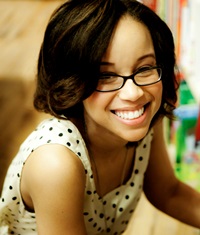
Dhonielle Clayton. Photo by Navdeep Singh Dhillon.
There’s lots of juicy drama and ballerinas behaving badly in this book. But a refreshing part of this novel is the diversity of its characters and the discussions of body image and sexism. Why did you think it was important to include your work? DC: When we sat down to talk about the issues we wanted to dig into in this book, we chose to include these because it’s what I saw [at the dance school]. These were things that really haunted my girls. Sexism is huge in the ballet world. Girls are treated like a dime a dozen. And body image is key because they’re constantly on stage and in front of a mirror. I felt that when I was teaching, that really messed up their [the teens’] psyche, particularly because they were constantly being critiqued by others and themselves. It would create an interior monologue that was negative and upsetting. It was something they wrote their papers about, and they were always talking about it. It’s a universal feeling, but especially in the ballet world, when you’re in front of all of those mirrors and critics. It’s something you feel deeply. SC: And it’s feelings and issues that the average teen feels. It’s just amplified to 10,000 in the ballet world. Those are all issues—like eating disorders, drug abuse—that teens face. It does bring something relatable to this very insular world. DC: And diversity is part of us. We wanted to fold in diversity the way we experience it in our daily lives. I don’t walk around thinking, “I’m a brown girl, today.” It’s not like that. Race comes up in smaller, cultural, everyday moments, such as moments of microagressions. This novel is told from three different perspectives (Gigi, Bette, and June). Is there a particular character that you connect with? DC: I connected with Bette. When I was a teen, I didn’t act the way she acted, but I definitely had those mean interior thoughts of entitlement. I couldn’t control my own universe. And that’s what resonates with me and Bette. She’s trying to control her universe, and she doesn’t know how to do it positively. It feels very teen to me. I work in the library with a lot of teens, and that’s how they behave. SC: I relate to June, because she feels neither here nor there. Growing up as a little brown girl in New Jersey in the 1980s and 1990s, I definitely felt that, even as more diversity got into the States. I grew up in a mostly white neighborhood. Once I got to high school, there was this unwritten rule that brown people are supposed to hang out with brown people and you had to join the international club. But I didn’t know that; it was kind of an awkward thing. Many of the characters were “unlikable” and not easily relatable. What are your thoughts on “unlikable characters”? DC: I’m around unlikable teens all day. I tend to write teens as they are vs. how I want them to be. I like when characters are unlikable, because it’s real. When I encounter characters that don’t inhibit the manifestations of a real teen, it frustrates me; it feels inauthentic. Gatekeepers like me—librarians, parents—don’t like to think that kids are reading unlikable characters. Spend some time at high school and middle school, and then tell me who’s likable. SC: People are unlikable. Most people are flawed. It makes them more interesting and more human. No one wants to read about someone who is perfect—that’s just annoying. And it doesn’t create opportunity for story, movement, and change. DC: We want that catharsis for change. We owe it to them to give them characters to help them really work it out. SC: Characters that are strong, fierce, and go after what they want are often considered unlikable characters—especially females. We should be able to go after something we want. DC: It’s veiled sexism. It’s like calling women bossy. They’re determined and ambitious. Women get slapped with that unlikable term a lot. What are you working on after the sequel to Tiny Pretty Things? Do you see yourselves continuing this collaboration on future projects? DC: We have some things cooking. We work so well together. We want to be a model of ways to do diversity in juicy, page-turner text. There’s not enough of that. We’re going to continue to write those books and give a variety of the human spectrum. Brown girls want to make out, too. I sold a high YA fantasy series to Disney Hyperion called “The Belles.” It’s a fun read about beauty, and it has characters of color. SC: There are a few things that I’m working on, but they are not quite ready to go out yet. Tell me a little bit about CAKE Literary and what inspired you to start up the book packaging company. SC: Dhonielle had worked for someone who knew about packaging. And I had interviewed for positions at a packager before. We both had a lot of ideas for things we can see on shelves and were diverse. And we know that there is an audience for these books. There are so many gaps on bookshelves. I never saw myself in a book until I was 19. My daughter is five now, and there are still not many books for her. There are so many readers that are missing out. We knew that creating a packaging company was one way to get those ideas on the shelves. We’ve got a few things cooking that hopefully will go out to publishers soon. Each of those projects is a really fun, high concept story with lots of diversity. Neither Dhonielle nor I could do them justice, so we found writers who could bring a level of authenticity and realism to the voices that we couldn’t. DC: We also wanted to give opportunities to writers of color. Publishing sometimes feels like a rigged system. It’s based on your connections and having a mom and dad who can support you while you work your way up the ladder, while writing on the side. Here’s a paid opportunity to write something that is fun and that will help you get your foot in the door. You have an editor to work with you through your publishing journey. We wanted to reach back and bring people with us. My family is a big believer of that, and it’s a big piece of what our company wants to do. SC: Dhonielle and I have found a few mentors on our publishing journey, and that was so key. Sometimes it’s hard for people from diverse backgrounds to find people in which they recognize a little bit of themselves. Being able to find mentorship in the book publishing world has been so revitalizing. If we could do that for someone else, that would be such an amazing thing.
Added To Cart
RELATED


RECOMMENDED
CAREERS
The job outlook in 2030: Librarians will be in demand
CAREERS
The job outlook in 2030: Librarians will be in demand
ALREADY A SUBSCRIBER? LOG IN
We are currently offering this content for free. Sign up now to activate your personal profile, where you can save articles for future viewing
ALREADY A SUBSCRIBER? LOG IN
Thank you for visiting.
We’ve noticed you are using a private browser. To continue, please log in or create an account.

Add Comment :-
Be the first reader to comment.
Comment Policy:
Comment should not be empty !!!