



2018 School Spending Survey Report
Are Historical Heroes Allowed to Have Prejudices in Children’s Literature?
I don’t usually post anything aside from videos on Sunday but after attending the IBBY Conference in NYC this past weekend this topic came up and seemed well worth pursuing. Not long ago I reviewed The Hired Girl by Laura Amy Schlitz. It’s a fine, unique historical novel about a 14-year-old girl who escapes a […]
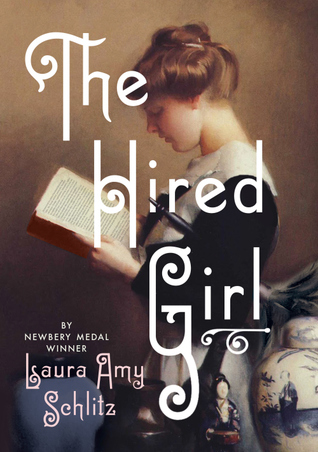 I don’t usually post anything aside from videos on Sunday but after attending the IBBY Conference in NYC this past weekend this topic came up and seemed well worth pursuing.
Not long ago I reviewed The Hired Girl by Laura Amy Schlitz. It’s a fine, unique historical novel about a 14-year-old girl who escapes a grim farm existence by running away to Baltimore to work as a hired girl. She’s the product of a cruel father who denies her any schooling leaving her little comfort except that which comes to her from books.
Recently this particular title has been the focus of a great deal of discussion over at Heavy Medals due to its mention of American Indians. Much to my surprise, people are commenting on the book’s merits due to a passage in which Joan thinks the following:
“It seemed to me–I mean, it doesn’t now, but it did then–as though Jewish people were like Indians: people from long ago; people in books. I know there are Indians out West, but they’re civilized now, and wear ordinary clothes. In the same way, I guess I knew there were still Jews, but I never expected to meet any.”
Folks appear to be mighty perturbed over this section of the story. It made me think a lot about what we demand of our historical protagonists in our contemporary children’s novels. Take Joan. Her education is that of a white working class girl in early 20th century America. She has a very limited world view and knows about Jewish people solely though the context of Ivanhoe. Now we look at that statement she thought. Considering white attitudes of the time, is it believable that Joan would think this of American Indians? Quite frankly, considering her schooling I found it, if anything, a little difficult to believe that her attitude wasn’t worse.
But let us not talk about being accurate to the attitudes of someone in Joan’s time and place and consider instead whether or not Ms. Schlitz should have included the passage at all. Is it harmful to her young readership to encounter a sympathetic protagonist with these opinions? Might they think them legitimate feelings? Might they not pick something up from such statements?
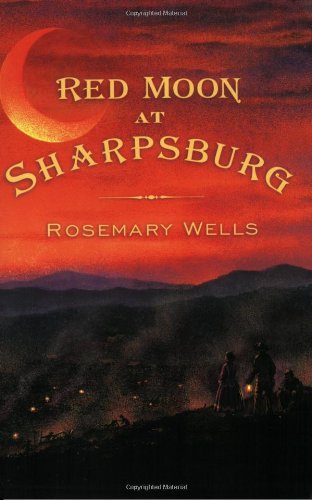 First, I’d like to address the question of whether or not children, or in this case middle school students, are capable of decoding an ignorant character’s prejudices if that prejudice is not specifically called out. Joan is wrong about a lot of things. You see this and you know this pretty early on. And while it is entirely possible that there will be young readers out there who have never encountered positive images and portrayals of American Indians in their children’s literature, the notion of white people “civilizing” other races and nations is not unique here. Do kids walk into historical novels with the understanding that people in the past thought things we cannot or should not think today? Is it the responsibility of the author instead to cut their all their sympathetic historical figures from a contemporary cloth and imbue them with our own attitudes towards race, gender, sexuality, etc.? I am reminded of a moment in Red Moon at Sharpsburg when author Rosemary Wells had her Southern Civil War era protagonist say of her corset that, “It constricts the mind.” A statement made by a young woman without outside influence or context, I might add. It felt wrong because it was wrong. A broad attempt to shoehorn contemporary attitudes into a historical tale.
But going back a bit, let’s again try to answer the question of why it was necessary for Ms. Schlitz to include this passage at all. It would have been easy to keep out. And Schlitz is not a writer who dashes off her prose without thought or consideration. So what is the value of its inclusion?
Does it come right out? It does! In fact, when you have a protagonist capable of awkward beliefs that are of their time, it would make so much sense to just not mention any of them, right? To do otherwise would be to offer a layer of complexity to an otherwise good character. Are books for young people capable of that complexity?
Let’s say the passage removed. Let’s say all passages of American Indians were removed (there’s more than one, you know). Let’s say mentions of American Indians were removed from all books for children written about this time period but only when those mentions were prejudiced. Let’s say all American Indians themselves were removed as well. See? Isn’t it so much easier to write historical fiction when you don’t have controversial topics to trip you up?
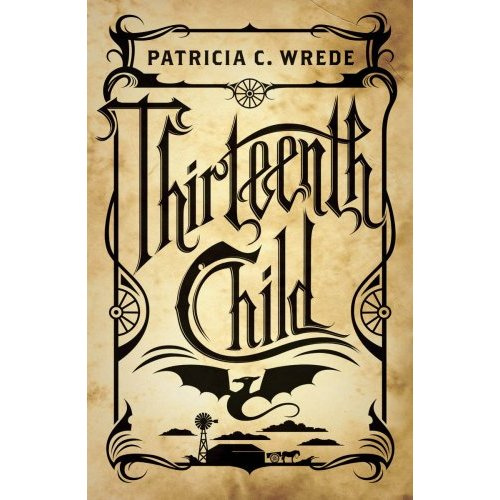 I am reminded of the lesson of Patricia C. Wrede’s Thirteenth Child. Do you remember this controversy from 2009? It came up in the pre-Twitter era (it was around but not what it constitutes today) when outrage had a less constructive echo chamber in place, so you’d be forgiven for having forgotten it. The novel takes place in a historical America where magic is common and the Land Bridge never occurred. This America has woolly mammoths and slaves but no American Indians. In a conversation online in 2006, long before the book’s publication, the author said this about her title:
The current plan is to have the primary difference before 1492 be that the various pre-historic attempts to colonize the Americas were unsuccessful; thus, no Mayans, Incas, Aztecs, Mississippi Valley civilization, or Native Americans of any sort…. The absence of an indiginous population in the Americas is obviously going to have a significant impact on the way things develop during the exploration and colonization period, and I’m still feeling my way through how I’m going to finagle that to get to where I want.
Which is, basically: A North America in which the threat of Indians was replaced by the threat of un-extinct megafauna…
Dubbed “MammothFail”, people were incensed that an entire ethnic group could be done away with because they were (their words) inconvenient to the plot. It was the first time I saw an angry internet pile-on (the like of which we’re almost accustomed to these days) and it shocked me. At the same time, the anger was understandable.
So what did we learn? Excluding someone doesn’t mean you’re doing them some kind of a service.
If Joan’s thoughts about Indians are prejudiced or nasty is she no longer worth rooting for because we’ve seen another side to her? Or will the child reader recognize ignorance when they see it? Joan is ignorant about so many things in the world. This is just one of them.
I think a lot of this comes down to the degree to which we trust child readers. I don’t think for one second that Ms. Schlitz shares Joan’s opinions of American Indians and what it means to be “civilized”. What I do think is that she works as a school librarian and sees children every day. I think that over the years she has learned from them and seen the degree to which they are capable of catching on to the subtlety of a book. I think she knows that this passage reflects more about Joan than it does about American Indians of the time and she believes kids will recognize that too. The question I’m interested in is whether or not we believe that characters with personal prejudices should be presented to our young readers AT ALL because kids and teens can’t handle that kind of complexity.
In the end, can prejudiced/racist characters be heroes when they appear in books for youth? Or are there subtleties at work here that make this more than just a black and white issue? I like to think we’re capable of trusting our readers, regardless of age. The Hired Girl believes them capable for rejecting Joan’s dated opinions. We should extend to them that same respect.

Added To Cart
RELATED


RECOMMENDED
CAREERS
The job outlook in 2030: Librarians will be in demand
CAREERS
The job outlook in 2030: Librarians will be in demand
ALREADY A SUBSCRIBER? LOG IN
We are currently offering this content for free. Sign up now to activate your personal profile, where you can save articles for future viewing
ALREADY A SUBSCRIBER? LOG IN
Thank you for visiting.
We’ve noticed you are using a private browser. To continue, please log in or create an account.
Add Comment :-
Be the first reader to comment.
Comment Policy:
Comment should not be empty !!!