


2018 School Spending Survey Report
Reading Room for Visually Impaired Kids Incorporates the Power of Touch
After researching how low-vision kids experience books today, the San Antonio Public Library opened a new reading room with plenty of braille and large-print children’s books, audio and magnifying technology, and tactile art.
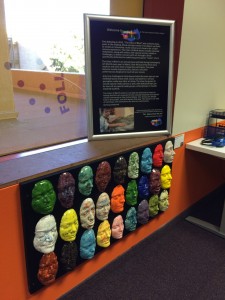
Images courtesy of the San Antonio Public Library
When the Semmes Foundation in San Antonio, TX, offered to underwrite a new low-vision reading room at the San Antonio Public Library (SAPL), it was a chance for the library to expand its braille collection, buy assistive equipment including a magnifying monitor, and more. But the biggest opportunity was to potentially bring in new patrons. In Bexar County, where San Antonio is located, 720 children have vision disabilities, SAPL public services administrator Joel Bangilan learned after conducting a community assessment study. Overall, 10 percent in San Antonio have low vision, including many elderly. The Low Vision Reading Room, also supported by SAPL Foundation, includes 100 juvenile braille volumes, 75 juvenile large-print titles, and 100 read-alongs—children’s books accompanied by CDs—as well as a magnifying monitor and a listening station. Refreshable braille displays, devices that provide a braille display of electronic reading materials, may be added in the future, says Kate Simpson, SAPL children’s department manager. Located in a former reading nook, the new area also includes a colorful, tactile art display. Objects include stone animal sculptures and reliefs of human faces made out of ceramic (above right), all meant to be touched and handled. When kids learn about physiognomy by exploring the ceramic faces, Bangilan says, it “allows [them] to experience that without the awkwardness of (touching) someone else.”Also read: "Braille's New Age"
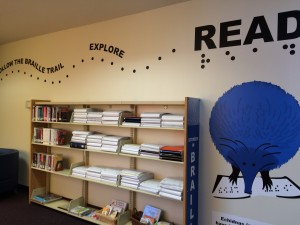 He also learned that “there are quite a number of complicating factors for learning braille,” he says. Kids will wonder why they need to master braille to read something when, they say, “’I already know how to listen to it.’” Among the benefits of reading braille, he says, is that “you can scan a page and see what exactly you need,” whereas “an audio is a string in time.” He adds, “it’s very difficult to scan an audio book in the same way we can read a page.” With the presence of the reading room, “we’ve seen an awareness of people who are sighted,” says Bangilan. SAPL sees the launch of the space as just the beginning of its expanded services. Simpson adds, “[We] consider the grand opening of the facility as phase one of an ongoing project.”
Added To Cart
RELATED

RECOMMENDED
CAREERS
The job outlook in 2030: Librarians will be in demand
CAREERS
The job outlook in 2030: Librarians will be in demand
ALREADY A SUBSCRIBER? LOG IN
We are currently offering this content for free. Sign up now to activate your personal profile, where you can save articles for future viewing
ALREADY A SUBSCRIBER? LOG IN
Thank you for visiting.
We’ve noticed you are using a private browser. To continue, please log in or create an account.
Add Comment :-
Be the first reader to comment.
Comment Policy:
Comment should not be empty !!!