


2018 School Spending Survey Report
Web2MARC/DL2SL: Making our OPACs more gracious hosts
It’s time to bust open the OPAC. In fact, it’s long past time. My notion of collection development and of cataloging were a little different back in the day. I now consider digital resources–OER, images, videos, audio files, slideshows, documents, ebooks, maps, art, student work, data sets, interactivities, simulations, and especially the elements of the [...]
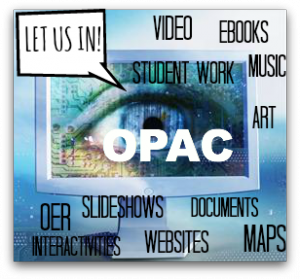 It’s time to bust open the OPAC. In fact, it’s long past time.
My notion of collection development and of cataloging were a little different back in the day.
I now consider digital resources–OER, images, videos, audio files, slideshows, documents, ebooks, maps, art, student work, data sets, interactivities, simulations, and especially the elements of the world’s richest museums and archives–intrinsic parts of my collection.
I may not own them, but I use them. And I want them discoverable and openable directly from the tool I purchased for discovery and access–my OPAC.
Until recently, my OPAC just hasn’t been all that gracious a host. It’s been a bit open-content shy.
I’ve longed preferred my pathfinders and LibGuides as easy containers for collecting and curating and integrating open content into our instructional program. They were so flexible and never asked me to make a MARC record.
The Digital Libraries to School Libraries (DL2SL) project, with its continually evolving Web2MARC tool, is a game changer.
The project’s goal is to
explore ways in which school librarians can use DL [digital library] open content to expand and enrich the school library’s resource base and instructional support. This project uses the newest web-based technologies to help school librarians identify DL open content, integrate open content metadata into their OPACs, and help use open content for learning.
It’s really silly, said Marcia Mardis, Assistant Professor and Associate Director, The PALM Center and the iSchool@The Florida State University and project leader:
Why aren’t we leveraging this really expensive piece of software sitting in our  libraries?
First released in beta in early 2010, the Web2MARC tool was developed for people (like me) who are not especially comfortable cataloging.
Marcia shares: It gets you through the basics and scaffolds the tailoring of MARC records for open content.
Beginning with a URL, librarians can easily create downloadable MARC records. The tool scrapes any useful data. Registered users may save and edit the resulting records, download them individually or as a batch.
But wait, there’s more.
Web2MARC also offers pull-down menus of Dewey numbers (at the three-number level), autofill suggestions of LC subject headings, and Common Core Standards at the grade band and the standards level.
And there’s more:
Web2MARC comes pre-populated with records from sources like: PBS LearningMedia.org, the National Science Foundation’s National Science Digital Library (NSDL), and Utah State University’s National Library of Virtual Manipulatives.
And there will be more:
On the top of the project’s priority list is the integration of indicators from the new Granular Identifiers and Metadata for the Common Core State Standards (GIM-CCSS). These new options will make it even easier for us to connect the items in our OPACs to specific curriculum, instruction and assessment.
Other priorities include developing packages of records, with starter packages addressing the Common Core and a special scraper for the new Digital Public Library of America’s metadata.

Instructions for grabbing open content for Web2MARC

Added To Cart
RELATED


RECOMMENDED
CAREERS
The job outlook in 2030: Librarians will be in demand
CAREERS
The job outlook in 2030: Librarians will be in demand
ALREADY A SUBSCRIBER? LOG IN
We are currently offering this content for free. Sign up now to activate your personal profile, where you can save articles for future viewing
ALREADY A SUBSCRIBER? LOG IN
Thank you for visiting.
We’ve noticed you are using a private browser. To continue, please log in or create an account.
Add Comment :-
Be the first reader to comment.
Comment Policy:
Comment should not be empty !!!