


2018 School Spending Survey Report
How to Kill a School Library: 10 Easy Steps
A straightforward, how-to set of instructions for squelching library services in a school community. It’s been a painful set of rants and raves to record. However, what I see worries me so much, I just can’t keep my mouth shut.
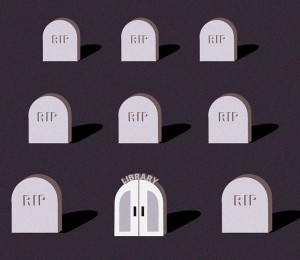 This is a straightforward, how-to set of instructions for squelching all remnants of library service in a school community. It’s been a painful set of rants and raves to record, and I can’t say I’ve enjoyed it. However, what I see worries me so much that I just can’t keep my mouth shut. 1. Fire your librarians. If you really want to get rid of library programs and services, start at the top. Ship them off to traditional classrooms or Timbuktu—just get rid of them. Some are rabble-rousers and troublemakers, and others just won’t get off their soapbox about all the great things libraries can do for kids. Once they’re out of the picture, it’ll be easier to do what you want with the library. 2. Tell staff, parents, and students that the library doesn’t offer flexible access anymore. All they do is come in and ask pesky questions at all hours of the day. If the librarian is gone, and the doors are locked half the time, it won’t be long before those annoying patrons start finding their answers elsewhere. 3. Hire clerks for next to nothing and make them do whatever you want. Need help covering the cafeteria? Ask the library clerk. Want someone to open car doors? The library assistant can do that. Is the sub for the absent classroom teacher a no-show? Call the library assistant. The library’s closed half the time anyway—she needs something to do. 4. Keep kids confused about how a library works. If they’ve never heard of a library catalog, they won’t ask how to use one. If kids don’t come in to the library to do research, you can use the space for baby showers and book fairs. Do they really need library books? Get the library assistant to pull a bunch from the stacks. If she’s not in the library, check the cafeteria or study hall. Be sure she includes a variety of titles, because who knows what kids really want to read. 5. Rush kids in and out of the library. You don’t want them in there too long. They’ll get curious about those banned books and genre displays, and we know what will happen next. We’re familiar with what follows when you give a mouse a cookie. 6. Remove interesting signage and timely displays. Don’t draw any special attention to national Children’s Book Week, Poetry Month, Battle of the Books, or Dr. Seuss. Any special events need to disappear from the school calendar. Once you start celebrating literacy, all those kids are going to want back in the library doors, and you‘ll have to repeat steps two through five all over again. 7. Don’t invite public library staff to visit your school and promote summer reading programs or special events. This will draw attention to all the wonderful things that don’t happen at your school any more. Keep all public library references to ebooks and resources on the down-low. If your students think a library has a real function and role in their learning, they’re just going to want those school library doors open longer. 8. Tell authors who want to visit your school that you don’t have time for them. You’re too busy working on the Common Core State Standards to devote time to frivolous pursuits, and they can be damn sure no child is going to get left behind at your school! 9. If teachers need lesson planning assistance or resources, tell them to put on their big girl panties and find it themselves. Surely they’ve heard of Pinterest? 10. Convince parents that early literacy has nothing to do with the library. Don’t send flyers or pamphlets home telling them how to read with their children, and don’t offer special seminars on building strong readers. A kid who loves reading at home is just going to knock on those library doors, and we’ve made it pretty clear: The lights are off and there’s no one there.
 Robin Overby Cox is an elementary library supervisor in central Texas.

Added To Cart
RELATED


RECOMMENDED
CAREERS
The job outlook in 2030: Librarians will be in demand
CAREERS
The job outlook in 2030: Librarians will be in demand
ALREADY A SUBSCRIBER? LOG IN
We are currently offering this content for free. Sign up now to activate your personal profile, where you can save articles for future viewing
ALREADY A SUBSCRIBER? LOG IN
Thank you for visiting.
We’ve noticed you are using a private browser. To continue, please log in or create an account.
Add Comment :-
Comment Policy:
Comment should not be empty !!!
Paul Carey
So many valuable thoughts in this post and its comments. When librarians are valued by those who are "not in the know", they are valued for their role in assisting with the research process, collaborating and co-teaching lessons, and aiding with technology integration. None of those are bad things and we can be thankful that at least these roles are valued - but the librarian who is locked down into block lessons for most of the day, and tied up the rest of the time with tech support, is probably not going to be doing a great job interfacing with students in the library. Granted, its better than hall monitoring, but is it truly in the best interest of students? Throughout the years, as we've eagerly restyled ourselves as "media specialists" or "teacher librarians" or anything other than "librarians", I fear that we've really minimized the power behind what we do when we are actually in the library, and what it means to students. Instead we've done what public education in general has done - abandoned something that is difficult to explain or back up with data and not always understood by all our teachers (i.e. the librarian who is actually working inside the library), for something easily quantifiable and very easy for any teacher to accept (i.e. the librarian who is more of a roving support teacher/admin, or perhaps a computer lab teacher).Posted : Nov 10, 2014 05:50
Lj
When your library doors are open, only permit children to take out AR books, because we all know that the more we are tested on what we read, the more we want to read. Oh, and make sure the only AR books that they can check out are at their AR LEVEL. Pleasure reading is a thing of the past.Posted : Dec 13, 2013 12:45
Myrna Allen
My lights are on and people are in my library, but the last three years have not been easy. My school district in Nova Scotia has witnessed the layoff of all elementary library staff and the remaining junior and senior high librarians have had a reduction in hours. I believe the situation would have been more dire had not action been taken by library staff and concerned students at several schools. That being said, our work is far from over as the situation in Nova Scotia is precarious. Librarians across Canada and the United States need to assertively advocate for library services. We live in a competitive world and our students need every conceivable advantage. These advantages, which past and current research suggests, can be provided by adequately funded and properly staffed school, public and university libraries. So let’s do everything possible to keep our lights on. Let’s promote authors and their work, let’s have book clubs, let’s promote our catalogue and databases, let’s make a portion of our material available 24/7, let’s attend board meetings and lobby politicians. Let’s keep our doors open so if you do ever have to shhhh someone (lol), there will be someone around to hear you. Note: When I say librarians I am referring to all library staff (librarians, library specialists, teacher-librarians, library technicians, etc.).Posted : Dec 11, 2013 09:21
Alla Umanskaya
Sadly, but my library has already gone through nine steps out of ten that Robin described (we never had a library clerk). The library turned into a classroom, and I am challenged with a task to prepare students for ELA test even though my subject is called "Library Skills". Most aspects of the library program that was super-active and successful, with established traditions of the library crew, multicultural celebrations, weekly trivia, etc., discontinued. It is happening in New York City, far away from Texas. It is happening throughout the country. Uninformed people, with a lack of personal encounter with libraries, make decisions regarding libraries.Posted : Dec 09, 2013 07:45
Carly Carson
I wonder what you think about this. In the elementary school my kids attend, they still have "library" in the schedule. But more and more frequently, the librarian shows them a movie! Seriously, instead of reading the actual book, they watch the movie of the book. I'm concerned about this, but maybe I'm missing something? (This is in a top-rated suburban school system in MA.)Posted : Dec 08, 2013 01:57
Brian M Gilb
Point well taken. And I feel your frustration with regards to libraries being under rated in schools. Libraries should be more part of the general education and a frequent visit for all. However, due to competition with digital resources and media, I would challenge librarians to do what they can to try and step up to the plate to get the attention of kids. And yes, resources are limited sometimes, but sometimes those situations force us to find creative solutions. Great article, and I look forward to your next ones.Posted : Dec 07, 2013 10:52
Elaine Fultz
This list is absolutely brilliant and terrifyingly dead-on. I am printing copies and sending them to every member of the local school board which recently eliminated librarians (Centerville, OH).Posted : Dec 07, 2013 07:18
S. Gans
This is well done but sadly so. I was so worn out from trying to impart important library information and being an advocate and leader every day to the over-worked but so often unbelieving educational community. ~~ Retired school librarian and teacher (38 years)Posted : Dec 07, 2013 03:08
Karen Homer
Thank you, Robyn. A little bit of satire sometimes goes a long way in sending out the call for change. We do need to keep working on all fronts, including those that emphasize changing people's attitudes from within. I'm trying to offer PD when possible. Teachers need incentives, and afterward they may also need reminders so they don't wander back out into the "Wild West/Wasteland" that the Internet can be. Hopefully, those who come to rely on the library will also become vocal advocates for it.Posted : Dec 06, 2013 09:53
Grant Tolley
How about: 11. Make sure to tell your kids that 1) all information you could ever want is available on Google; 2) That Google isn't really controlled by by huge commercial interests; and 3) that you can believe absolutely everything you read on the internet. Not only are our kids missing out on the library itself and the full access it provides to any information they are needing, they are not getting library skills any more -- how to find, judge and adjudicate the value of the information that they are getting. So sad.Posted : Dec 06, 2013 09:18
Diane Sindler
Don't forget about letting students only check out non-fiction books. Only facts matter any more. We can't have children reading literature. They might start stretching their imaginations, or start thinking about the world beyond them, or encountering new ideas. Once that starts, you never know where that sort of thing might lead!Posted : Dec 06, 2013 08:50
Kate Lang
You forgot: Check in books returned before classes begin 30 minutes into the first period, then fine the child for those 30 minutes (yes, fines by minutes). Have the child's parent call up and say that there is no way the book could have been returned at that time as she was in class. Then remove fine. (true story)Posted : Dec 06, 2013 04:53
Richard Moore
Or, you could just move to California where we have always had the lowest level of school and public library service in the nation! What is a library?Posted : Dec 06, 2013 04:27
Meg Hawkins
Sing it, Sister! I was just told today that instead of processing new books, planning programs and making displays, I have to use my "non teaching time" to sit in the hall and monitor bathroom passes. My *aide* gets to shelve books and do the cataloging and set up the collection. My hours for collection management, running the Reading Olympics program and creating book talks were seen by "real" teachers as "free time". Now my schedule is full - but not with library work. So I'm guessing step 1 is in the works. The library will be locked while I watch students sign the bathroom log.Posted : Dec 06, 2013 03:28
Stephanie W.
This is all going on at my daughter's school. I "volunteer" at least one day a week and the entire time during book fair week because there is no clerk/assistant that the school will pay for to help. I very rarely even get a meal bought so that I eat when I'm there all day and don't have the money or time to eat. I could almost be there daily (but without pay of course) if I'm needed/wanted for things to get done. It's so incredibly sad and hard to believe that most kids don't care about libraries or books.Posted : Dec 05, 2013 09:20
Stephen Webb
Amen, sister! It's through the school libraries that kids first encounter the marvelous world of literature. We just did an author presentation at Pioneer Middle School in Upland, CA, and the school librarian there was a joy. Bravo to school librarians everywhere!Posted : Dec 05, 2013 09:01
David Wright
Thank you for this heartfelt piece: I think several of these items would be equally at home on a "How to Kill a Public Library" list, including the first. We're seeing many of these same trends.Posted : Dec 05, 2013 02:19