


2018 School Spending Survey Report
Death, Destruction, and Destiny: Roshani Chokshi on “The Star-Touched Queen”
SLJ caught up with Roshani Chokshi to chat about her inspiration for The Star-Touched Queen, life as a first-time novelist, and what she’s working on next.
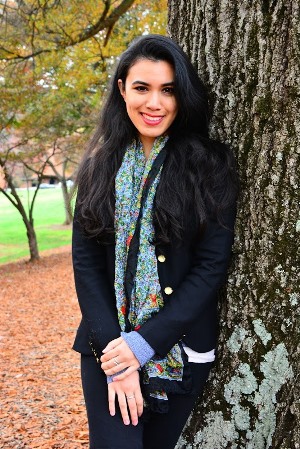
Photo by Aman Sharma
Roshani Chokshi’s The Star-Touched Queen (St. Martin’s Griffin; April 26, 2016) has already garnered lots of buzz and a starred review from SLJ: “A stunning debut filled with lush writing, smart characters, and a mysterious plot that provides as many twists as it does swoons.” It follows Maya, a teen with a cursed horoscope that promises a marriage of Death and Destruction. Though she would rather be studying in the library, the young woman is pushed into a union of political convenience, which sets her off on a course of adventure, love, and, of course, demise and ruin. SLJ caught up with the first novelist to chat about her inspiration for the work, life as an author, and what she’s writing next. I noticed threads of Beauty and the Beast and the myth of Persephone in The Star-Touched Queen, but you also drew upon your Indian and Filipino heritage. Was there a specific cultural touchstone for you in writing the novel? Not particularly. Obviously, the story draws most on the Indian setting, but that’s because I wanted to play more with the idea of stacked worlds (like tiers of cake). Indian mythology lends itself easily to that world-building, but I’m really looking forward to working on a project that takes from Filipino mythology. Particularly its monsters. [I've had] nightmares for days thanks to those stories. The many universes Maya travels to are all so different and well crafted. How did you develop each world/setting? For each world, I wanted to create a sense of emotion and crafted each piece around that feeling. For example, the Night Bazaar builds strongly on a sense of wonder. I strove to consider things that are not just fantastic but also unsettling. So, I split the sky and imagined a bazaar with strange wares for sale. Maya visits an orchard of jeweled fruit, where just beyond the shadows something dark and dazzling sways in the distance. To me, these are emotional set pieces for all that wonder can lead to: darkness or delight. When Maya arrives in Akaran, the feeling is one of being caught between emotions; like happiness tilting into sadness or anger careening into fear. Akaran is a realm of liminality, or disorientation, which is why I included details such as mirrors leading to supposedly impossible places (like a star room!). Did you have to do any research to get some of the details of the world-building just right? Most of my research could be summed up as extensive Pinteresting. However, I did look at descriptions of worlds mentioned in ancient Indian texts such as the Vishnu Purana. There was a particularly arresting description of Patala, a subterranean land that was said to be filled with beautiful demon maidens, shining jewels, and lush groves. It was opulent and a little sinister. I loved that and ultimately used it as a foundation for many of the worlds in TSTQ. What's it like being a debut author? Are there difficulties? Rewards? The worst has been the uncertainty of it all. The constant feeling of whether I’ve given my 110 percent, which is kind of impossible to gauge until the year goes by and then you see your entire trajectory with the hindsight of an overly critique-y aunt/backseat driver. The most rewarding has been the readers. Oh, my stars. Readers. They are my lifeblood, my elixir of immortality, my incomparable muse. When fans reach out to me and share GIF images of their excitement, Tumblr graphics, fan-made book trailers, etc., it gives me purpose and inspires me to keep trying to create works that will inspire them. It’s unequivocally the best [reward].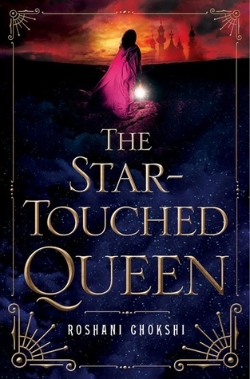 What advice do you have for aspiring authors, especially young people of color, who wish to create works based on their own background? Don’t compromise the story you need to tell to fit someone else’s idea. Don’t compromise the tales that run in your veins because you’re scared no one will want them. People will amaze you with their capacity to love. They will astonish with their desire of learning. Write for those people and for yourself. Not anyone else. Who was your favorite character to write? Kamala. I put so much of myself in that flesh-eating demon horse. I have no clue what that says about me. In the novel there are multiple story lines and jumps in time. How did you keep track of it all? I struggled. I had 50 billion index cards reminding me what happened, why, and where. I had my brilliant critique partners who would call me out on gaping plot holes and remind me that pretty metaphors do not make a story arc. Then I would slink back into my Word document with my tail between my legs and iron out the chaos. What are you working on next? I am writing a heist fantasy set during la belle epoque. There’s time traveling and fate warping, absinthe and art deco, [and] smart boys and smarter girls. I’m quite in love with it.
Added To Cart
RELATED


RECOMMENDED
CAREERS
The job outlook in 2030: Librarians will be in demand
CAREERS
The job outlook in 2030: Librarians will be in demand
ALREADY A SUBSCRIBER? LOG IN
We are currently offering this content for free. Sign up now to activate your personal profile, where you can save articles for future viewing
ALREADY A SUBSCRIBER? LOG IN
Thank you for visiting.
We’ve noticed you are using a private browser. To continue, please log in or create an account.

Add Comment :-
Comment Policy:
Comment should not be empty !!!
Marcos Costas
exciting, congratulations writerPosted : Apr 26, 2016 11:50