


2018 School Spending Survey Report
Beyond the Whodunit: Sarah Miller Takes a Deep Dive into the Infamous Lizzie Borden Case
Sarah Miller relates the challenges of researching and writing The Borden Murders and discusses the moments and discoveries that surprised her.

Photo by Janelle Hamrick Photography
While a book examining Lizzie Borden and the murders she was accused of committing might seem a grisly addition to YA shelves, Sarah Miller’s The Borden Murders: Lizzie Borden and the Trial of the Century (Random, Jan. 2015) is compelling nonfiction at its best. Tracking down sources, considering the accuracy of the different accounts she read, and separating fact from speculation: Miller’s preparation is a stellar example of the involved process of writing nonfiction. The author shared with SLJ her process and intentions, relating the challenges and discussing the moments and discoveries that surprised her. This is a compelling but gruesome subject. What made you choose Lizzie Borden for a topic—especially for a book aimed at a younger audience than most murder/thriller books? The crime is indeed gruesome and horrible and eye-catching. But the murder is not the focus. For me, it was only the catalyst. So even though I came to the Borden case the same way anyone else does—wondering whodunit—what ultimately compelled me to learn more was Lizzie Borden herself. The gap between how we perceive her and the verifiable facts about her became, to me, nearly as disturbing as the murder itself. I had to find out how that gap opened. So this isn't a book about cracking a crime. At its core, The Borden Murders revolves around the role that our beliefs and perceptions play in shaping what eventually becomes accepted as fact. Almost anyone with a cursory knowledge of the Borden case will tell you Lizzie Borden did it, that it was an open-and-shut case. The reality is much more ambiguous. Your book is thoroughly researched. Can you discuss your process? How did you know whom to trust? How did you weigh the evidence? I started from the ground up, reading primary sources—first the witness statements, then the inquest, the preliminary hearing, and finally the trial. Reading them in that order allowed me to trace the growth of the story—the additions and alterations people made to their statements. Some of it was simply fine-tuning, but in other instances, you can see a sort of momentum building. For example, an alleged remark Lizzie once made about Mrs. Borden is quoted as “a mean old thing” at the inquest and “a mean, good-for-nothing thing” at the trial 10 months later—by the same witness. In the newspapers the remark snowballed further into “a mean, good-for-nothing old thing.” Once I was familiar with the official record (I hesitate to say “the facts” because there's no guarantee that what people said was accurate), it became possible to assess the newspapers' coverage. The earliest articles in particular are very telling. Did they report what little was known, acknowledging the gaps in available information? Or did they fill in those gaps to create a more engaging scenario? What I gradually learned was that if a newspaper article reads like a story—with a compelling plotline, details that grab at the emotions, and a satisfying resolution—the information probably isn't reliable. Even so, many times I'd get myself into a dither over not knowing whether this report or that report was true. And then I'd remember—I'm allowed to say that we don't know which is the truth. In an unsolved case, acknowledging conflicting information can be just as valuable as presenting facts.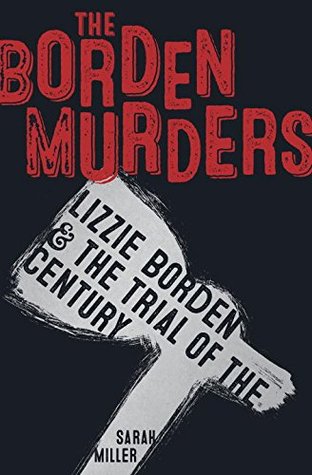 What surprised you the most in your research process? I was continually surprised by how quick the public and the media were to judge and how little those judgments were based upon. We all seem to think we know how a person “should” react in a situation that is for the most part unimaginable. To add insult to injury, Lizzie Borden's personality did not mesh neatly with the standards of her time, and because of that, her character and reputation were brutalized. It didn't matter what Lizzie Borden did—her actions and reactions were interpreted to fit the observer's preconception of her. There were just as many who condemned her for recoiling from her father's body ("Unnatural! Unfeeling!") as there were who denounced her for having the nerve to remain inside the house at all while the maid ran for help ("Guilty!"). I never stopped being affronted by that phenomenon. But in terms of aha! moments, I'd have to say the honor goes to a 1916 photograph of Miss Lizbeth Borden in Parallel Lives, a massive social history of Fall River and its most notorious citizen, coauthored by the curators of the Fall River Historical Society. Dressed all in white, she's pictured sitting in a rocking chair on her back porch, gazing fondly at the Boston terrier in her lap. It's charming. That image alone is enough to challenge almost anyone's assumptions about Lizzie Borden, but the book is also loaded with little-known details about the Borden family. It was eye-opening to read Lizzie Borden's letters from jail, to see how much kindness she quietly dispensed in her later years, and to learn how beloved she was by those who befriended her after the trial. While this is a story of the Borden murders, it also gives readers a strong sense of socioeconomic issues—social class and gender in particular are strong themes. How were you able to weave these themes through your book? For the most part, it was effortless. Those issues were at the forefront of the investigation in 1892. One of the first questions police asked Lizzie Borden was “Is there any Portuguese working on the farm over the river for your father?” To them, not only was it absurd to suspect a well-bred lady of committing such a barbaric crime, it was also completely obvious the murders had to be the work of a “foreign-born lowlife.” (It is to Lizzie's credit that she immediately pointed officers away from both the Portuguese in general and her father's Swedish farm hand in particular.) So my task was not so much weaving those issues in, as keeping them from overwhelming the narrative. The specifics of 1890s etiquette may seem quaint and stuffy to us now (for example, the backlash for not wearing a veil to a funeral), but the principles behind those conventions are felt no less strongly today. While it's no longer necessary to wear specific colors and fabrics for a set amount of time following a death, most of us still have strong opinions regarding what is appropriate funeral attire, as well as how soon is too soon for a bereaved person to resume a regular social life. Remember the Casey Anthony trial? The photographs of her attending a party while her daughter was missing and likely dead had a tremendous—possibly irreparable—effect on the public's perception of Casey Anthony's character. Is there anything you think we can learn or take away from the Borden case when it comes to our perception of crime and the law? It seems to me that the more tantalized we are by the mystery of sensational cases like the Borden murders, the more we risk losing sight of the realization that these things happened to real people. That's what struck me while standing at the Borden family plot in Fall River's Oak Grove cemetery: This happened to you. To all of you. All the details I'd been studying and sifting were fragments of people's lives. I thought I knew that, but standing in front of a headstone brings a whole new level of awareness. And I wasn't even trying to crack the case. The most discouraging consequence of that disconnect is that people are just as likely to be typecast by the media and the public today as they were in Lizzie Borden's time. We get so caught up in solving the puzzle—and in the case of violent crime, of making sense of something senseless—that we're terribly prone to warping not only the accused, but the victim's character as well. Isn't it easier to stomach the thought of an axe-wielding daughter if you also have a miserly, controlling father and a slovenly, greedy stepmother “who deserve to die”?
Added To Cart
RELATED


RECOMMENDED
CAREERS
The job outlook in 2030: Librarians will be in demand
CAREERS
The job outlook in 2030: Librarians will be in demand
ALREADY A SUBSCRIBER? LOG IN
We are currently offering this content for free. Sign up now to activate your personal profile, where you can save articles for future viewing
ALREADY A SUBSCRIBER? LOG IN
Thank you for visiting.
We’ve noticed you are using a private browser. To continue, please log in or create an account.

Add Comment :-
Comment Policy:
Comment should not be empty !!!
Kristin Lenz
Wonderful interview. I always enjoy learning about Sarah's research that brings new dimensions to real-life stories.Posted : Dec 18, 2015 08:40
Ruth McNally Barshaw
I've read the first chapter (of the ARC). Like this interview, it's stunning, complex, and left me wanting to read more.Posted : Dec 18, 2015 10:11
Sharon
Your photo is fab.!!!!!!' Save me a copy of the book please Interview is very revealing about your process Proud of youPosted : Dec 18, 2015 05:26
Marty Graham
A real wow of an interview! Thoughtful and intelligent! Looking forward to reading. MartyPosted : Dec 18, 2015 05:17
Shutta Crum
Yay, Sarah. Can't wait to read it. S.Posted : Dec 18, 2015 02:01