


2018 School Spending Survey Report
AASL Conference 2011: Colorado Elementary School Ditches Dewey for Bookstore Model
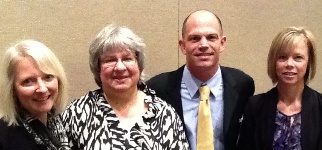 Buchter, along with Deann Hoff, Mackin Educational Resources's opening day collections director, and Ryan Thomas, Mackin's national sales director, Ann Weber, Mackin's opening collection coordinator for Colorado spoke on Friday about their collaboration at the "Using the Bookstore Model of Classification in an Elementary School Library" session during the American Association of School Librarians 15th National Conference in Minneapolis, MN, from October 27-30. Indeed, several public libraries, like Arizona's Maricopa County Library District and the nearby Rangeview Library District, also known as the Anythink Libraries, have eliminated call numbers and organize their collections based on the model used by many large bookstore chains. After a visit to Anythink, Buchter was so impressed by the way their picture book collection was arranged under the BISAC (Book Industry Standards and Communications) classification system that she was inspired to do the same. BISAC, which organizes titles based on subject headings, empowers students to track down materials on their own, she says. Getting buy-in from the school district was easy-but it took more than 500 hours of work and more than six months to create a grid with over 100 categories for Red Hawk's collection. Another hurdle involved finding a library supplier that was willing to work with her. Luckily, Mackin agreed to take the job to provide the school with a collection using the BISAC grid, but it took some extra work. For instance, typical opening day collections can range from 1-10 customized processing sets, but Red Hawk ended up with 250. Library books are divided into fiction and nonfiction, and both are shelved in categories based on their subjects. Both fiction and picture books are sorted into their own broad categories and then shelved by the author's last name within each section. Subcategories exist for larger categories like science and history, and as the collection grows, more categories and subcategories can be easily added, Buchter says. There have been some challenges, however. Each category requires at least 15 titles, but when it came to books on pirates, for example, there weren't enough. Those books ended up in general history. Another problem arose with shelving multi-genre fiction. Where would an adventure history book belong, for instance? A decision was made to shelve based on how another library in the district did it, and if no one stocked the title, then a decision would be made after re-reading a few reviews, says Buchter. How do the kids like the new system? "My observations of how the students are using the library have been very encouraging," says Diane Sherman, the Red Hawk's teacher librarian and technology coordinator on the school's website. "I see the students using this model daily and am excited to say it is very user friendly. I am able to see the students exploring different types of genres such as realistic, historic, humorous, science, and fantasy in our fiction section. The books are very well identified by our signage and the students are eager to explore their options." One parent told Buchter that her kindergartener can now easily find books without help and a teacher called it a "kid-friendly" library. Based on preliminary circulation stats taken from three different elementary schools, Red Hawk has had 100 percent of its students check out a fiction title since school started, compared to 24 percent at one school and 35 percent at another, says Buchter. If successful, the district may consider implementing the system districtwide, she adds.
Added To Cart
RELATED


RECOMMENDED
CAREERS
The job outlook in 2030: Librarians will be in demand
CAREERS
The job outlook in 2030: Librarians will be in demand
ALREADY A SUBSCRIBER? LOG IN
We are currently offering this content for free. Sign up now to activate your personal profile, where you can save articles for future viewing
ALREADY A SUBSCRIBER? LOG IN
Thank you for visiting.
We’ve noticed you are using a private browser. To continue, please log in or create an account.
Add Comment :-
Be the first reader to comment.
Comment Policy:
Comment should not be empty !!!