


2018 School Spending Survey Report
Views On An "Embattled" Profession | Professional Shelf
As journalist Dana Goldstein eloquently documents in 'The Teacher Wars: A History of America’s Most Embattled Profession,' the state of our current public school system is rooted in a complicated story.
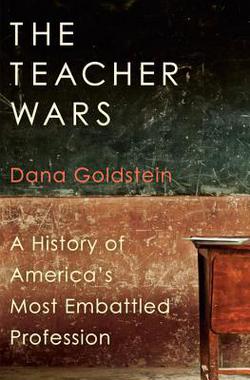 In the United States, a “good education” is often perceived as a prerequisite for personal achievement and financial security, a stepping stone to the American dream. When that promise isn’t realized, schools and teachers become easy targets. While politicians (and others) complain about inept teachers coddled by tenure, the current state of our public school system is rooted in a far more complicated story—a story journalist Dana Goldstein eloquently documents in The Teacher Wars: A History of America’s Most Embattled Profession (Doubleday, 2014). In her introduction, Goldstein shares that she “assumed this war over teaching was new, sparked by the anxieties of the Great Recession.” Instead, her research reveals a long history of political in-fighting and top-down reform. Divided into cohesive segments, the author’s compelling investigation of educational reform movements, their leaders, and the impact on American public schools begins in the 1800s, with the “feminization of American teaching” and the subsequent fight for pay equity and access to male colleges (by reformers like Susan B. Anthony) through to present-day conflicts, including the dismantling of a teacher-led school by the controversial (and recently resigned) Los Angeles Schools superintendent, John Deasy. Along the way, Goldstein provides objective, research-backed analysis of unions, tenure, accountability, value-added measurement, high-stakes testing, teacher training, charter schools, No Child Left Behind (NCLB), and many other divisive topics, perceptively noting similarities between past and present struggles. Particularly noteworthy are the in-depth chapters on the impact of the Civil War on the education of African Americans, the development of teacher unions, politically motivated teacher purges during both world wars, and the rise of the community control movement in the 1960s with emphasis on the 1968 New York City teachers’ strike. (Any of these discussions could easily be used for supplemental reading in high school American history classes.) Goldstein ends her study with a list of sensible suggestions for improving the teaching profession gleaned from a careful review of the history. Simply put, this is an important work worth studying and sharing with students, parents, educators, and other stakeholders.
 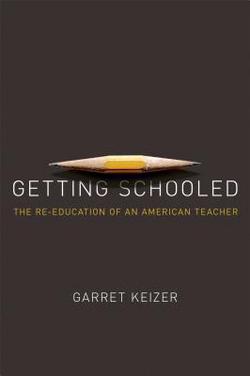 Getting Schooled: The Reeducation of an American Teacher (Holt, 2014) by Garret Keizer, a more personal but no less captivating look at the teaching profession, takes readers into the small, rural Vermont public high school that Keizer left 14 years ago in order to pursue a full-time writing career. When the school seeks a replacement English teacher for a year, the author returns to the classroom, motivated in large part by his need for health insurance coverage. He’s not thrilled about his return, but early on, it’s clear that Keizer is a dedicated teacher, beginning preparations long before he’s on the payroll. Class size is small, but the author’s month-by-month account introduces rural students who face social and economic problems similar to those of their peers in large urban schools. Readers also learn about technology tools that force the use of “form over function,” the mountains of paperwork driven by data collection, the pressures of standardized testing and teaching to the test, and the inequities of school funding. Teachers will especially appreciate his honest take on the ups-and-downs of classroom assignments, including his commitment to a months-long unit on how to write a research paper. Keizer has generous praise and respect for a supportive administration, creative colleagues, and, most importantly, his students, all working together under less-than-optimal circumstances. While his relief at the end of the school year from a physically and intellectually challenging job is evident, it’s also easy to imagine that he’ll be sorely missed.
Added To Cart
RELATED


RECOMMENDED
CAREERS
The job outlook in 2030: Librarians will be in demand
CAREERS
The job outlook in 2030: Librarians will be in demand
ALREADY A SUBSCRIBER? LOG IN
We are currently offering this content for free. Sign up now to activate your personal profile, where you can save articles for future viewing
ALREADY A SUBSCRIBER? LOG IN
Thank you for visiting.
We’ve noticed you are using a private browser. To continue, please log in or create an account.

Add Comment :-
Be the first reader to comment.
Comment Policy:
Comment should not be empty !!!