


2018 School Spending Survey Report
The Hum of Mindful Learning | Professional Shelf
It’s easy to recognize the educational bliss of a classroom that hums with joyful learning. Here are two books that have the potential of transforming classroom stresses and improve learning outcomes along the way.
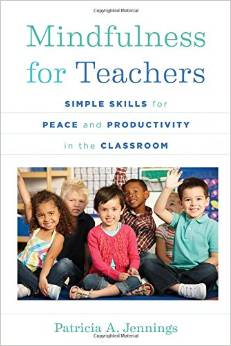 In Mindfulness for Teachers: Simple Skills for Peace and Productivity in the Classroom (Norton, 2015), Patricia A. Jennings offers a readable introduction to the theory and background of mindfulness in education along with its practical applications in promoting social, emotional, and cognitive growth in real classrooms. Jennings, an associate professor of education at the University of Virginia and a developer of CARE for Teachers, a professional development program that mitigates the impact of stress on teachers and their performance through mindfulness training, maintains that mindful awareness has the potential to transform education. Each classroom contains a hodgepodge of personalities, and each teacher and student enters it with pre-established emotional triggers and varying degrees of self-regulation skills. Jennings discusses the evolutionary nature and potentially damaging effects of negative emotions on the classroom climate and the healing power of positivity. Throughout this discussion, she interweaves challenging (and familiar) classroom scenarios and illustrates how to handle difficult situations proactively, avoiding reactive responses that send negative emotional messages to students. Teachers can be taught to manage stress, even with something as simple as the act of taking three deep breaths, and in doing so, they can set a positive tone, model appropriate behavior, and respond more effectively to the needs of each student. The ultimate goal is a calm learning environment that cultivates collaboration, cooperation, and compassion. Exercises and activities for reflection that allow readers to dig deeper are included throughout. Jennings cautions that teachers who want to share mindfulness activities should be prepared to explain the science behind the practice, and she provides information about existing programs along with a solid list of additional resources.
 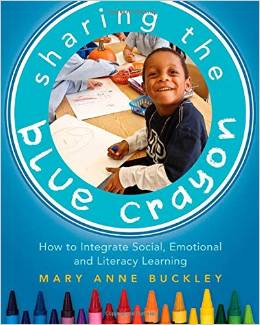 Mindful awareness is at the heart of Mary Anne Buckley’s Friendship Workshop which she introduces in the aptly titled, Sharing the Blue Crayon: How to Integrate Social, Emotional, and Literacy Learning (Stenhouse, 2015). Buckley, an experienced early childhood teacher, explains that Friendship Workshop grew out of a need to teach young children social and emotional skills, self-regulation skills such as paying attention, sharing supplies, taking turns, walking quietly, all the small behaviors children are expected to bring with them to school but often don’t. The Friendship Workshop is a 30-minute weekly session that follows the same model as Reading or Writing Workshop using a mini-lesson, discussion, and an activity. Lessons focus on building community and should reflect the needs of the students in a particular classroom, but Buckley has identified a core set of skills that include Getting Along, Empathy, Kindness, Peacefulness, Self-Control, Perseverance, and Giving and Getting Feedback. Throughout she includes questions for reflection that guide teachers as they pinpoint what their students need along with possible actions teachers can take to encourage behavior that supports learning. In addition, Buckley details how Friendship Workshop is aligned with the goals of her literacy teaching, and she includes recommended read alouds that reinforce the theme. A Study Guide to use with colleagues, for in-service training, or individual study is available online and makes a valuable companion piece.
Added To Cart
RELATED
BOOKS
PREMIUM
Tide’s Journey
BOOKS
PREMIUM
The Smushkins: ABC Zoinks
BOOKS
PREMIUM
Whose Footprint Is That?
BOOKS
PREMIUM
Our World: Vietnam


RECOMMENDED
CAREERS
The job outlook in 2030: Librarians will be in demand
CAREERS
The job outlook in 2030: Librarians will be in demand
ALREADY A SUBSCRIBER? LOG IN
We are currently offering this content for free. Sign up now to activate your personal profile, where you can save articles for future viewing
ALREADY A SUBSCRIBER? LOG IN
Thank you for visiting.
We’ve noticed you are using a private browser. To continue, please log in or create an account.

Add Comment :-
Be the first reader to comment.
Comment Policy:
Comment should not be empty !!!