


2018 School Spending Survey Report
Stolen Kisses | Romances to Tempt Teen Readers
Conjuring up illicit but intoxicating chance meeting and burning passion, forbidden love is a tried-and-true trope that teens gravitate toward.
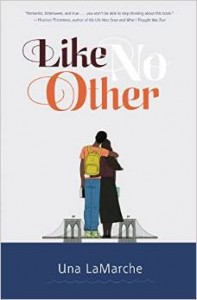 “‘That's what happens when you try to live out West Side Story east of Flatbush.’” The protagonists of Una LaMarche’s Like No Other (Razorbill, 2014; Gr 9 Up), 16-year-old star-crossed lovers Devorah and Jaxon, aren’t from rival families. They live in the same neighborhood in Crown Heights, Brooklyn, and while neither is particularly rebellious, they push against convention with potentially life-changing consequences. Devorah is from an Hasidic Jewish family, for whom any interaction between unrelated members of the opposite sex is verboten. When she meets Jaxon, a smart and bookish African American boy, as they wait in a stalled hospital elevator, attraction quickly blossoms. The two have little opportunity to see each other but are soon willing to go to great lengths for a few stolen minutes or kisses. Through alternating first-person narratives, LaMarche skillfully shows how this bond forces the teenagers to question their assumptions about the world and the lives they take for granted. Devorah initially describes herself as frum, or devoted and pious, the kind of girl who wouldn’t even commit a sin as trivial as looking at a fashion magazine. But as she becomes more involved with Jax, the life she is expected to lead comes into sharper and sharper relief, especially as she observes her 18-year-old sister’s arranged marriage. Torn between an infatuation that has taken her by surprise and her respect for family and tradition, Devorah has a strong, well-developed voice that will resonate with teens making those first, uncertain forays into adulthood. Jax, too, must struggle with his parents’ expectations and his own sense of self. While nowhere near as rigid as Devorah’s family, his parents hold him to high standards, resulting in turmoil for the teen. Though the author has deftly captured the excitement and urgency that mark a burgeoning romance, she’s also crafted a stirring, moving tale of two thoughtful, courageous adolescents who are willing to break the rules to establish independent identities.
 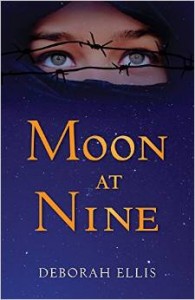 Set in Iran 10 years after the shah has been deposed, Deborah Ellis’s Moon at Nine (Pajama Pr., 2014; Gr 9 Up) presents a backdrop ripe for illicit love. Farrin inhabits a world where almost everything desirable is forbidden: music, Western movies and television, even the short stories about demons the teenage girl loves to write. At school, teachers and other students suppress any original or dangerous thought, and at home, Farrin’s parents secretly, though ineffectually, plot to bring the shah’s son to power. This repressive environment alienates Farrin, who takes solace alone in her room watching television and writing, while longing for freedom. When she meets Sadira, she’s physically drawn to the her, but, more importantly, Sadira is a breath of fresh air in Farrin's cloistered life (“What brought her calm and a feeling of hope was a vision that rose from somewhere deep in her chest. The vision was Sadira’s face.”). Committed to her music and willing to stand up to the class monitor, a pious, bullying girl who turns in other students for any infraction, Sadira inspires Farrin. The girls quickly bond, with Sadira encouraging Farrin's writing. Farrin's infatuation grows, but the relationship is dangerous for a number of reasons. The girls are from two different worlds: Farrin’s parents support the shah, who imprisoned Sadira’s father, and because of their illegal activities, Farrin’s mother mistrusts outsiders. More significantly, Islamic law punishes same-sex romance with death. Though this is a dark and dire situation, tinged with cultural and religious implications, Ellis excels at personalizing the political, and in Farrin, she’s crafted a strong, likable adolescent experiencing a quiet but palpable sense of joy from a relationship she knows is fraught with peril. More than a mere salacious romance, this poignant, often haunting tale makes a period of history real and relatable and may even inspire teens to seek out other titles set in this period, such as Marjane Satrapi’s Persepolis (Pantheon, 2003) .
  Rather than a more romanticized view of the forbidden, Alexis Coe’s intricately researched, nonfiction Alice + Freda Forever: A Murder in Memphis (Zest, Oct. 2014; Gr 9 Up) depicts the destructive power of love. It centers on the relationship between Alice Mitchell, 19, and Freda Ward, 17, two girls living in Tennessee during the 1890s. Their intense friendship soon spiraled into an obsessive love affair, as the two plotted to run away and live together, until their families put an end to their plans. Freda then turned her affections in a more socially sanctioned direction, becoming engaged to a man her father approved of, but the unstable Alice remained fixated on her lover, slitting Freda’s throat with a razor in revenge for her lover’s perceived betrayal. While Coe establishes a thrilling, almost lurid tone (“Razor in hand, she sprinted back up the hill, leaving the love of her life bleeding on the railroad tracks”), once she’s whet the appetites of her readers, she uses the relationship and murder as a springboard for exploring deeper issues of gender and sexuality during the 19th century. For instance, in crafting a defense for Alice, psychiatrists created a profile of the young woman (“The Hypothetical Case”) that described her as insane due to a lifelong fascination with typically masculine activities. Coe contrasts Alice’s supposedly masculine behavior with the comportment of other women involved in the case (such as Lillie Johnson, Alice’s best friend and witness to the murder) who presented a more vulnerable, demure image and thus were looked upon far more favorably. Reminiscent of Peter Jackson’s film Heavenly Creatures (which in turn was based on actual events), an account of two teenagers who are compelled to murder to protect their intense, almost incestuous friendship, Alice + Freda Forever will not only attract teens and adults alike for its gripping treatment of love gone dreadfully wrong—it will force them to think critically from both a historical and sociocultural perspective.
Added To Cart
RELATED


RECOMMENDED
CAREERS
The job outlook in 2030: Librarians will be in demand
CAREERS
The job outlook in 2030: Librarians will be in demand
ALREADY A SUBSCRIBER? LOG IN
We are currently offering this content for free. Sign up now to activate your personal profile, where you can save articles for future viewing
ALREADY A SUBSCRIBER? LOG IN
Thank you for visiting.
We’ve noticed you are using a private browser. To continue, please log in or create an account.

Add Comment :-
Be the first reader to comment.
Comment Policy:
Comment should not be empty !!!