


2018 School Spending Survey Report
Shining a Spotlight On Verse | Professional Shelf
Two new handbooks remind teachers and librarians that poetry needn’t be relegated to a single unit or a particular time of year.
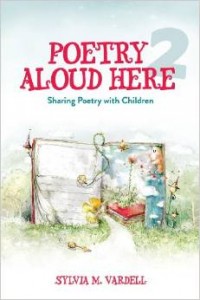 With Poetry Aloud Here 2: Sharing Poetry with Children (ALA, 2014), children’s literature specialist Sylvia M. Vardell updates her 2006 guidebook. In this primer for classroom and library practitioners serving children ages 5–12, Vardell reviews the ways in which reading and reciting poetry support language learners, from building vocabulary and word recognition to reinforcing concepts and themes in all curriculum areas. With lists of recommendations, the author introduces popular poets and the types of poetry that most appeal to young readers, encouraging teachers and librarians to build easily accessible classroom and library collections. Also included are ideas for promoting poetry and increasing students’ exposure to verse, such as planning a theme-related poetry scavenger hunt or introducing a science topic with a poem and related nonfiction book. “Ten Strategies for Sharing Poetry Out Loud” demonstrate steps to move the focus from the adult reader to student voices, with suggestions for reading in unison, small group readings, poems for two voices, and singing poems to familiar tunes. Vardell also offers a sample list of open-ended questions to get conversations started about poetry. She suggests forming poetry circles that function like book clubs, allowing students to meet and work in small groups. Sprinkled throughout the book are tips from working poets. Joyce Sidman talks about why she writes poetry, Douglas Florian discusses the hows and whys of reading poems aloud, and Naomi Shihab Nye shares memories of her childhood writing experiences. Each of these profiles includes at least one poem and a related “Class Exercise.” For additional inspiration and information, see the author’s blog, Poetry for Children.
 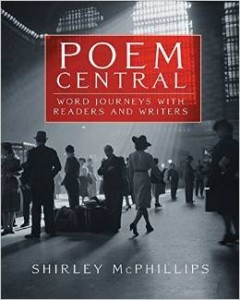 A literacy consultant and poet, Shirley McPhillips shares her considerable expertise in Poem Central: Word Journeys with Readers and Writers (Stenhouse, 2014). It's McPhillips's belief that “poetry is not an academic subject but an art,” and the author's lyrical, conversational voice opens the door to the literary form. The book's three main sections focus on building exposure to, reading and interpreting, and writing poetry. Each is comprised of chapters, some as brief as three pages, others much longer, filled with the author’s musings and experiences along with the thoughts and ideas of other writers, artists, students, and teachers. McPhillips intertwines these voices with practical teaching suggestions and samples of student work that illustrate the process. For example, she suggests various ways in which a choral reading of a poem written by a student might be choreographed. In another, she reviews the deep reading of Robert Frost’s "The Pasture" by students whose teacher allows them time to read poems of their choosing that are then studied with thoughtful and respectful discussion. Portions of the book could easily serve as mini-tutorials. In the chapter “Line by Line,” McPhillips considers the importance of line endings by inviting two poets to talk about the decisions they made while writing particular poems, and she includes the line-by-line work of a 10th grader as he crafts and re-crafts a poem. There are also sections on persona, homage, and invective poems. This not-to-be missed resource also abounds in lists of additional references, both online and in print. A final note on both titles—while numerous poems are referenced, the full text of each is not always provided. Fortunately, most can easily be found online.
Added To Cart
RELATED


RECOMMENDED
CAREERS
The job outlook in 2030: Librarians will be in demand
CAREERS
The job outlook in 2030: Librarians will be in demand
ALREADY A SUBSCRIBER? LOG IN
We are currently offering this content for free. Sign up now to activate your personal profile, where you can save articles for future viewing
ALREADY A SUBSCRIBER? LOG IN
Thank you for visiting.
We’ve noticed you are using a private browser. To continue, please log in or create an account.

Add Comment :-
Be the first reader to comment.
Comment Policy:
Comment should not be empty !!!