


2018 School Spending Survey Report
Old Friends, Fresh Stories: New Middle Grade Fantasy
Fantasy writing for children has a long and storied history, populated with all manner of heroic quests, forgotten prophecies, and strange magic. Despite its near-century of popularity, there is no sign of flagging enthusiasm for this much-beloved genre.
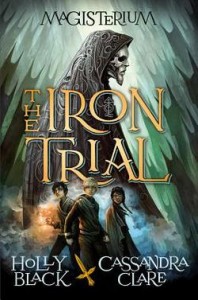 Avid fantasy fans may find themselves occasionally suffering from magic-school fatigue, in which the exploits of our Harry-esque protagonist(s) play out against a Hogwarts-ish backdrop. Delightfully, in The Iron Trial (Scholastic, 2014; Gr 5-8) co-authors Cassandra Clare and Holly Black nimbly dodge readers’ familiarity with the tropes of the genre, creating a cast of characters that’s both recognizable and excitingly new. Instead of looking forward to his time at magic school, Callum Hunt tries his best to fail his entrance exams and avoid the certain death that his father is sure will result if he enters The Magesterium. The school in question is located in a labyrinthine series of underground caverns. Meals in the dining cave consist of food-flavored lichens and moss, and students are rarely allowed above ground—plot details that imbue the story with an eerie, claustrophobic atmosphere. Classmates and new friends from diverse backgrounds, and political maneuverings of the ruling class add depth to the world, while the evil magician bent on destroying this way of life has a thoroughly surprising plan—and face. Iron Trial is the first title in a new series, and readers will eagerly await the sequels. By staking out a completely original magic school, Clare and Black’s effort finds itself at the head of the class.
 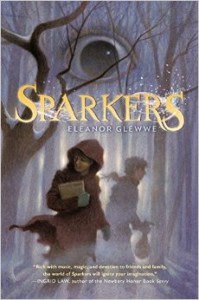 If the fertile but oft-mined grounds of magic training prove too familiar to readers, there’s another type of fantasy story ready to be explored: that of an under-appreciated or subjugated group rising up against their oppressors. In fantasy, this conflict most often plays out as a battle between magical and non-magical folks, à la Eleanor Glewwe’s Sparkers (Viking, 2014; Gr 5-8). Marah is a bright, inquisitive 14-year-old girl with a loving family, a passion for languages and music, and a strong work ethic. In any other culture she’d be a valued member of society, but in Ashara, she’s a sparker: a member of a caste without magical skills forced into reduced circumstances by a governing body that has them. When a mysterious illness begins striking down sparkers and kasari (magical folk) alike, Marah begins a desperate search for a cure, aided by a bright kasari boy named Azariah. Strong world-building, intense action, and nuanced characters distinguish Glewwe as an author to watch. Marah and Azariah’s adventures are spiced with big questions and topics: what makes people dislike those who are different, the place of pride in a virtuous world, the importance of representative government, and the positive effects religion and music can have on people’s lives. Fantasy is a great way to explore these issues—something about the combination of magic and new landscapes give children the space they need to truly consider deep political and social concerns, and the world is a better place for it.
 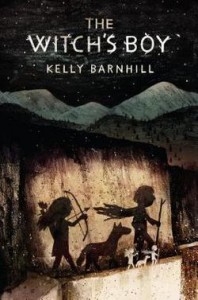 The world would be a kinder place if more people realized how swiftly negative words and reactions can be taken to heart, and two recently published titles look at alternate ways of dealing with these slings and arrows. In Kelly Barnhill’s The Witch’s Boy (Algonquin, 2014; Gr 4-7), a child named Ned is dealt a terrible burden. When a tragic accident kills his twin, the villagers begin telling each other and Ned that “the wrong boy” drowned. Ned’s life is further changed when his mother, a witch charged with keeping an ancient magic safe and contained, attempts to keep his brother’s soul from leaving Earth, mistakenly cleaving the siblings together. Ned’s resulting silence and depression only increases the taunts from the villagers. Meanwhile, a bandit king grows ever more obsessed with obtaining the magic for himself, leaving his daughter Aine to figure out a way to calm her father’s madness. Circumstances force Aine and Ned to become allies and work together to keep the magic safe and the kingdom from ruin. This classic fantasy tale combines a quest through a sentient forest straight out of Grimm’s, a hero’s origin story, and the type of political maneuvering that Marah and Azariah are dealing with in Glewwe’s Sparkers. The characters and world are richly drawn, and Ned’s growing confidence is a testament to love’s power to heal the wounds of thoughtless words and actions.
 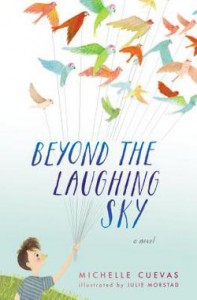 In Michelle Cuevas’s Beyond the Laughing Sky (Dial, Oct., 2014; Gr 3-6) readers meet Nashville, another child with the weight of the world on his shoulders, but for very different reasons. Hatched from an egg his parents found outside their home, Nashville has a boy’s body and a bird’s beak, and feathers where his hair should be. Though his family is loving and supportive (building him a child-sized birdbath outside, eating at the kitchen table in perches suspended from the ceiling), they cannot protect him from the scrutiny of the world. Nashville dreads school, where even the neutral curiosity of classmates emphasizes how little he fits in. He has one deep, burning question: he has the beak and the feathers, so why not the wings? Nashville longs to fly with an ache so powerful it seeps from the page. Self-loathing turns out to be the culprit keeping him from the joyous release of flight, and this bird-child’s journey of self-awareness and the power that finally accepting his nature gives him serves as an important metaphor for readers. His family’s distress at losing him to the skies but ultimate peace with his decisions are exemplary models of loving, caring behavior any family can aspire to. With its simple, beautiful prose and profound message of acceptance, this sweet fable is sure to find a place in readers’ hearts. Elisabeth Gattullo Marrocolla (@liswithanS) is the Assistant Head of Children’s Services and Collection Development Coordinator at Darien Library in Darien, CT. An avid sci-fi and fantasy fan, you can usually find her with her nose buried in a book.
Added To Cart
RELATED


RECOMMENDED
CAREERS
The job outlook in 2030: Librarians will be in demand
CAREERS
The job outlook in 2030: Librarians will be in demand
ALREADY A SUBSCRIBER? LOG IN
We are currently offering this content for free. Sign up now to activate your personal profile, where you can save articles for future viewing
ALREADY A SUBSCRIBER? LOG IN
Thank you for visiting.
We’ve noticed you are using a private browser. To continue, please log in or create an account.

Add Comment :-
Be the first reader to comment.
Comment Policy:
Comment should not be empty !!!