


2018 School Spending Survey Report
Full Steam Ahead with Brian Floca | Interview
With a rattle and a roll, award-winning author and artist Brian Floca takes readers on a ride across the country on the Transcontinental Railroad in 'Locomotive,' a September publication from Simon & Schuster.
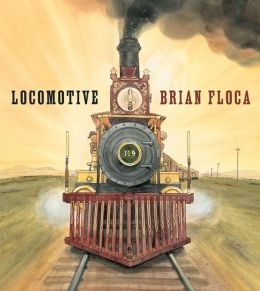 With a rattle and a roll, award-winning author and artist Brian Floca takes readers on a ride across the country on the Transcontinental Railroad in his latest book, Locomotive (S&S, September, 2013). Floca’s lively text and detailed watercolor images paint a picture of these magnificent iron horses and the small towns and breathtaking landscapes they steamed through. Along the way, the author packs in information on how these machines operated, the people who worked and traveled on them, and how the Transcontinental Railroad changed America. Here the author discusses his longer-than-anticipated journey to Locomotive. Tell us how Locomotive came to be. A very early version of Locomotive was all about how the steam engine operates. I had little idea where [the book] was going or where it would be set. In asking those questions, I came to the Transcontinental Railroad, which totally upended the focus of the book. You include a wealth of details in the book—sometimes you mention or draw a nugget only in passing. How did you decide what to include and what to leave out? Momentum…I wanted to keep it in the narrative. An early scene about laying the rails was in and out of the book 10 times. The piece about the train's construction feels so essential, yet it's really its own story. Using it as the preamble for the trip felt right. If I had started with the idea of writing about the Transcontinental Railroad, I would have made a [very different] book.…In the end, I arrived at the trip in the way that a passenger would have experienced it. This book [is] about riding the train and what that felt like. Were there any surprises in your research?
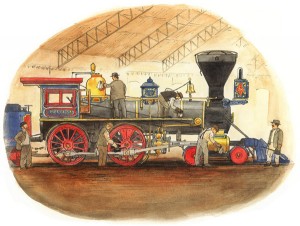
 - 'Locomotive' ©Brian Floca
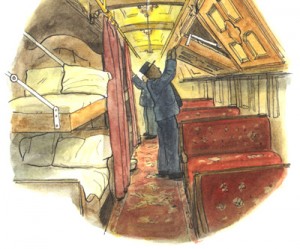
'Locomotive' ©Brian Floca
In contrast to trips taken in your books Lightship (2007) and Moonshot (2009, both Atheneum), the path of the locomotive gave way to new cultures growing up around it and displaced others—the Chinese who came to work on the Central Pacific line and the Cheyenne, Pawnee, and Arapaho. And the African-American Pullman porters were an essential part of the rail system. The Transcontinental Railroad really changed America, in perhaps unanticipated ways, didn't it? Some of the most trying stretches in creating the book were spent thinking about how to address the more difficult issues that arrived with the train, especially with regard to Native Americans. The story of the porters is a fascinating story, one with difficult aspects, too, but with some positive aspects as well. The porters were men who might have been emancipated just five years earlier—and they're not enjoying the journey the way a passenger might; they’re working, they’re enduring discrimination, but at the same time they’re crossing the country and their horizons are expanding. They are, it’s been argued, the beginning of the black middle class. There were so many ways in which the train transformed the country. Brian Floca discusses his research for Locomotive and reads a scene from the book in this audio recording, courtesy of TeachingBooks.net.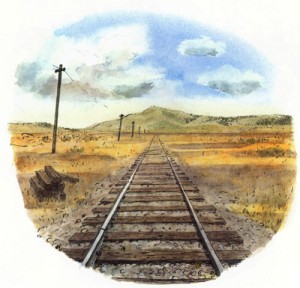
'Locomotive' ©Brian Floca

Added To Cart
RELATED


RECOMMENDED
CAREERS
The job outlook in 2030: Librarians will be in demand
CAREERS
The job outlook in 2030: Librarians will be in demand
ALREADY A SUBSCRIBER? LOG IN
We are currently offering this content for free. Sign up now to activate your personal profile, where you can save articles for future viewing
ALREADY A SUBSCRIBER? LOG IN
Thank you for visiting.
We’ve noticed you are using a private browser. To continue, please log in or create an account.
Add Comment :-
Be the first reader to comment.
Comment Policy:
Comment should not be empty !!!