


2018 School Spending Survey Report
Selecting and Promoting Nonfiction in Your Library | Nonfiction Notions
Welcome to Nonfiction Notions, a new column devoted to exploring and recommending middle grade nonfiction. If you and your readers have always thought that nonfiction meant boring textbooks, dry as dust tomes, or—gasp!—factoid books with no redeeming qualities, think again! There’s a whole world of amazing middle grade narrative and expository nonfiction waiting to entice readers.
- Look for the hook
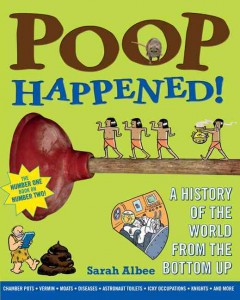 In a perfect world, we’d have all the time (and attention span) to present lengthy booktalks and perform in-depth readers' advisory with each library user. Realistically, we’re busy, kids are busy, and you’ve probably got about one minute, if that, to grab their attention—current research indicates that the average middle schooler’s attention span is about 10 to 12 minutes and they can retain only five to seven pieces of information at a time. If you’re promoting five to 10 books and hoping each kid will remember one or two of them, you need to have a good hook—something to grab their attention and stick in their mind. A great example is Sarah Albee’s Poop Happened: A History of the World from the Bottom Up (Walker, 2010). The book has a handy list of questions on the back to grab kids’ interest. One of my favorites is “How did a knight wearing fifty pounds of armor go to the bathroom?” How indeed! Another example of a great book hook is in I Feel Better with a Frog in My Throat: History's Strangest Cures by Carlyn Beccia (HMH, 2010). It’s full of quizzes and information about ancient and
 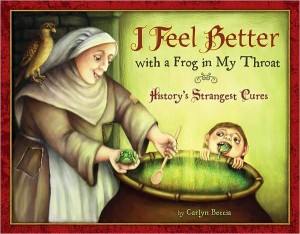 medieval medicine. Try this quiz from the book on your audience: “If you have a stomachache, would you rather drink urine? Eat dirt? Or down a glass full of live millipedes? Will any of these cure you?” A hook doesn’t have to elicit groans, though. It can be as simple as holding up a book and telling kids that it presents new facts and/or emerging research on a beloved subject. Which brings us to our next point...
 - Be selective about subject
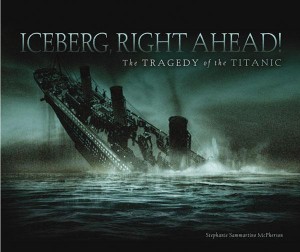 As an adult reader of nonfiction, I often find myself searching for new viewpoints, stories of obscure explorers and historical events, or other little-known subjects. When I choose nonfiction for my tween readers, however, it’s important to remember that they don’t have the background knowledge that an adult reader has. While I may roll my eyes and groan at "yet another Titanic book", it’s new and fresh to students. Stephanie Sammartino McPherson’s Iceberg, Right Ahead!: The Tragedy of the Titanic (Twenty-First Century, 2011) is a great example of a book that revisits a tried-and-true subject while offering fresh information and perspective. While it retells the events of that fateful night of April 14, 1912, and the discovery of the sunken ship by Robert Ballard years later, it also examines how the sinking changed history by inspiring new safety laws and includes many stories of individual passengers and sailors. This is an example of a book that will appeal both to habitual readers, who may have already read many titles on the Titanic, as well as more reluctant readers who are discovering it for the first time.
 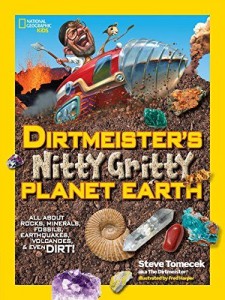 Major disasters like that of the Titanic, true adventure and survival stories, and well-known historical events and figures are often perennial favorites for nonfiction readers. Gross or interesting facts; anything about favorite animals like big cats, snakes, or wolves; and how-to books are also sure bets to fly off the shelf. This doesn’t mean that you have to stick to the same subjects when purchasing and booktalking nonfiction, though! An obscure topic like the science of dirt can be made interesting with an eye-catching layout and a good hook as in Dirtmeister’s Nitty Gritty Planet
 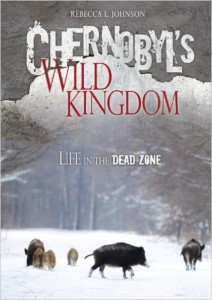 Earth: All About Rocks, Minerals, Fossils, Earthquakes, Volcanoes, & Even Dirt (National Geographic, 2015) by Steve Tomacek. A more obscure title that includes links to popular subjects can grab readers’ interest, such as Chernobyl’s Wild Kingdom: Life in the Dead Zone by Rebecca L. Johnson (Twenty-First Century, 2014), which connects the ongoing study of the effects of radiation to animals and a huge disaster, both popular subjects. It’s all about connections, which leads to the next point...
 - Always connect
 The other side of the coin for an interesting subject, especially with broad, popular historical events, is finding nonfiction that includes people and events kids can relate to. Few series do this better than HMH's "Scientists in the Field," which presents current scientific research in a way that readers can understand alongside profiles of the scientists—and communities—involved in and affected by their research. A great title in that series is The Frog Scientist by Pamela S. Turner (HMH, 2011). This book focuses on Dr. Tyrone Hayes and his research into how pesticides, especially Atrazine, affect frogs and the environment. In addition to exploring his research project, the author also delves into Dr. Hayes’s journey to become a scientist. Kids can relate to his struggles in school and his continued involvement with students, ultimately seeing a career in science as something that anyone, from any background, can aspire toward.
 - Design matters
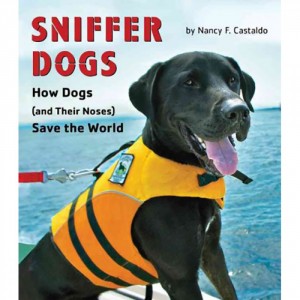 Finally, a title that combines all of these aspects—hook, subject, relatable elements, and design—is Nancy Castaldo’s Sniffer Dogs: How Dogs (and Their Noses) Save the World (HMH, 2014). Readers will be hooked initially by interesting facts (“Did you know dogs can locate and identify cremains —human remains that have been heated to 6,000 Fahrenheit and then crushed until they’re just like sand?”). Next, the broad subject of dogs and working dogs will grab kids; animals are almost always popular. Stories of dogs from history and current events as well as comparisons with Castaldo’s own pet dog, Gatsby, offer kids a real life connection to help bridge the new information. Finally, the book is a compact size, only slightly larger than the average chapter book, and includes many photographs. It also breaks up the text with additional information and color backgrounds. All of these elements entice readers and lead them from the stories into the science and biology of dogs and how they are trained to use their sense of smell, possibly inspiring further research on their own. When it comes to booktalking, making displays, or creating recommended book lists, it can be all too easy to forget nonfiction—or relegate it to the sidelines of assignment-focused library time. But a wonderfully written, eye-opening work of nonfiction can attract readers not typically inspired by fiction and help devoted fiction readers to broaden their reading experiences. Titles Referenced
 - I Feel Better with a Frog in My Throat: History’s Strangest Cures by Carlyn Beccia. HMH. 2010. ISBN 9780547225708.
- Poop Happened!: A History of the World from the Bottom Up by Sarah Albee. 2010. ISBN 9780802798251.
- Iceberg, Right Ahead!: The Tragedy of the Titanic by Stephanie Sammartino McPherson. Lerner/Twenty-First Century. 2012. ISBN 9780761367567.
- The Frog Scientist (Scientists in the Field) by Pamela S. Turner, photos by Andy Comins. HMH. 2009. ISBN 9780618717163.
- Sniffer Dogs: How Dogs (and Their Noses) Save the World by Nancy F. Castaldo. HMH. 2014. ISBN 9780544088931.

Added To Cart
RELATED
BOOKS
PREMIUM
Babies at the Zoo
BOOKS
PREMIUM
Construction
NONFICTION
PREMIUM
Hooray for My Brain!


RECOMMENDED
CAREERS
The job outlook in 2030: Librarians will be in demand
CAREERS
The job outlook in 2030: Librarians will be in demand
ALREADY A SUBSCRIBER? LOG IN
We are currently offering this content for free. Sign up now to activate your personal profile, where you can save articles for future viewing
ALREADY A SUBSCRIBER? LOG IN
Thank you for visiting.
We’ve noticed you are using a private browser. To continue, please log in or create an account.
Add Comment :-
Comment Policy:
Comment should not be empty !!!
Mary
Exciting to see this new column focusing on nonfiction for middle graders. Great group of books highlighted in this first edition to show important features that will attract kids. Thank you!Posted : Jan 21, 2016 03:18
Leslie Bulion
Let's hear it for all kinds of wonderful nonfiction!!Posted : Jan 21, 2016 02:39
Karen Sterling
So refreshing to see a column about nonfiction titles! Great things are happening in the world of middle grade (and all grades) nonfiction, and some of my favorite authors have gotten short shrift in libraries due to the way we librarians shelve books. These authors do not always enjoy fan followers like their fiction counterparts simply because they are shelved by Dewey rather than author. The Common Core has made the inclusion of nonfiction more important than ever, and we are seeing some great authors rising to the call. Jim Murphy's titles (Breakthrough! How three people "saved" blue babies and changed medicine forever) keep me on the edge of my seat, and Sarah Albee (Why'd They Wear That?) answers the questions kids want to know. For more great nonfiction choices and authors, don't miss iNK Think Tank's "Nonfiction Minute" [www.nonfictionminute.com] for top nonfiction authors publishing daily stories about high interest topics for our students - for FREE!Posted : Jan 20, 2016 11:28
Kyra Teis
Sniffer Dogs, by Nancy Castaldo, is a well-researched, compelling book. Great choice!Posted : Jan 20, 2016 06:23
Pam Clark
Must have Poop Happened! My 7th graders would love it!Posted : Jan 20, 2016 02:48
jone
What a great list of titles. Will be putting some on my list.Posted : Jan 20, 2016 12:25