


2018 School Spending Survey Report
Navigating the "Tween Scene," Getting "Between the Sheets," and Exploring Realistic Fiction | Professional Reading
From a look at programming for tweens to a guide to navigating sexual content, this month's professional reading delivers some can't-miss new resources.
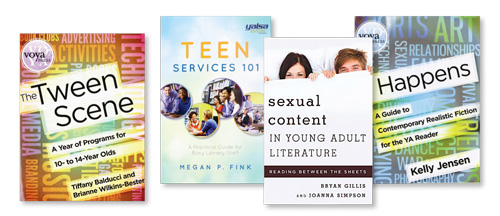
Balducci, Tiffany & Brianne Wilkins-Bester. The Tween Scene: A Year of Programs for 10- to 14-Year Olds. 243p. ebook available. VOYA. 2015. pap. $50. ISBN 9781617510298.
Library staff with an interest in programming for tweens will find a solid introduction to the process in this volume. Setting the stage with information on the developmental stages of 10- to 14-year-olds, this work opens with no-nonsense advice for providing programs that tweens will both attend and enjoy. An excellent chapter on icebreaker games demystifies the process of helping groups of tweens get to know one another. The bulk of the book is comprised of full program how-tos, including tips for advertising and pre-program prep, step-by-step program outlines, and reproducible elements for many of the programs. Some of the images are pixelated, but that does nothing to distract from all this resource has to offer. VERDICT With 50 full program plans, this is a solid purchase for libraries with tween-focused staff looking to amp up selections for that age group.
Fink, Megan P. Teen Services 101: A Practical Guide for Busy Library Staff. 229p. Young Adult Library Services Association (YALSA). 2015. pap. $40. ISBN 9780838988039.
This primer on teen services succinctly articulates how the teen population is one of the most important groups of patrons. It presents the case that young adults are the future of library support. If teens have positive experiences, then they are more likely to be supporters of the library when they are older. The author discusses how interaction with the library helps teens develop social skills and literacy and provides access to volunteer opportunities, lifelong learning, and career development. The book also handles themes such as dealing with the developing minds of teens, creating safe spaces for them, and handling teen behavior in a manner that will be both constructive and productive. Importantly, Fink points out that feedback from teens is critical. Their confidence in the services offered by the library will put them on the road to becoming lifelong users. VERDICT A helpful guide for those new to the field.
Gillis, Bryan & Joanna Simpson. Sexual Content in Young Adult Literature: Reading Between the Sheets. 194p. Rowman & Littlefield. 2015. lib. ed. $60. ISBN 9781442246874.
The idea that literature provides a safe place for exploration is the primary argument of this study of young adult works. Although sex is a common theme in YA, it is seen as taboo in many places. The authors begin by discussing the sexual identity development of young adults and the role of a constructive understanding of sexual relationships. While analyzing works from many famous authors, from Shakespeare to Suzanne Collins, the authors present examples of sexual innuendos, scenes, and moments in classic and popular literature. They provide excerpts and synopses of the sexual material in canonical, historical, dystopian, romantic, and realistic/contemporary fiction for teens. Taking time to thoroughly explain the sexual content in over 50 popular works of young adult literature (YAL), the authors give teachers and librarians a reason not to skip over these important teachable moments for young adults. Gillis and Simpson shed light on the benefits of including the sexual content of YAL during class discussions. Although they are proponents of intellectual freedom, the authors honestly explore the challenges to the inclusion of sexual content in many collections. They present both sides and usually end a point by asking pertinent questions or relaying their opinion on the subject, leaving readers the chance to agree or disagree with their points of view. VERDICT A must-purchase for all middle and high school professional libraries, especially where schools are experiencing book challenges based on sexual content.
Jensen, Kelly. It Happens: A Guide to Contemporary Realistic Fiction for the YA Reader. 278p. VOYA. 2014. pap. $50. ISBN 9781617510311.
A comprehensive look at contemporary YA fiction. The book is divided into three parts: “Real Tools,” “Real Reads,” and “Real Talk.” In “Real Tools,” Jensen walks readers through the multiple layers of contemporary YA fiction and explains the importance of the genre. She shows readers how to seek out contemporary YA titles by relying on nontraditional review sources and award and selection lists. She also explains how to evaluate books for eight critical elements such as appeal, voice, and pacing. Readers’ advisory is highlighted through a thorough look at what it is and how to best conduct it. In “Real Reads,” 150 titles are annotated covering 10 topics. Each annotation includes read-alikes and reasons the book is appealing. The 10 topical lists include additional titles relevant to that category. “Real Talk” presents five chapters of “conversation starters” for discussing books and their common themes. The conversation starters include a few books on the topic and cover areas such as bullying, sex and sexual abuse, and unlikable female characters. Rounding out this section are additional ideas and tips for how to advocate for contemporary YA fiction. This title includes an appendix of books and blogs to continue one’s study, as well as author, title, and topical indexes. The volume’s strengths lie in its book lists, where Jensen chose to focus on selections that “are less likely to be found in other resources outside of this book.” VERDICT An additional purchase for those looking to beef up their professional collection.

Added To Cart
RELATED
FICTION
PREMIUM
Who Will Rule the Trees?
FICTION
PREMIUM
Go Bananas!
FICTION
PREMIUM
The Dark Is For
BOOKS
PREMIUM
How the Other Half Die


RECOMMENDED
CAREERS
The job outlook in 2030: Librarians will be in demand
CAREERS
The job outlook in 2030: Librarians will be in demand
ALREADY A SUBSCRIBER? LOG IN
We are currently offering this content for free. Sign up now to activate your personal profile, where you can save articles for future viewing
ALREADY A SUBSCRIBER? LOG IN
Thank you for visiting.
We’ve noticed you are using a private browser. To continue, please log in or create an account.
Add Comment :-
Be the first reader to comment.
Comment Policy:
Comment should not be empty !!!